Chain Block Partnership FAQ: Long-Term Supply, After-Sales, and OEM/ODM Support
Chain Block Partnership FAQ: Long-Term Supply, After-Sales, and OEM/ODM Support
A long-term chain block partnership is decided less by unit price than by a handful of written answers: how far OEM/ODM customization can go, which compliance standards the factory can document, what spare-part support follows the first container, how repeatable the lead time is, and how quickly a named contact responds when something needs attention. This FAQ answers those questions for Baoding Junyun Hoisting Machinery Co., Ltd., the Hebei-based manufacturer and exporter behind the JUNYUNHOIST brand, using the verified VD chain block specification set together with the company’s stated customization, capacity, and after-sales terms.
The Partnership Gap: What a Chain Block Quotation Still Does Not Answer
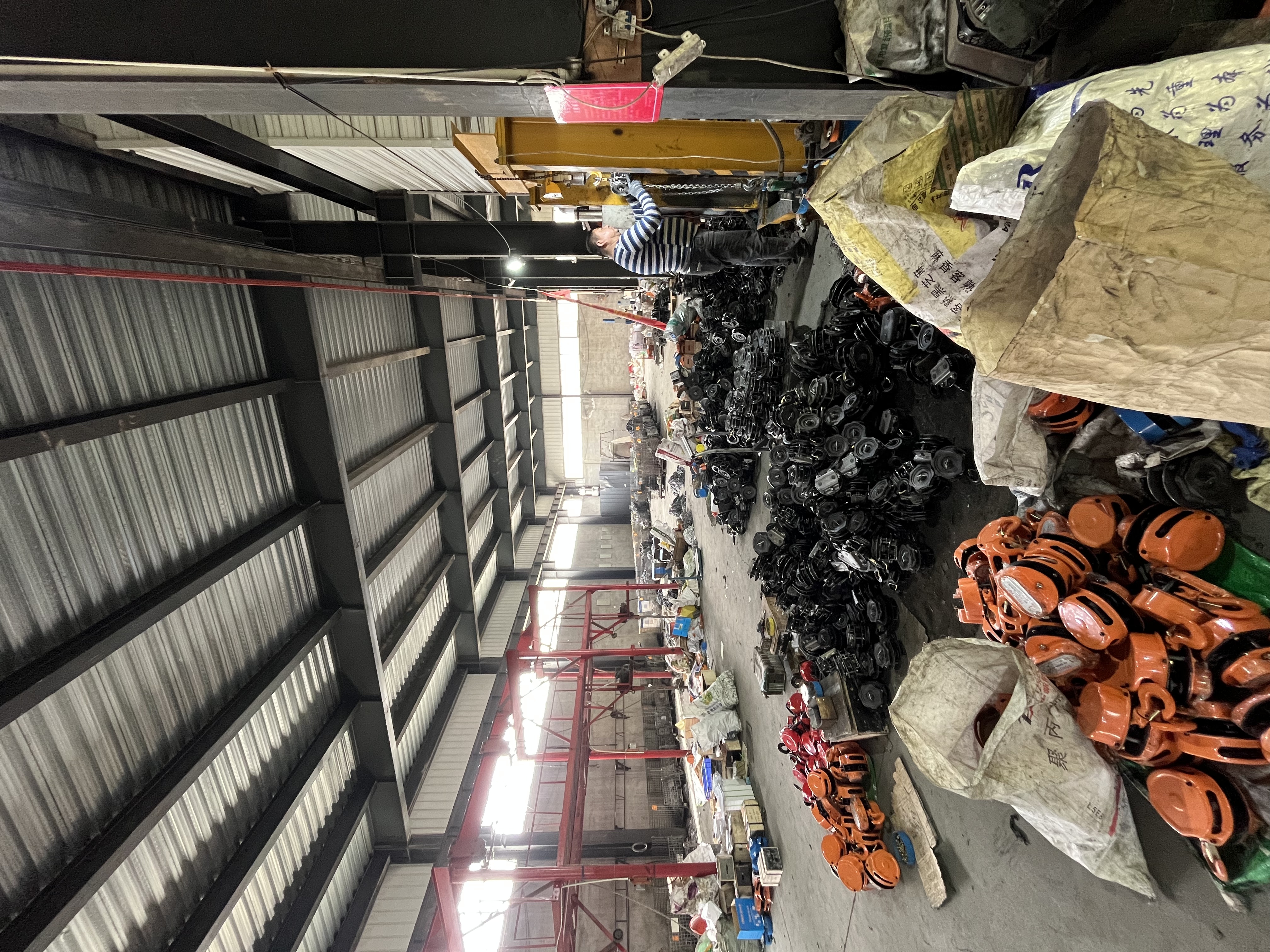
A chain block quotation is built to answer three questions: price at a given capacity, order quantity, and an approximate delivery window. The questions that decide whether the same supply relationship is still workable in year three are usually left out.
- Which values are locked as the specification baseline for repeat orders?
- What can be customized, and what must remain standard?
- Which standards and certificate copies can go into a compliance file?
- What happens to wear parts after the first container is delivered?
- Who answers a technical question in year three?
The cost of leaving these unanswered rarely shows up at the quotation stage. It shows up later, when a second batch arrives with different chain values than the first, or when a distributor cannot match a replacement hand chain to units already sold into the field. Rated capacity looks identical on both invoices; the difference sits in the details nobody wrote down.
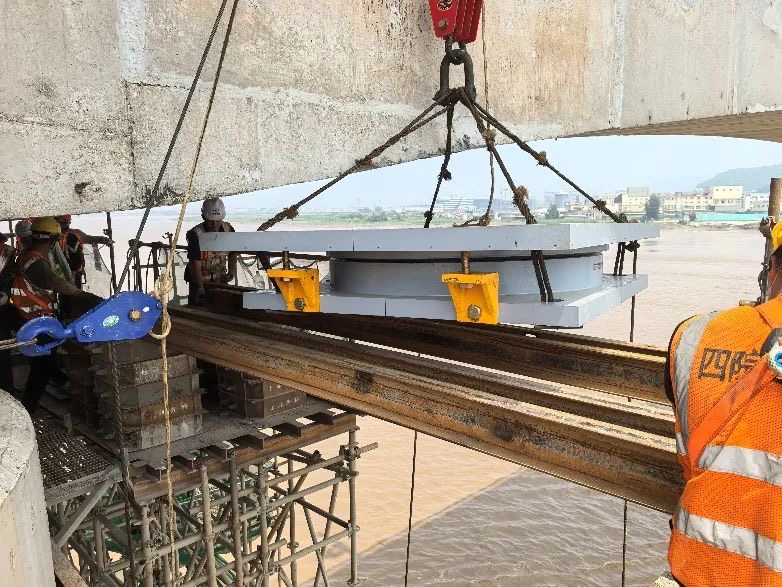
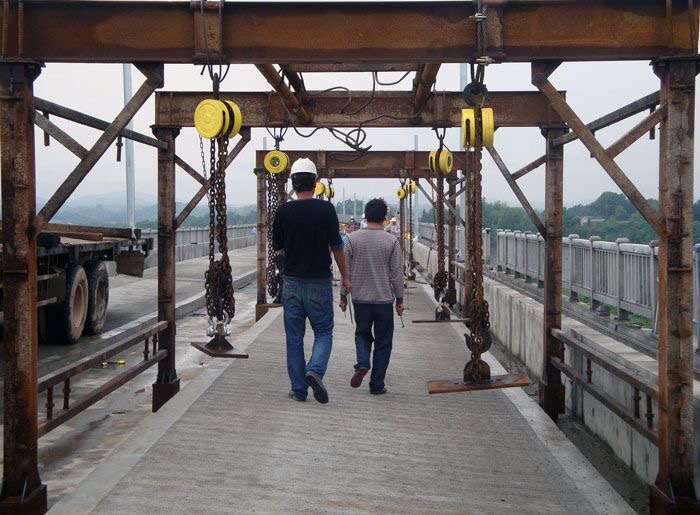
A recorded JUNYUNHOIST importer case involving 2,000 units shows what written specification discipline looks like in practice. Those units were distributed through local stores and used in long-term bridge and construction processes, with recorded service life exceeding two years and low loss. The case was documented as a response to insufficient durability in long-term construction applications — a risk that is managed before the first order is placed, not after.
Chain Block Market Context: Why Long-Term Supply Terms Matter More Now
The global chain block market was valued at approximately USD 1.95 billion in 2024, according to Intel Market Research. Broader chain hoist coverage, which includes electric units, is projected to reach USD 3.9 billion by 2034, according to Dataintelo. Within that picture, manual chain pulley blocks are estimated to account for about 48% of the total product segment share in 2026 (Fact.MR) — the manual equipment that most importers and distributors actually keep in stock remains the volume core of the category.
Production weight sits heavily in Asia. Asia Pacific dominated the chain hoist market in 2025 with a 41.3% revenue share, driven by rapid industrialization in China and India (Dataintelo). At component level, China’s exports of parts for lifting and handling equipment under HS 843139 reached USD 1.36 billion in 2024 (UN Comtrade / WITS), which reflects how much of the category’s supply chain — not only finished hoists — flows through Chinese manufacturing.
Demand is also concentrated by application. Construction sites are the largest application segment for chain blocks, contributing approximately 30% to 54% of global demand depending on the source (Stratview Research / Fact.MR). That concentration matters for partnership terms, because construction demand is project-driven and uneven. Capacity and lead-time commitments are tested precisely when several projects overlap.
The competitive structure explains why the evaluation questions look the way they do. Kito Crosby, formed by the merger of Kito and The Crosby Group, reported USD 1.1 billion in revenue for 2024, and Columbus McKinnon Corporation holds a strong presence in the 0.5–20 ton capacity range. Tier-one brands dominate specification-driven project work and premium distribution. Integrated manufacturers running OEM/ODM production serve a different buyer — importers, wholesalers, and channel partners who need flexible customization, documented specifications, and shorter order cycles.
Regulation adds a second layer. In the European market, chain blocks must comply with EN 13157, which specifies safety requirements for hand-powered lifting equipment. In the United States, ASME B30.16 governs the construction, installation, inspection, and maintenance of overhead hoists, including hand chain-operated units. Compliance documentation is therefore not a marketing line; it is a partnership prerequisite in both regions.
What a Long-Term Chain Block Supply Partnership Covers
OEM/ODM customization: what can change, and within which limits
Baoding Junyun Hoisting Machinery Co., Ltd. operates on an OEM/ODM production model, and the customization scope is defined in four categories rather than left open: housing color; load-bearing chain length; accessory quality tier adjusted according to the customer’s needs to reach the best achievable price; and customization against the customer’s usage scenario, including stainless steel and explosion-proof variants.
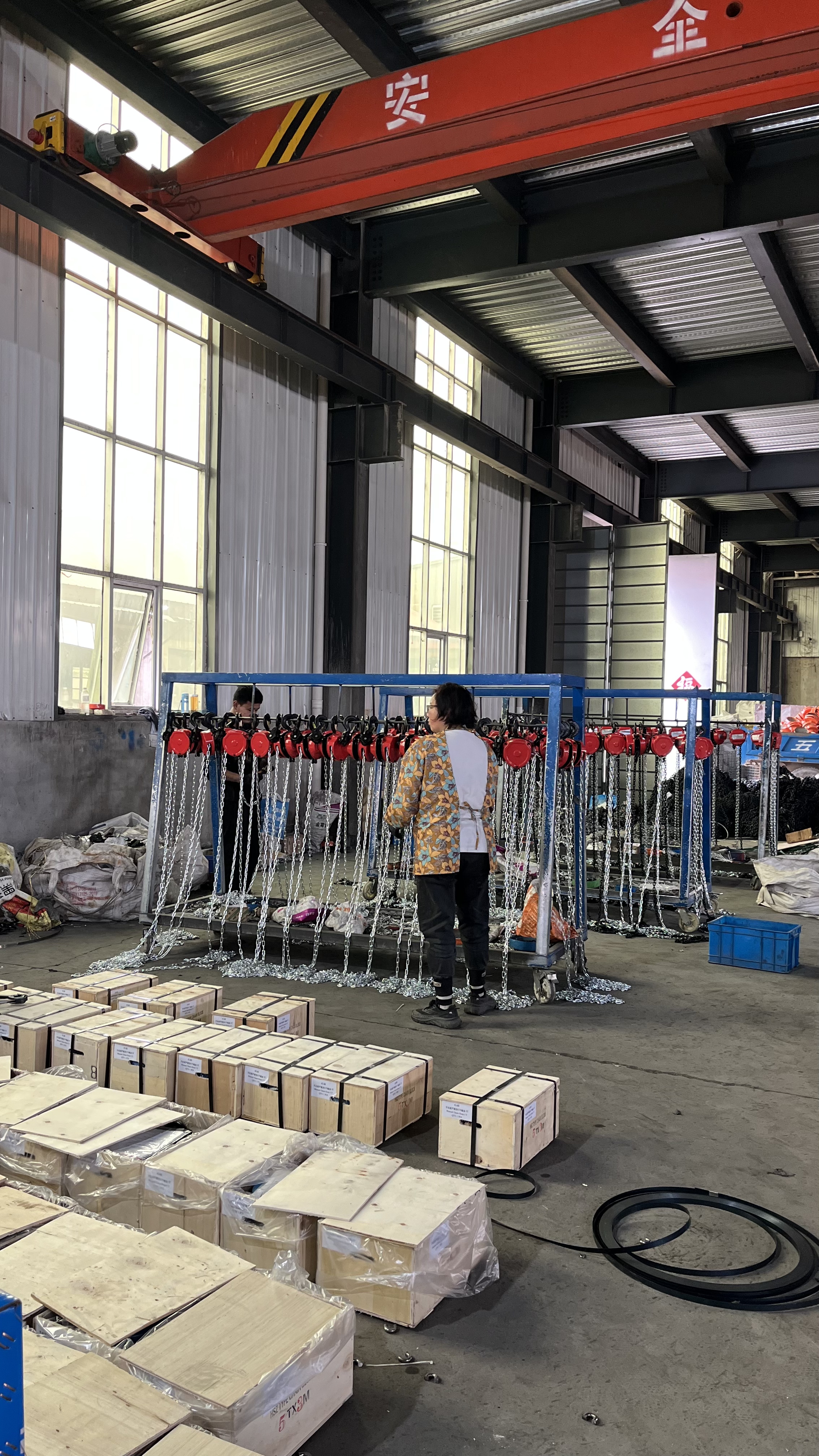
The commercial frame around that scope is fixed and quotable. The minimum order quantity is 50 PCS, monthly production capacity is 15,000 pcs, and standard lead time runs 15–20 days. The product families available to a partner include the VD chain block, VT chain block, HSZ chain block, HSC chain block, VD-II chain block, and the VA and VL lever blocks.
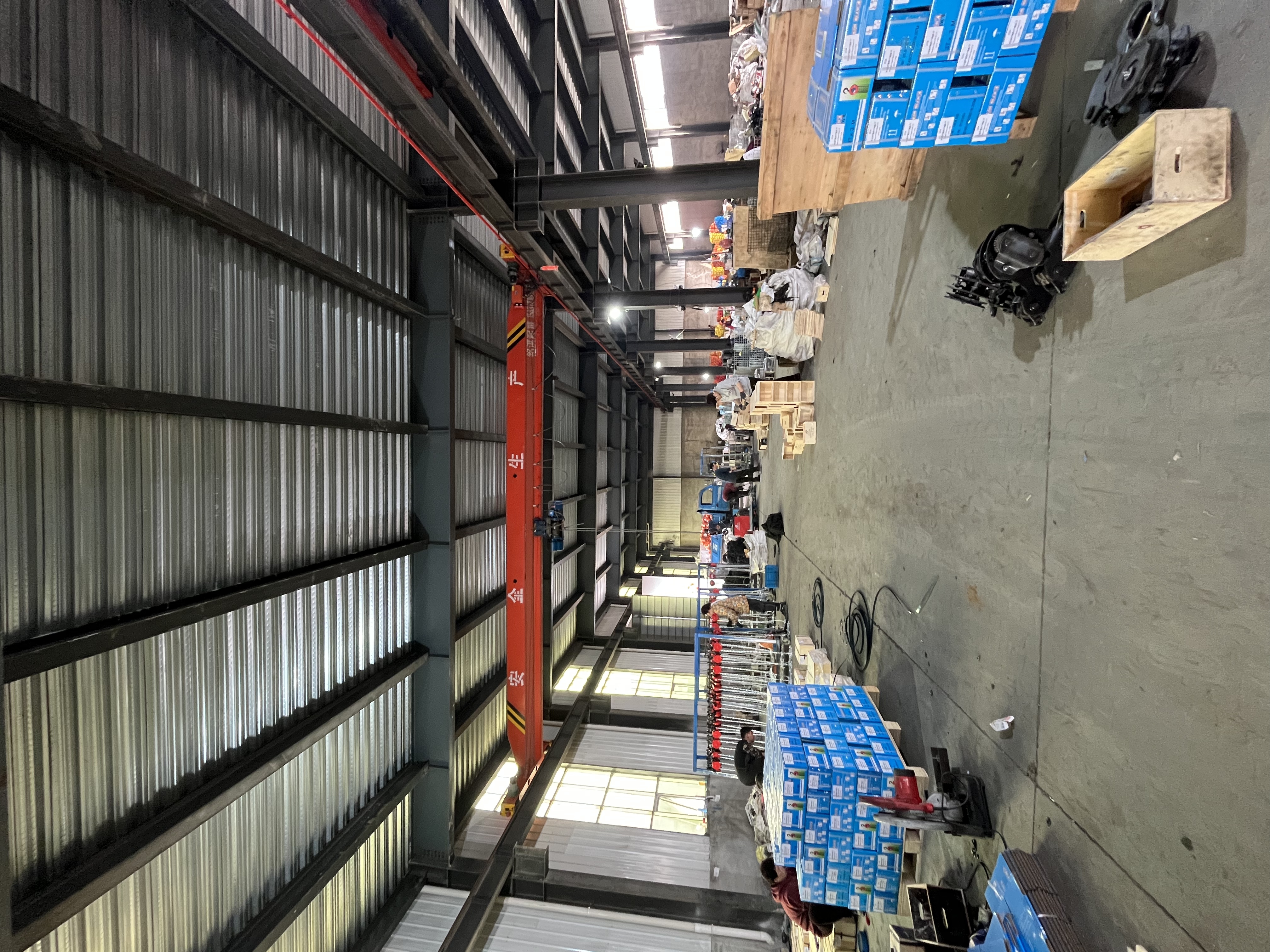
The supplying entity behind these terms was established in 2018 in Qingyuan District, Baoding City, Hebei Province, and runs an eight-person R&D team. Roughly 80% of output is exported, with established shipments to Vietnam, India, Russia, the United Arab Emirates, Brazil, Türkiye, the Middle East, and Southeast Asia. For a distributor, that mix matters: it means the customization requests most likely to arise in those markets have already been produced and shipped before.
Compliance: the standards behind the CE marking
The VD chain block specification references ISO 16872, EN 13157, and ASME B30.21, and states that the units are CE marked. Load chain is produced to Grade V (80) or Grade T in accordance with DIN EN 818-7. Quality control is stated as 100% testing rather than batch sampling.
The safety factor follows the same logic. The verified values are ≥ 4:1 on the chain and ≥ 5:1 on structural parts — consistent with the 4:1 standard safety factor that applies to EN 13157-compliant chain blocks. For a buyer distributing into the European Union, that is the figure to quote back in a compliance conversation; for a buyer in the United States, the equivalent reference point is ASME B30.16.
What a partner should actually collect is not a verbal assurance but the certificate copies with scope, issuing body, and validity dates, filed against the specific order. The written standard list is the starting point for that request, not a substitute for it.
After-sales specification clarity: the numbers that make spare parts matchable
After-sales support for lifting equipment only works if the specification baseline is complete. The verified VD chain block values below are the ones that determine whether a replacement chain, hook, or hand chain actually fits what a customer already owns.
| Specification item | Verified value (VD chain block) |
|---|---|
| Rated load capacity | 0.5 – 50 t |
| Standard lift height | 3 m (2.5–12 m optional) |
| Number of chain falls | 1 – 4, depending on capacity |
| Load chain grade | Grade V (80) or Grade T, according to DIN EN 818-7 |
| Load chain diameter | 6.3 – 11.2 mm (varies with capacity) |
| Hand chain type | Round link, galvanised or zinc-plated |
| Hand chain length | Standard = lift height + 0.5 m slack |
| Pull force on hand chain | ≤ 35 daN (350 N) up to rated load |
| Minimum headroom / hook distance | 300 – 1000 mm, model dependent |
| Hook opening | 24 – 55 mm |
| Hook material | Forged alloy steel, heat-treated |
| Safety factor | ≥ 4:1 (chain) / ≥ 5:1 (structural parts) |
| Operating temperature range | –20°C to +50°C (standard grease) |
| Protection / finish | Painted housing (RAL 2000 or 1007), corrosion-resistant chains |
| Chain material | 20Mn2, 25MnV, 23MnNiMoCr54 |
| Standards | ISO 16872, EN 13157, ASME B30.21, CE marked |
Read as an after-sales document, three of these rows carry the most weight. Hand chain length is defined as lift height plus 0.5 m of slack, so a replacement hand chain can be ordered from the lift height alone. Load chain diameter is published as a range of 6.3–11.2 mm that varies with capacity, so the capacity and chain diameter must be recorded together at order stage. The operating temperature range of –20°C to +50°C with standard grease sets the boundary for outdoor and cold-storage applications, and it is the first value worth re-checking when a distributor sells into markets with extreme seasonal temperatures.
Spare parts and long-term support
Each container is supplied with a certain number of easily damaged spare parts, and those parts are replenished as needed based on subsequent usage. This is a materials-based support model rather than a warranty-based one: the partner receives usable parts with the shipment instead of filing a claim later. Combined with a published specification table, it removes the most common failure point in cross-border lifting equipment channels — an unidentifiable part with no reference number.
How to Qualify and Onboard a Chain Block Supply Partner: Six Steps
Step 1 — Lock the specification baseline before discussing price. Record rated capacity, standard lift height, number of chain falls, load chain diameter, and hand chain length for every model in the proposed range. These are the values that determine spare-part matching later.
Step 2 — Confirm the compliance file. Request certificate copies and the standard list relevant to your market: EN 13157 for the European Union, ASME B30.16 for the United States, plus the manufacturer’s referenced standards (ISO 16872, EN 13157, ASME B30.21) and the load chain grade under DIN EN 818-7.
Step 3 — Test the customization boundary. Take the four stated categories — color, load-bearing chain length, accessory quality tier, and scenario-based builds such as stainless steel or explosion-proof — and confirm in writing which ones apply to your order and which do not.
Step 4 — Match order size to capacity and lead time. With a 50 PCS minimum order, 15,000 pcs monthly capacity, and a 15–20 day lead time, a distributor can plan replenishment cycles against a known production rate instead of a verbal estimate.
Step 5 — Agree the after-sales mechanics. Confirm the spare-part provision per container and the replenishment rule based on subsequent usage, and record which parts are covered.
Step 6 — Establish one working contact channel. WhatsApp, email, phone, website, and brochure are all live channels. Choose one as the primary route for technical questions and one as the record channel for written confirmations, so that specification changes never arrive as verbal instructions.
Use Cases: Where Partnered Chain Blocks Operate
Application fit is easier to evaluate when the operating environment is mapped against specific verified values rather than against a general capacity claim. The table below connects common operating conditions to the specification item that should be confirmed for each.
| Operating environment | What the buyer must confirm | Relevant verified specification |
|---|---|---|
| Workshop and factory hoisting | Repeated short lifts across mixed loads | Rated capacity 0.5–50 t; 1–4 chain falls depending on capacity |
| Construction site chain block work | Outdoor exposure across a full project cycle | Operating range –20°C to +50°C with standard grease; painted housing RAL 2000 or 1007 with corrosion-resistant chains |
| Warehouse and logistics handling | Routine lifts at a fixed working height | Standard lift height 3 m, with 2.5–12 m optional |
| Mining and shipbuilding operations | Heavy loads, abrasive or humid conditions | Grade V (80) or Grade T load chain to DIN EN 818-7; load chain diameter 6.3–11.2 mm; forged, heat-treated alloy steel hooks |
| Small space operation | Restricted headroom above the load | Minimum headroom / hook distance 300–1000 mm, model dependent |
| Heavy duty lifting | High rated loads with a defined safety margin | Safety factor ≥ 4:1 on chain, ≥ 5:1 on structural parts |
| Bridge and railway construction | Multi-year project duration and repeat use | Recorded case: service life exceeding two years in long-term bridge and construction use, with low loss |
| Petrochemical and power industry | Corrosive or hazardous environments | Scenario-based customization is available for stainless steel and explosion-proof requirements, subject to confirmation per order |
Compliance and Specification Comparison Reference
Buyers comparing manufacturers across regions frequently mix up the standards involved. Each framework covers a different thing, and a supplier that answers only one of them leaves a gap in the compliance file.
| Market / framework | Reference standard | What it covers | Verified reference point |
|---|---|---|---|
| European Union | EN 13157 | Safety requirements for hand-powered lifting equipment | The standard safety factor for EN 13157-compliant chain blocks is 4:1 |
| United States | ASME B30.16 | Construction, installation, inspection and maintenance of overhead hoists, including hand chain-operated units | Request documentation scope for the US market before ordering |
| International product standard | ISO 16872 | Chain block standard referenced by the manufacturer | Listed in the VD chain block specification |
| Load chain | DIN EN 818-7 | Load chain grade system applied to hoist chain | Grade V (80) or Grade T load chain |
| US manual hoist reference | ASME B30.21 | Referenced in the manufacturer’s VD chain block specification | Listed alongside ISO 16872 and EN 13157 |
| European product marking | CE marking | Product conformity marking for the European market | VD chain blocks are stated as CE marked |
The practical takeaway: a long-term partnership should be able to produce documents for the market you actually sell into, not a generic certificate pack. When a partner lists the specific standards above and shows a matching safety factor, that is a materially stronger answer than a general compliance statement.
Chain Block Partnership FAQ
Is JUNYUNHOIST chain block production CE certified and aligned with ISO standards?
The VD chain block specification lists ISO 16872, EN 13157, and ASME B30.21, and states that the units are CE marked. Load chain is produced to Grade V (80) or Grade T under DIN EN 818-7, and quality control is stated as 100% testing. Buyers distributing into the European Union should request EN 13157 documentation; buyers in the United States should request documentation covering ASME B30.16, which governs the construction, installation, inspection, and maintenance of overhead hoists including hand chain-operated units. Collect certificate copies with scope, issuing body, and validity dates for the compliance file rather than relying on a general statement.
What safety factor and operating limits apply to these chain blocks?
The verified safety factor is ≥ 4:1 on the chain and ≥ 5:1 on structural parts, which is consistent with the 4:1 standard safety factor for EN 13157-compliant chain blocks. Rated capacity spans 0.5–50 t, the operating temperature range is –20°C to +50°C with standard grease, and the pull force on the hand chain is ≤ 35 daN (350 N) up to rated load. Standard lift height is 3 m, with 2.5–12 m optional.
What OEM/ODM customization can a long-term chain block partner request?
Four categories are verified. First, housing color. Second, load-bearing chain length. Third, accessory quality adjusted according to customer needs to reach the best achievable price. Fourth, customization against the customer’s usage scenario, including stainless steel and explosion-proof variants. Production mode is OEM/ODM with a minimum order of 50 PCS. Any customization should be written against the specification baseline so that repeat batches match the first delivery.
Which specification values should be written into an after-sales file?
The values that determine whether spare parts match: load chain diameter 6.3–11.2 mm, number of chain falls 1–4, hand chain length equal to lift height plus 0.5 m slack, hand chain type round link galvanised or zinc-plated, hook opening 24–55 mm, minimum headroom 300–1000 mm, and load chain grade (Grade V (80) or Grade T to DIN EN 818-7). Recording these at order stage is what makes a replacement order possible without a physical sample.
What are the MOQ, monthly capacity, and lead time for a partnership order?
The stated minimum order quantity is 50 PCS, monthly production capacity is 15,000 pcs, and standard lead time is 15–20 days. For a distributor planning replenishment, the practical planning sequence is capacity first, then lead time, then order size — because accessory quality tier and chain length customization are the variables that affect cost, while capacity and lead time stay fixed in the published terms.
Can a buyer validate the product before committing to a long-term agreement?
The smallest verified commercial order unit is the stated MOQ of 50 PCS, which functions as the first validation batch before a partnership agreement is signed. Sample availability, sample quantity, and freight terms are not part of the published specification, so the practical step is to confirm them directly with the sales team by WhatsApp or email before placing a partnership order, using the verified specification table above as the reference for what will be tested.
What after-sales support and durability evidence exist for long-term use?
Each container is supplied with a certain number of easily damaged spare parts, and those parts are replenished as needed based on subsequent usage. On durability, a recorded importer case involving 2,000 units — distributed through local stores and used in long-term bridge and construction processes — shows a service life exceeding two years with low loss. That case was documented as a response to insufficient durability in long-term construction applications.
How do I reach JUNYUNHOIST about a long-term supply partnership?
Five contact routes are available. WhatsApp: +86 134-8345-2631. Email: Junyunsteven@163.com. Phone: +86 13483452631. Website: www.junyunhoist.com. The full product catalog is available as a downloadable brochure, linked in the section below. The registered address is Donglu Village, Qingyuan District, Baoding City, Hebei Province, China. For evaluation-stage buyers, the fastest starting point is a WhatsApp message listing capacity range, lift height, target market, and customization requirement — the specification table in this article is written to match exactly those inputs.
Next Step: Samples, Quotation, and the Full Catalog
Long-term chain block supply works when the specification baseline, compliance file, spare-part terms, capacity, and lead time are all in writing before the first container ships. Everything in this article — from the 0.5–50 t capacity range and the ≥ 4:1 chain safety factor to the 50 PCS minimum order and the 15–20 day lead time — maps directly onto the questions a distributor or importer needs answered during evaluation.
Request a Quotation or the Full Chain Block Catalog
Send your capacity range, lift height, target market, and any OEM/ODM requirement to the JUNYUNHOIST sales team. Brochure, specification details, and spare-part terms are available on request.
WhatsApp: +86 134-8345-2631 | Email: Junyunsteven@163.com | Phone: +86 13483452631
Download brochure: JUNYUNHOIST Product Brochure (PDF)
Website: www.junyunhoist.com | Blog: blog.junyunhoist.com
Third-party market data cited in this article is attributed to Intel Market Research, Dataintelo, Fact.MR, Stratview Research, UN Comtrade / WITS, CEN, and ASME. Product specifications, customization scope, capacity, lead time, MOQ, and after-sales terms reflect the verified VD chain block specification and the manufacturer’s stated operating terms.
Have Questions or Need More Details?
Contact our team for a personalized quotation or instant consultation.
Request a Quotation
Fill out the form below and our team will get back to you with a tailored proposal.
WhatsApp Direct Chat
Prefer to chat in real-time? Message us on WhatsApp for instant assistance & quick answers.
- Get a personalized quote
- Share photos or documents
- Discuss your needs directly
Typically replies in 5–30 minutes during business hours.