Evaluating a Chain Block Manufacturer's True Capability: From Certification to Custom Fabrication
A chain block manufacturer's real capability can be verified in four places: who controls the manufacturing process, which standards and test records the plant can hand over, whether it can customize a unit for a specific job, and whether it can repeat the same delivery at scale. Catalog specifications and unit price answer none of those questions on their own.
Baoding Junyun Hoisting Machinery Co., Ltd. — trading under the brand JUNYUNHOIST — is a vertically integrated manufacturer and trading company based in Baoding, Hebei, China, founded in 2018. It manufactures VD, VT, HSZ and HSC chain blocks as well as VA and VL lever blocks, and reports that approximately 80% of its output is exported to markets including India, Russia, Vietnam, Brazil, Türkiye and Dubai. This article sets out the verification steps a buyer can apply to any chain block supplier, and shows what the evidence looks like when it is properly documented.
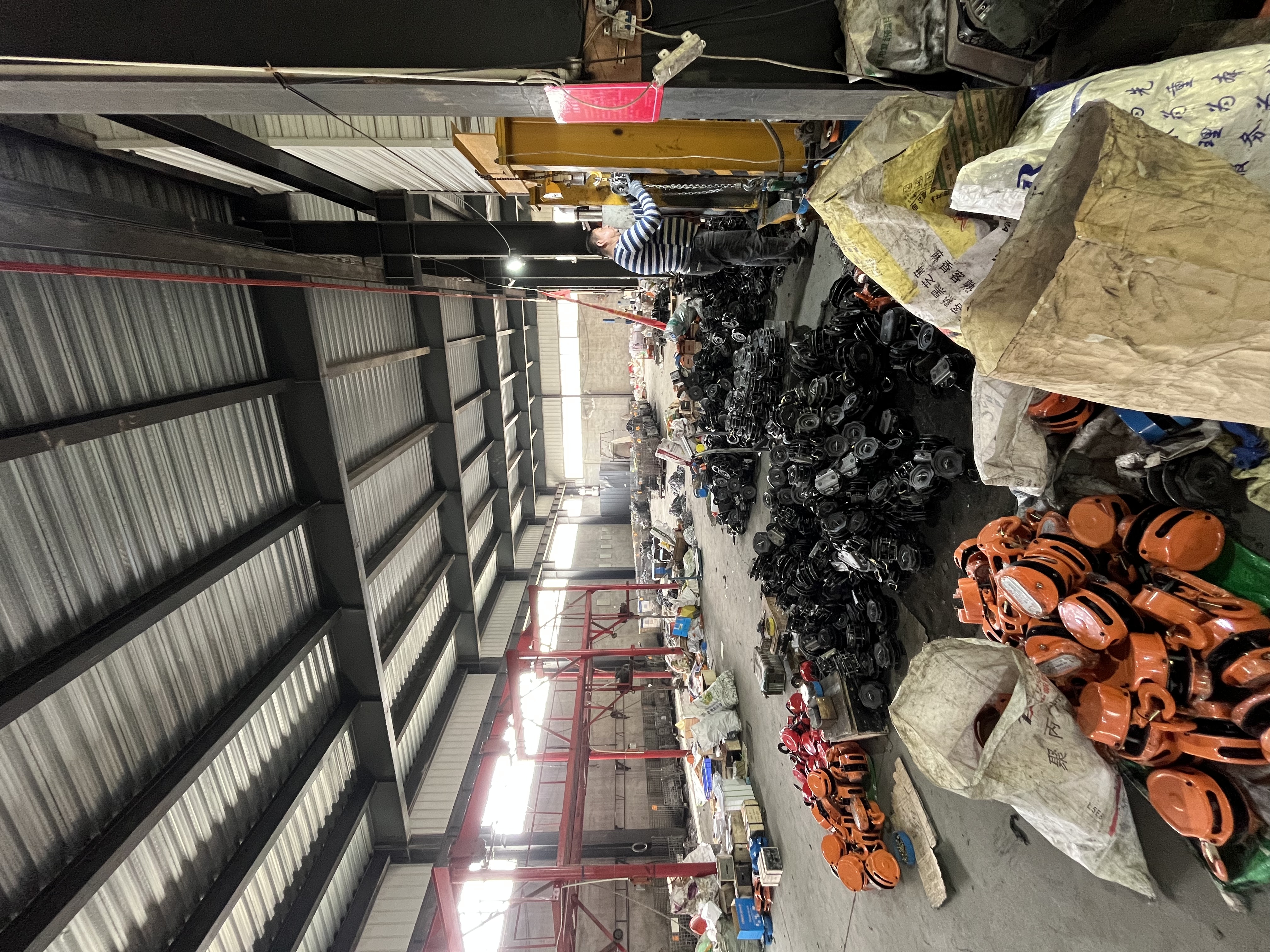
Chain block production at Baoding Junyun Hoisting Machinery Co., Ltd. (JUNYUNHOIST), Baoding, Hebei, China.
Why a Product Catalog Cannot Prove Manufacturing Capability
A catalog page describes a finished product, not the system that produced it. Two suppliers can list near-identical headline specifications — rated capacity from 0.5 t to 50 t, a standard 3 m lift height, one to four chain falls — while operating fundamentally different manufacturing setups. One may forge and heat-treat its own hooks and test every unit before packing; another may assemble from bought-in components and inspect on a sampling basis. On paper, the two look the same.
The difference only becomes visible at three moments, and all three are expensive to discover late:
- When customization is requested. A supplier without in-house tooling and engineering often accepts a custom requirement verbally, then delays it once production reality arrives.
- When volume increases. A pilot order of a few dozen units can be assembled in almost any workshop. Monthly output in the thousands requires process control, not improvisation.
- When documentation is demanded. Project buyers, distributors and importers increasingly need to state which standard a lifting device was built to, and to show test evidence rather than a marketing claim.
The stakes are higher than in most industrial categories because a chain block is a safety-critical lifting device. Under EN 13157, the European standard for hand-powered lifting equipment, the standard safety factor is 4:1 — meaning the load chain and structure are designed to hold at least four times the rated load. A supplier that cannot state its safety factor, or that treats the question as a formality, is telling you something about how it treats production.
Industry Background: A Large, Application-Led Market Served by Very Different Supplier Types
The chain block category is large, stable and heavily weighted toward manual equipment and construction work — which is exactly why supplier quality varies so widely. Publicly available market data gives the scale:
- The global chain block market was valued at approximately USD 1.95 billion in 2024 (Intel Market Research).
- The wider chain hoist market, including electric and manual units, is projected to reach USD 3.9 billion by 2034 (Dataintelo).
- Manual chain pulley blocks are estimated to hold about 48% of total product segment share in 2026 (Fact.MR).
- Construction sites are the largest application segment, contributing roughly 30% to 54% of global demand depending on the source (Stratview Research / Fact.MR).
- Asia Pacific held a 41.3% revenue share in 2025, driven by industrialization in China and India (Dataintelo).
- China's exports of parts for lifting and handling equipment (HS 843139), which include chain block components, reached USD 1.36 billion in 2024 (UN Comtrade / WITS).
At the top of the market sit global tier-one suppliers. Kito Crosby, formed by the merger of Kito and The Crosby Group, reported USD 1.1 billion in revenue for 2024, and Columbus McKinnon is widely recognized as a leading competitor with a strong presence in the 0.5–20 ton capacity range. At the other end sit pure trading intermediaries with no production control at all.
The practical consequence is that most project-level and OEM buyers do not fall neatly into either group. They need units that match a specific lift, often under their own brand or in a specific configuration, at quantities far below tier-one program supply levels — but with documentation and consistency that a trader cannot provide. That middle ground is where capability verification decides the outcome, and where a structured evaluation replaces a specification comparison.
The Six Capability Layers That Decide Whether a Chain Block Supplier Can Deliver
Capability can be broken into six layers, each of which produces evidence a buyer can request, check and file. The layers below are illustrated with the facts Baoding Junyun Hoisting Machinery Co., Ltd. publishes about its own operation, so that the reader can see what a documented answer looks like.
1. Manufacturing Control and Repeatable Output
The first question is simple: does the supplier own the production process, or coordinate it? JUNYUNHOIST operates with a monthly production capacity of 15,000 units and an annual output of approximately 200,000 units, with export accounting for about 80% of sales. A capacity figure matters less as a boast than as a scheduling constraint: it tells a buyer how much room exists between their order date and the production calendar.
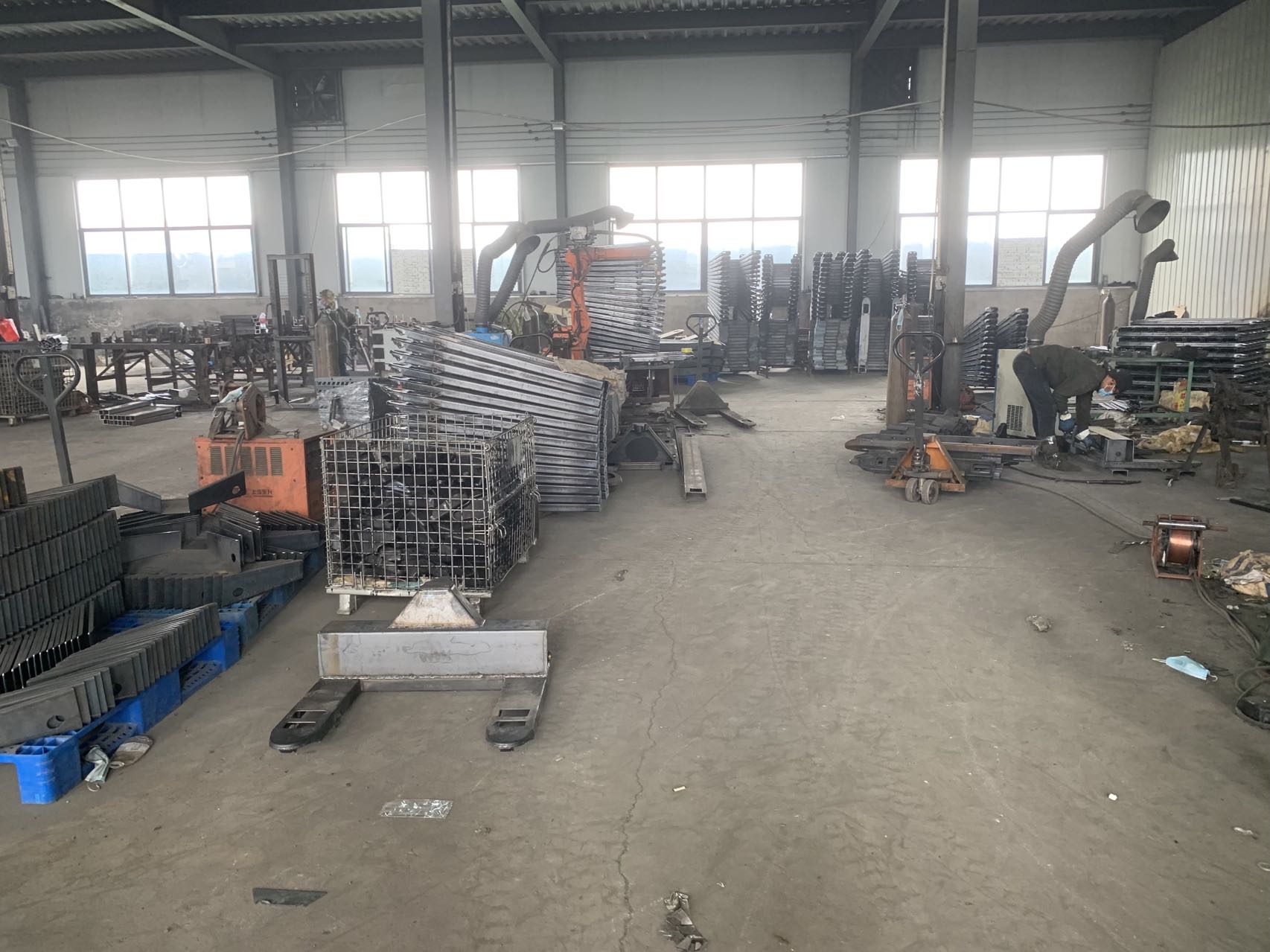
Production at the same Baoding facility that manufactures chain blocks, lever blocks and pallet trucks.
2. Certification and Test Documentation
Certification is the layer buyers most often accept on trust and later regret. The chain block specifications published for the VD series reference ISO 16872, EN 13157 and ASME B30.21, with CE marking and a declared safety factor of at least 4:1 for the load chain and at least 5:1 for structural parts. For US-market projects, ASME B30.16 governs overhead hoists, including hand chain-operated units.
Documentation is what turns those names into evidence. The manufacturer states that quality control includes 100% testing, and that acceptance criteria for export orders include a pre-shipment test and third-party inspection such as SGS. When comparing suppliers, the useful question is not "are you certified" but "which standard applies to this model, and what test record will accompany the shipment".
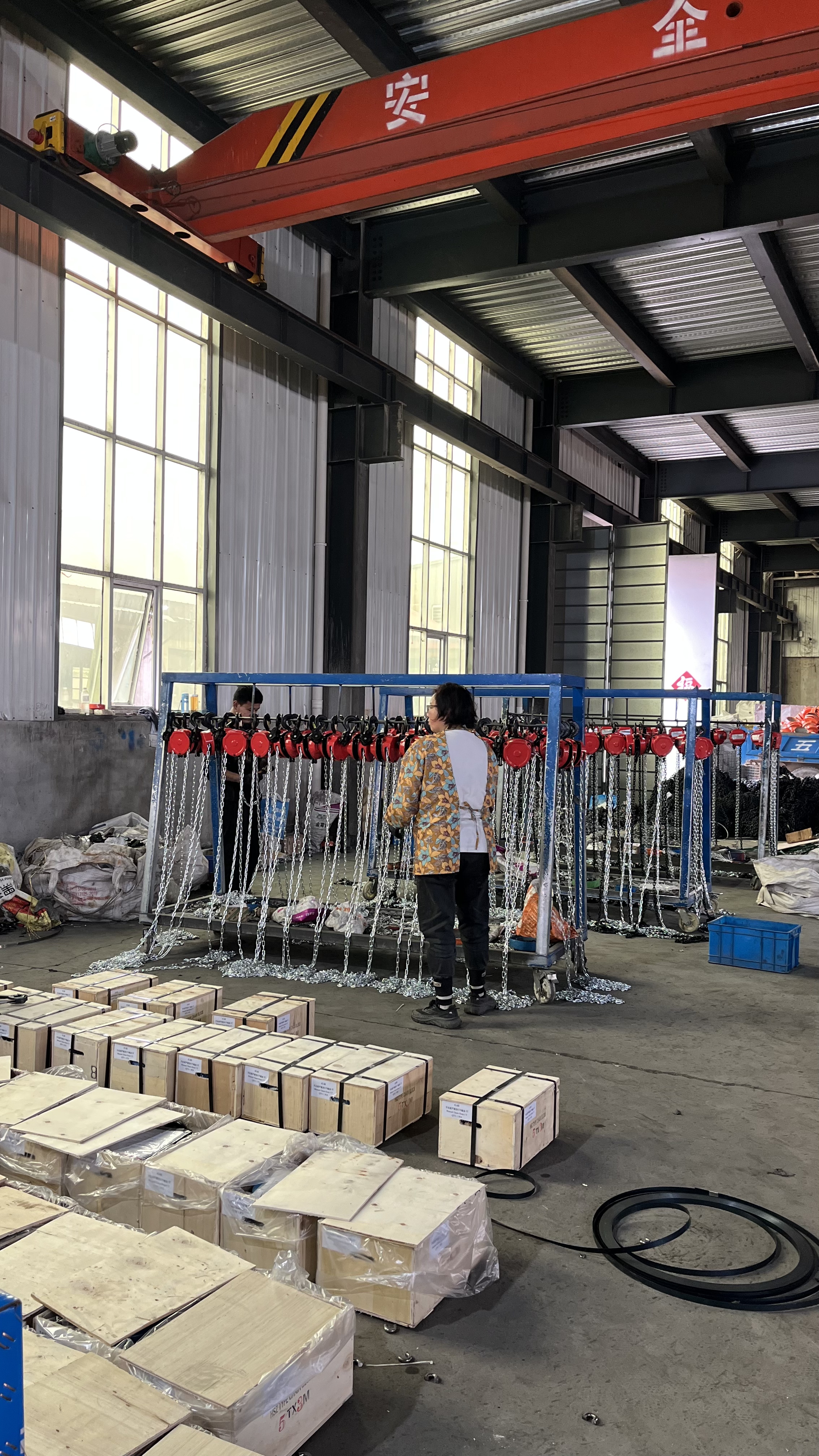
Chain block assembly area — 100% testing is applied as part of the production quality control process.
3. In-House R&D and Materials Engineering
An engineering team is what allows a manufacturer to answer questions instead of repeating a catalog. JUNYUNHOIST maintains an in-house R&D team of 8 engineers. The technical output of that team is visible in the specifications: load chains are produced in alloy steels including 20Mn2, 25MnV and 23MnNiMoCr54, in Grade V (80-grade) or Grade T (per DIN EN 818-7), with diameters from 6.3 mm to 11.2 mm depending on capacity. Hooks are made from forged alloy steel and heat-treated.
This is where the loose vocabulary of "carbon steel chain block", "alloy steel chain block", "forged steel chain block" or "high-strength steel chain block" should be converted into a grade and a standard. A 2-ton unit built on a higher-grade load chain behaves differently in high-cycle duty, high humidity or low temperature than a lower-grade unit of the same nominal capacity. Standard units are also rated for an operating temperature range of –20°C to +50°C with standard grease, a figure worth checking against the installation environment.
4. OEM/ODM and Custom Fabrication
Custom fabrication is the layer that separates a manufacturer from a reseller, because it requires control over tooling, finishing and component sourcing. The manufacturer provides OEM/ODM production services globally, with four documented customization routes:
- Colour — housing finish adapted to a brand's identity.
- Load-bearing chain length — lift height adjusted to the actual installation rather than taken from a standard list.
- Accessory quality adjustment — component grade tuned to the customer's target price point without changing the core lifting structure.
- Scenario-based builds — for example stainless steel or explosion-proof configurations where the working environment demands them.
For a buyer, the value of this list is that each item is testable. A supplier that offers "customization" without naming what can be changed is offering flexibility in principle and obstacles in practice.
5. Capacity, Minimum Order Quantity and Commercial Terms
Commercial parameters reveal how a factory is organized. The documented position here is a minimum order quantity of 50 pieces, a production lead time of 15–20 days, and delivery terms of FOB, EXW, CIF and CFR. Payment terms are 30% T/T in advance with 70% T/T against a copy of the bill of lading.
These figures matter in combination. A 50-piece MOQ with a 15–20 day lead time and a 15,000-unit monthly capacity means a buyer can start with a validation order and scale into container volume without changing supplier — the commercial structure supports the transition from evaluation to execution.
6. After-Sales Spares and Long-Term Availability
Lifting equipment is maintained over years, so spare-part supply is part of the product, not an add-on. The documented after-sales arrangement is that each container is supplied with a quantity of easily damaged spare parts, with replenishment based on actual usage after delivery.
That arrangement addresses the two common failure points in after-sales support: the first breakdown, when a missing small component stops a job, and the long term, when a distributor needs a replenishment route rather than a one-off goodwill gesture.
Step-by-Step: How to Evaluate a Chain Block Manufacturer Before You Order
- Define the lift before contacting suppliers. Fix the rated capacity, lift height, available headroom, chain-fall configuration and the environment (dust, moisture, temperature). The specification range for this product family runs from 0.5 t to 50 t, with minimum headroom between 300 mm and 1,000 mm depending on model, so an imprecise brief will produce an imprecise quote.
- Request the documentation set, not the brochure. Ask which standards apply (ISO 16872, EN 13157, ASME B30.21, CE marking), what the declared safety factor is, and how quality management is structured at plant level. If your market or customer requires a formal quality management standard such as ISO 9001, ask which certificate covers the site and its scope — not just whether the company "has ISO".
- Test customization feasibility with a concrete requirement. Give one real change — a non-standard chain length, a specific colour, a stainless or explosion-proof build — and observe how the supplier responds. A manufacturer with in-house engineering will return a feasibility answer and a revised lead time.
- Validate before shipment. Use the acceptance route of pre-shipment testing combined with third-party inspection (SGS) so that conformity is confirmed while the goods are still in the factory, when corrections are still cheap.
- Confirm commercial terms and supply rhythm. MOQ, Incoterms (FOB, EXW, CIF, CFR), payment schedule and the repeat-order lead time all belong in the written offer, not in a later negotiation.
- Plan the after-sales structure. Confirm which spare parts ship with the container, how replenishment is triggered, and who is responsible for technical guidance on maintenance.
One clarification is worth making early in the process: if the project brief mentions variable frequency control or remote monitoring, those requirements point to powered hoisting equipment rather than a manual chain block. Separating manual and powered lifting requirements before requesting quotes prevents suppliers from bidding the wrong product family — and prevents the most common comparison error in this category.
Where These Capabilities Matter: Applications and Use Cases
Capability requirements shift with the application, and the published industrial scope for this product family covers manufacturing, construction, logistics and warehousing, shipbuilding, mining, petrochemicals, the power industry, bridge engineering, railway construction, automotive repair, agriculture and stage construction.
- Workshop lifting equipment. The defining constraints are headroom, hand pull force (rated at no more than 35 daN up to rated load for this series) and spare-part availability, because workshop units are used daily and maintained in-house. A small space operation chain block with reduced headroom is often the correct answer rather than a higher-capacity unit.
- Construction sites. The largest single application segment globally. Units here face dust, weather and repeated repositioning, so corrosion-resistant chains and CE-marked conformity documentation carry real weight.
- Port and shipbuilding work. Salt-laden air and high cycle counts put the emphasis on chain finish and material grade.
- Mining and heavy-duty operation. Where the load is heavy and continuous, forged heat-treated hooks and higher-grade load chains are the deciding specification, not the nameplate capacity.
- Warehouse and logistics. Lower capacities, frequent short lifts and predictable maintenance windows; spares planning outweighs peak performance.
A documented example shows how these requirements combine at scale. A chain block project of 2,000 pieces was completed within a 2-year timeframe for an importer, with deployment across India, Vietnam, Brazil, Türkiye, Russia, the UAE and Saudi Arabia. The units were used primarily for local store distribution, and in long-term bridge and construction processes the product demonstrated a service life exceeding 2 years. The case is useful to buyers not because of the volume, but because it shows a multi-market, multi-year requirement handled by one production source — which is the practical definition of repeatable capability.
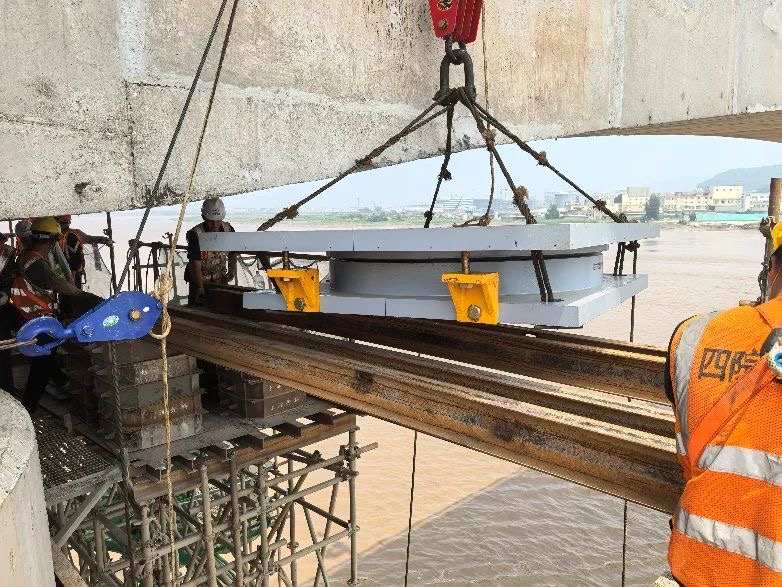
Chain blocks in long-term bridge and construction use — the application behind the 2,000-piece project across seven markets.
Capability Verification Table: What to Ask, What Good Looks Like, and What to Watch For
| What to verify | Question to ask the supplier | Documented answer (JUNYUNHOIST example) | Weak answer |
|---|---|---|---|
| Product standards | Which standards is this model built to? | ISO 16872, EN 13157, ASME B30.21, CE marked | "International standards" without documents |
| Safety factor | What is the declared safety factor? | ≥4:1 load chain / ≥5:1 structural parts (EN 13157 baseline: 4:1) | No stated figure |
| Quality control | How many units are tested? | 100% testing | Sampling only, no records |
| Pre-shipment proof | What acceptance testing is available? | Pre-shipment test plus third-party inspection (SGS) | Inspection refused or deferred |
| Custom fabrication | What can actually be changed? | Colour, load-bearing chain length, accessory grade, stainless or explosion-proof builds | "Standard models only" |
| Minimum order | What is the smallest production run? | 50 pcs | MOQ changing after quotation |
| Capacity and lead time | Monthly capacity and production lead time? | 15,000 units per month; 15–20 days | Lead time quoted with no capacity data |
| Spare parts | How are spares handled after delivery? | Easily damaged spares supplied with each container, replenished by usage | No spares arrangement |
| Commercial terms | Incoterms and payment schedule? | FOB, EXW, CIF, CFR; 30% T/T in advance, 70% against copy of B/L | Terms renegotiated after order |
Frequently Asked Questions
Which certifications should a chain block manufacturer be able to document before an order?
It depends on the destination market, but the documentation set is broadly the same. For Europe, EN 13157 specifies safety requirements for hand-powered lifting equipment and sets a standard safety factor of 4:1. For the United States, ASME B30.16 governs overhead hoists, including hand chain-operated units. The chain block specifications published by Baoding Junyun Hoisting Machinery Co., Ltd. reference ISO 16872, EN 13157 and ASME B30.21 with CE marking, and declare a safety factor of at least 4:1 for the load chain and at least 5:1 for structural parts. Buyers should request the standard reference and the test record for the specific model ordered, not a general compliance statement.
Can a manufacturer produce OEM chain blocks for workshop lifting equipment?
Yes, where OEM/ODM services are genuinely in place. JUNYUNHOIST provides OEM/ODM production services globally, with customization covering housing colour, load-bearing chain length, accessory grade adjustment to meet a target price, and scenario-specific builds such as stainless steel or explosion-proof versions. This matters for workshop lifting because headroom, hand pull force and duty cycle vary significantly between installations: minimum headroom in this series ranges from 300 mm to 1,000 mm depending on model, and the rated hand pull force is up to 35 daN at rated load. A standard catalogue unit may not fit the space, which is exactly the situation OEM configuration is designed to solve.
How does customization affect cost, and what is the smallest order a factory will accept?
The documented minimum order quantity is 50 pieces. Cost in this category is driven by four customization variables: housing colour and finish, load-bearing chain length beyond standard, accessory grade, and special materials such as stainless steel or explosion-proof construction. One lever buyers frequently overlook is deliberate component tuning — adjusting accessory quality according to the customer's needs to reach the best price — which allows a project to meet a budget without weakening the core lifting structure. Payment terms are typically 30% T/T in advance with 70% against a copy of the bill of lading, and delivery can be arranged on FOB, EXW, CIF or CFR terms.
How can a buyer validate quality before shipment rather than after delivery?
Validation should be built into the acceptance criteria. The documented quality control process applies 100% testing, and export orders can be accepted on the basis of a pre-shipment test combined with third-party inspection such as SGS. Because the standard production lead time is 15–20 days, there is normally enough time within a conventional procurement schedule to arrange inspection while the goods are still at the factory — the point at which corrections are still inexpensive.
What is the typical lead time and monthly capacity for an OEM chain block order?
For this manufacturer, production capacity is 15,000 units per month, with a lead time of 15–20 days and a minimum order quantity of 50 pieces — a combination that allows a buyer to place a validation order first and scale into repeat container volumes on the same production line. To move from evaluation to execution, you can request a quotation, a sample configuration review or the full product catalogue directly from the manufacturer: email Junyunsteven@163.com, call or message +86 134-8345-2631 on WhatsApp, or download the company brochure for the full model range.
Conclusion: Buy Verified Capability, Not a Catalogue Page
A chain block purchase is a risk decision dressed up as a specification decision. The six layers that determine the outcome — manufacturing control, certification and testing, in-house R&D, OEM/ODM custom fabrication, capacity and commercial structure, and after-sales spares — are all verifiable before an order is placed, provided the buyer asks for evidence rather than assurance. A supplier that can name its standards, quote its safety factor, explain its material grades, describe exactly what it can customize, and state its MOQ and lead time in writing is a supplier whose performance can be predicted. One that answers those questions vaguely will remain unpredictable at every stage that follows.

Baoding Junyun Hoisting Machinery Co., Ltd. (JUNYUNHOIST)
Donglu Village, Qingyuan District, Baoding City, Hebei Province, China
Website: www.junyunhoist.com | Blog: blog.junyunhoist.com
Email: Junyunsteven@163.com | Tel / WhatsApp: +86 134-8345-2631
Download the Product Brochure Request a Quote or Sample Review
Have Questions or Need More Details?
Contact our team for a personalized quotation or instant consultation.
Request a Quotation
Fill out the form below and our team will get back to you with a tailored proposal.
WhatsApp Direct Chat
Prefer to chat in real-time? Message us on WhatsApp for instant assistance & quick answers.
- Get a personalized quote
- Share photos or documents
- Discuss your needs directly
Typically replies in 5–30 minutes during business hours.