Chain Block Partnership FAQ: Terms, Acceptance & Support
Chain Block Partnership FAQ: Terms, Acceptance & Support
For repeat or long-term chain block supply, the buying decision is not only a unit price. A distributor, importer, or industrial buyer moving from Decision to Execution needs a supply agreement that fixes commercial terms, acceptance evidence, compliance documents, after-sales scope, and change control for OEM/ODM orders. This FAQ answers those questions for buyers evaluating Baoding Junyun Hoisting Machinery Co., Ltd. (JUNYUNHOIST), a Chinese manufacturer of VD, VT, HSZ, HSC, and VD-II chain blocks and VA and VL lever blocks. JUNYUNHOIST reports approximately 138 employees, 8 R&D engineers, and VD chain block capacities from 0.5 to 50 t. Published contact routes are www.junyunhoist.com, Junyunsteven@163.com, phone +86 13483452631, and WhatsApp +86 134-8345-2631.
The problem: a one-off quote does not protect a repeat-order program
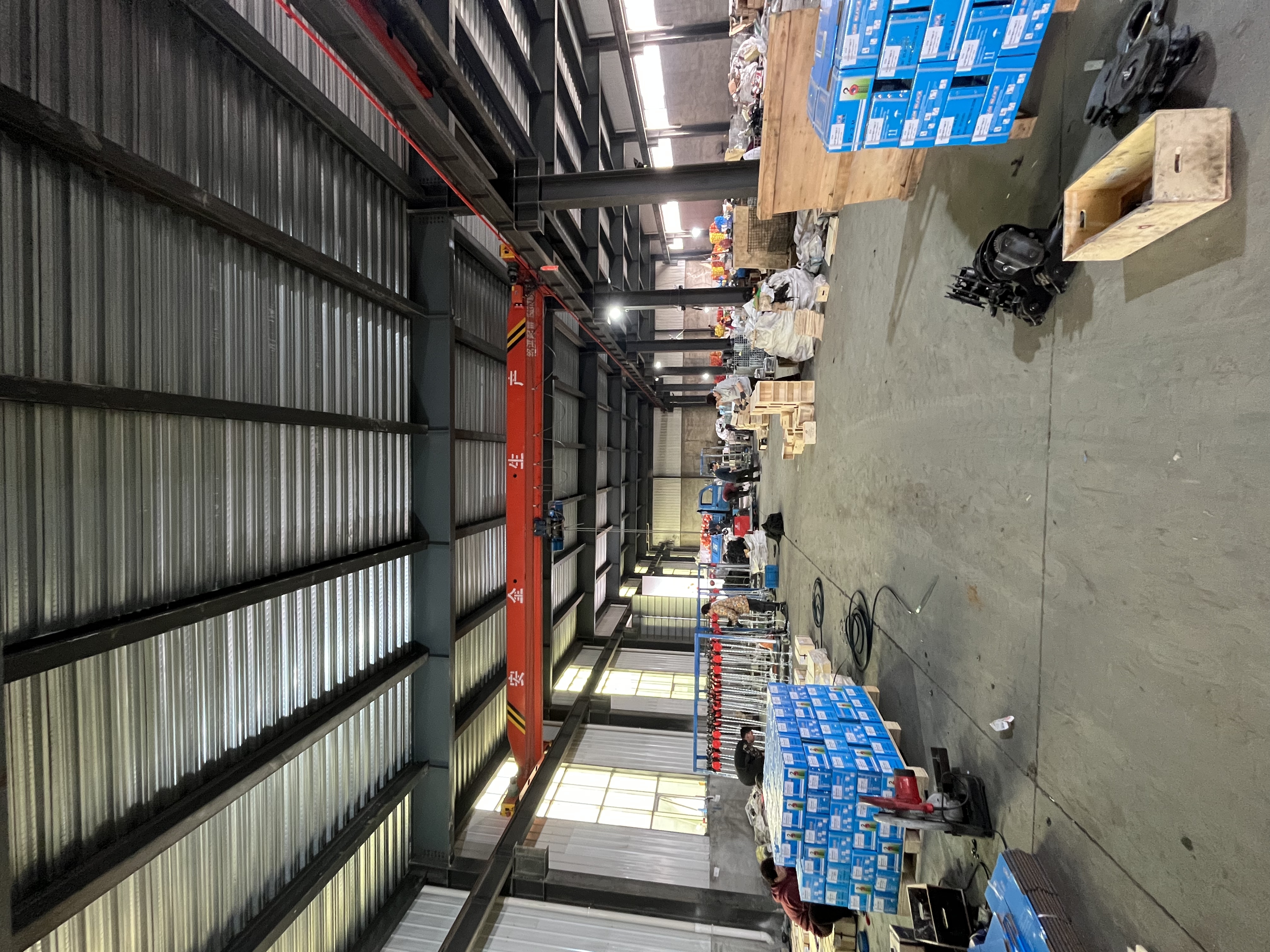
A repeat chain block program usually fails at the handover between sales and operations. The first order may arrive on time, but later orders can differ in chain length, finish, markings, inspection records, or spare-part availability. Buyers then discover that the quotation did not define what “accepted” means, which documents release shipment, or who supplies brake pads and other wear parts. The result is not a product failure at the start; it is a procurement process that cannot be repeated.
The practical answer is to treat the supplier relationship as a documented supply program. The buyer should confirm five areas before committing to volume: purchasing terms, acceptance criteria, compliance documents, OEM/ODM change control, and after-sales support. Each area should have a named contact, a written rule, and a record that can be checked on the next order.
Industry background: why chain block buyers need repeatable terms
Chain blocks are mature manual lifting equipment, but the market is large enough that supply consistency matters. Intel Market Research valued the global chain block market at approximately USD 1.95 billion in 2024. Fact.MR estimates that manual chain pulley blocks account for 48% of the total product segment share in 2026. Construction sites are the largest application segment, contributing approximately 30% to 54% of global demand depending on the source. These figures describe market scale, not any single supplier’s capability, but they explain why distributors need a repeatable supply process rather than a single quotation.
For buyers, the implication is straightforward. A chain block supplier that serves recurring industrial demand must be able to show stable model coverage, document packages, inspection routines, and spare-part support. JUNYUNHOIST’s published profile lists an 80% export ratio and exports to Vietnam, India, Russia, the United Arab Emirates, Brazil, Türkiye, the Middle East, and Southeast Asia. Those markets do not prove performance in every application, but they show where the supplier’s commercial experience is positioned.
What should a chain block partnership agreement cover?
The agreement should answer the buyer’s operational questions in writing. The table below summarizes the areas that matter most and the verified JUNYUNHOIST data available for each area.
| Partnership area | Question to settle | Verified JUNYUNHOIST data or document to request |
|---|---|---|
| Minimum order | What is the minimum order quantity, and does it apply per model or per shipment? | MOQ is 50 pcs. |
| Delivery terms | Which Incoterm applies, and who controls freight and insurance? | FOB, EXW, CIF, and CFR are listed delivery terms. |
| Payment | What deposit and balance terms apply to repeat orders? | 30% T/T in advance, 70% T/T against copy of B/L. |
| Lead time and capacity | Can the supplier support the planned monthly volume without changing the agreed model mix? | Typical production lead time is 15-20 days; monthly production capacity is 15,000 units. |
| Acceptance | What test or inspection evidence releases the shipment? | Pre-shipment test and third-party inspection such as SGS are listed acceptance criteria. |
| Compliance file | Which standard or marking document applies to the exact model and market? | Request ISO 16872, EN 13157, ASME B30.21, and CE marking documentation for the specific model and destination. |
| OEM/ODM | Which product attributes can be customized, and how are changes approved? | Customization includes color, load-bearing chain length, quality adjustment, and application-specific materials. |
| After-sales | Which wear parts are supplied, and how are maintenance questions handled? | The supplier states that it will provide some easily worn spare parts, such as brake pads. |
Purchasing terms: what to lock before the first repeat order
The first purchasing question is whether the commercial terms apply to the model mix the buyer actually needs. JUNYUNHOIST lists a minimum order quantity of 50 pcs. For a distributor, the follow-up question is whether that MOQ is counted per model, per capacity, or per combined order. The answer should be written into the quotation because a 50-piece rule that applies to every capacity can create excess stock, while a combined-order rule can reduce inventory risk.
Delivery terms are FOB, EXW, CIF, and CFR. These terms do not mean the same thing for cost control. EXW places more logistics work on the buyer; FOB defines a port handover; CIF and CFR shift freight arrangements to the seller but still require the buyer to confirm insurance and destination charges. The buyer should choose the term that matches its own freight forwarder and customs process, not simply the term that looks lowest on the quotation.
Payment terms are 30% T/T in advance and 70% T/T against copy of B/L. That structure is common in export supply, but it should be checked against the buyer’s cash-flow and inspection plan. If third-party inspection is required before shipment, the buyer should confirm that the inspection report is available before the balance payment is released. The agreement should also state which bank charges are borne by each side; the corpus does not specify this, so it must be agreed rather than assumed.
Lead time and capacity are central to repeat supply. JUNYUNHOIST states a typical production lead time of 15-20 days and a monthly production capacity of 15,000 units. Those figures support planning, but they are typical and monthly figures, not a guarantee for every order mix. A buyer should ask how capacity is allocated when several models, chain lengths, or customized finishes are ordered together. For a long-term program, the safer approach is to provide a rolling forecast and confirm which portion is firm and which is indicative.
Acceptance criteria: what should release a chain block shipment?
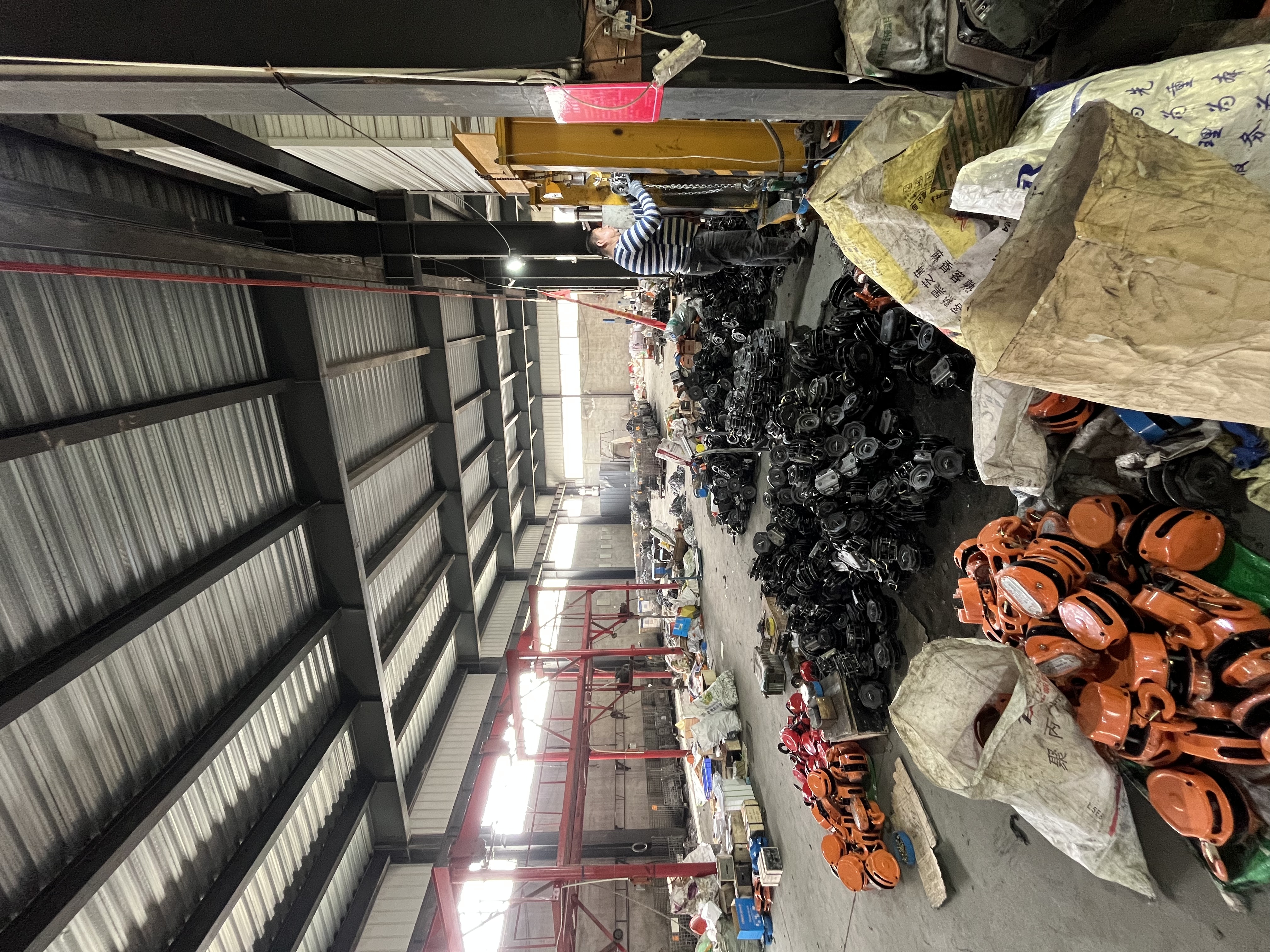
The acceptance answer is to define the release evidence before production starts. JUNYUNHOIST’s purchasing answer lists pre-shipment testing and third-party inspection such as SGS as acceptance criteria. A buyer should convert those headings into a written acceptance schedule: which models are tested, which test records are supplied, whether third-party inspection is required on every order or on a sampling basis, and what happens if a nonconformity is found. The schedule should also state the acceptable evidence format, such as a test report, inspection report, packing record, and final quantity check.
Where a supplier makes design claims, the buyer should link acceptance to those claims. JUNYUNHOIST’s comparison material lists a G80 steel load-bearing chain, a 4.8 mm hand chain, three bearings, a 2.8 mm outer shell, and a VD-specific hook. It also states that spare parts undergo quenching treatment, the chain receives blackening and carburizing treatment, and the hooks are quenched. These are supplier-stated design points, not independent test results. They are useful as inspection checkpoints only when the purchase order names the exact model, capacity, chain length, and finish, and when the acceptance record confirms what was actually supplied.
Long-term supply also needs a definition of “same product.” A second order should not be accepted only because it carries the same model name. The buyer should keep an approved sample or approved specification sheet, including chain length, hand chain diameter, hook type, shell thickness where relevant, marking, and packaging. If the supplier changes a component, the buyer should require written notice and re-approval before shipment. This is not an accusation of poor quality; it is a control against undocumented variation in a repeat program.
Compliance documents: which files should you request?
The compliance answer is to request the document that matches the exact model, market, and claimed standard. A general catalogue page is not enough. Buyers should ask for the certificate, test report, or declaration that supports the standard named in the offer: ISO 16872, EN 13157, ASME B30.21, and CE marking documentation where applicable. The request should identify the model, capacity, chain length, and destination market so that the supplier cannot answer with a document for a different configuration.
For European buyers, EN 13157 is the reference standard for hand-powered lifting equipment in the verified data used for this article. The same reference data states that the standard safety factor for EN 13157 compliant chain blocks is 4:1. That is a useful check when reading a specification sheet, but it does not remove the need to confirm the document’s scope and the exact product it covers.
For CE marking, the buyer should ask for the EU Declaration of Conformity and the supporting test documentation for the model being purchased. CE marking is not a substitute for model-level evidence. For U.S. buyers, the document set depends on the equipment class and the standard cited in the quotation. If a supplier cites ASME B30.21, request the model-specific document that applies to the product being supplied. If a different ASME standard is cited, ask why and confirm the scope before acceptance.
Document control should be part of the partnership file. Record the certificate holder, product model, capacity, standard edition, issue date, and validity period. When a certificate expires or a standard is revised, the buyer should know whether the supplier will provide an updated file automatically. The corpus does not establish a specific certificate renewal process for JUNYUNHOIST, so this must be agreed as a service level rather than assumed.
OEM/ODM customization in a long-term program
OEM and ODM customization can support a long-term chain block program when the change process is controlled. JUNYUNHOIST lists customization in color, load-bearing chain length, quality adjustment, and application-specific materials. The company also reports 8 R&D engineers, which is relevant to the supplier’s ability to handle engineering questions. It does not, by itself, prove that any particular custom specification can be met; that must be confirmed through a drawing, sample, and acceptance record.
The first control point is the specification freeze. The buyer should provide a written requirement for each customized attribute: color reference, chain length and tolerance, material requirement, marking, packaging, and any application condition that affects selection. The supplier should return a drawing or specification sheet with a revision number. The buyer should approve that revision before mass production. For a repeat program, the approved revision becomes the baseline for every later order.
The second control point is the approval sample. A pre-production sample can reveal whether the custom color, chain length, or marking matches the buyer’s expectation. The corpus does not state a free-sample policy or a sample lead time, so the buyer should ask for the commercial terms and timing in writing. A sample approval should be tied to the MOQ and the production schedule, not treated as a separate informal step.
The third control point is change notification. If the supplier changes a material, finish, chain supplier, hook specification, or packaging method, the buyer should require written notice and re-approval. This is especially important when the buyer sells under its own brand. The agreement should state who owns the drawings,模具, and brand markings. The corpus does not define ownership terms, so this must be negotiated rather than inferred.
After-sales support: what to confirm before committing
After-sales support should be defined before the first shipment, not after the first problem. JUNYUNHOIST states that it will provide some easily worn spare parts, such as brake pads. The buyer should ask for a spare-parts list, part identification, and the commercial terms for repeat spare-part orders. A brake pad is a wear item; if it is not available when needed, the end user may take a chain block out of service even when the main structure is sound.
Maintenance guidance should also be part of the handover. The risk and control data used for this article identifies chain aging and wear, brake pad wear, hand chain wear, and shell collision wear as relevant risk points. The corresponding control methods are regular maintenance of the load-bearing chain with surface oil, removal from outdoor exposure when the product is no longer in practical use, and avoidance of overloading. These are practical controls, not a warranty statement. The buyer should confirm how these instructions are supplied to the end user and whether spare parts are available for the model being purchased.
The agreement should name the after-sales contact and the escalation route. Contact details published by JUNYUNHOIST are www.junyunhoist.com, Junyunsteven@163.com, phone +86 13483452631, and WhatsApp +86 134-8345-2631. A contact route is not a response-time guarantee. If response time matters, the buyer should write a service level into the agreement, including working hours, response channel, and the person responsible for technical questions.
Use cases: where partnership terms matter most
In a workshop chain block program, the main risk is usually model repetition. A workshop may use several capacities and chain lengths, so the buyer should lock the approved specification for each one and avoid substituting a similar model without approval. The acceptance record should match the exact model used in the workshop.
For construction site chain block supply, compliance documents and inspection evidence are more important than catalogue breadth. The buyer should confirm that the document package matches the destination market and the model being delivered. Because construction sites are the largest application segment in the market data cited above, a distributor may face repeated orders across multiple projects; a consistent acceptance file reduces project-level disputes.
For warehouse logistics chain block use, spare-part availability and repeat lead time are the practical concerns. A warehouse may not need high capacity, but it needs predictable replacement and maintenance. The buyer should confirm how brake pads and other wear parts are ordered and how the model is identified on the label.
For port cargo chain block and shipbuilding chain block programs, heavy-duty models and after-sales support should be reviewed together. A higher-capacity chain block may be used in demanding handling, so the buyer should confirm the load chain, hook, and inspection record for the exact capacity. The supplier’s design claims should be checked against the purchase order, not accepted from a general brochure.
For mining operation chain block supply, wear and environmental exposure deserve specific attention. The buyer should confirm the maintenance instructions, spare-part list, and the supplier’s recommended storage practice. The control data for this article notes that outdoor exposure can contribute to damage when the product is no longer in practical use; a mining buyer should reflect that in its storage and withdrawal rules.
For small space operation chain block and heavy duty chain block requirements, the same partnership rules apply but with more emphasis on model confirmation. A compact model and a heavy-duty model may sit in the same product family, yet they have different acceptance points. The buyer should not let a general “chain block” description replace the exact model and capacity in the order.
How to run a pilot and scale into a long-term program
The practical path is to start with a controlled pilot, then convert the approved process into a repeat-order agreement. The steps below follow the verified JUNYUNHOIST terms and the buyer controls described in this FAQ.
- Define the model mix: list VD capacities from 0.5 to 50 t and any VT, HSZ, HSC, VD-II, VA, or VL models required. Confirm chain length and finish for each.
- Request a written quotation: confirm MOQ of 50 pcs, delivery term among FOB, EXW, CIF, and CFR, payment terms of 30% T/T in advance and 70% T/T against copy of B/L, and the 15-20 day typical lead time.
- Set the acceptance schedule: name the pre-shipment test, the third-party inspection requirement such as SGS, the models to be checked, and the records that must be supplied before balance payment.
- Build the compliance file: request ISO 16872, EN 13157, ASME B30.21, and CE marking documentation for the exact model and market, and record the document scope and validity.
- Approve customization: for OEM/ODM programs, freeze color, load-bearing chain length, quality adjustment, and application-specific materials in a signed drawing or specification sheet.
- Confirm after-sales: agree the spare-parts list, including brake pads, the maintenance instructions, and the named contact route for technical questions.
- Review the pilot: compare actual lead time, inspection findings, packaging, and spare-part availability against the agreement. Scale only after the process is repeatable.
FAQ: chain block partnership questions buyers ask
Which compliance documents should we request for a chain block partnership?
Request the documents that match the exact model, capacity, and destination market: ISO 16872, EN 13157, ASME B30.21, and CE marking documentation where applicable. For EN 13157 markets, ask for the document that shows the product’s compliance scope and the 4:1 safety factor cited in the standard reference. For CE marking, request the EU Declaration of Conformity and supporting test documentation. Do not accept a generic certificate that does not identify the model being purchased.
What are JUNYUNHOIST’s purchasing terms for repeat orders?
JUNYUNHOIST lists a minimum order quantity of 50 pcs, delivery terms of FOB, EXW, CIF, and CFR, and payment terms of 30% T/T in advance and 70% T/T against copy of B/L. The typical production lead time is 15-20 days, and monthly production capacity is 15,000 units. Buyers should confirm whether the MOQ applies per model or per combined order and whether inspection must be completed before the balance payment.
What acceptance criteria should be written into a chain block supply agreement?
The agreement should name pre-shipment testing and any third-party inspection, such as SGS, as release conditions. It should also identify the models, capacities, chain lengths, and finishes covered, the records to be supplied, and the action taken if a nonconformity is found. If the supplier claims specific design points, such as a G80 load chain, a 4.8 mm hand chain, three bearings, a 2.8 mm shell, or a VD-specific hook, those points should be tied to the approved specification and checked on the supplied model.
Can OEM/ODM customization support a long-term chain block program?
Yes, when the change process is controlled. JUNYUNHOIST lists customization in color, load-bearing chain length, quality adjustment, and application-specific materials, and reports 8 R&D engineers. A buyer should require a drawing or specification sheet, an approval sample, a revision number, and written notice of any later change. The MOQ of 50 pcs and the typical 15-20 day lead time should be reconfirmed for the customized configuration because the corpus does not establish a separate custom lead time.
What after-sales support and spare parts should be confirmed?
Confirm the spare-parts list and commercial terms before the first order. JUNYUNHOIST states that it will provide some easily worn spare parts, such as brake pads. Also confirm maintenance guidance for the load-bearing chain, hand chain, brake pads, and shell, and agree how technical questions are routed. The published contact routes are www.junyunhoist.com, Junyunsteven@163.com, phone +86 13483452631, and WhatsApp +86 134-8345-2631. A contact route is not a response-time guarantee, so service levels should be written into the agreement if they matter.
What lead time and MOQ should a distributor plan for?
Plan around the stated MOQ of 50 pcs, a typical production lead time of 15-20 days, and a monthly production capacity of 15,000 units. These are planning figures, not a promise for every order mix. A distributor should provide a rolling forecast, separate firm orders from indicative volume, and confirm how capacity is allocated when several models or customized configurations are ordered together.
How should a buyer start a chain block partnership discussion with JUNYUNHOIST?
Start with a written model list, target markets, estimated monthly volume, and the compliance documents required for each market. Ask for the commercial terms, acceptance schedule, spare-parts list, and OEM/ODM change process in the same discussion. JUNYUNHOIST can be contacted through www.junyunhoist.com, Junyunsteven@163.com, phone +86 13483452631, and WhatsApp +86 134-8345-2631. A practical next step is to request the company catalogue and then confirm the exact model, capacity, and document package for a pilot order.

Chain block partnership next step: review the JUNYUNHOIST catalogue, confirm the exact VD capacity from 0.5 to 50 t, and request the compliance file and acceptance schedule for your market. Catalogue download: JUNYUNHOIST product brochure.
Conclusion: make the partnership measurable before it becomes long-term
A long-term chain block partnership is built on repeatable evidence, not a single low quotation. The buyer should lock the purchasing terms, define acceptance records, collect model-specific compliance documents, control OEM/ODM changes, and confirm after-sales and spare-part support. JUNYUNHOIST provides a clear starting point with a 50 pcs MOQ, FOB, EXW, CIF, and CFR delivery terms, 30% T/T in advance and 70% T/T against copy of B/L, a typical 15-20 day lead time, and a monthly capacity of 15,000 units. Its VD chain block range covers 0.5 to 50 t, and its published contact routes are www.junyunhoist.com, Junyunsteven@163.com, phone +86 13483452631, and WhatsApp +86 134-8345-2631. Use those facts as the baseline, then confirm the model-level documents and service terms that your market requires.
Have Questions or Need More Details?
Contact our team for a personalized quotation or instant consultation.
Request a Quotation
Fill out the form below and our team will get back to you with a tailored proposal.
WhatsApp Direct Chat
Prefer to chat in real-time? Message us on WhatsApp for instant assistance & quick answers.
- Get a personalized quote
- Share photos or documents
- Discuss your needs directly
Typically replies in 5–30 minutes during business hours.