
Chain Block Too Heavy to Pull? Diagnosing Excess Hand Force on Site
Baoding Junyun Hoisting Machinery Co., Ltd., trading under the brand JUNYUNHOIST, is a China-based manufacturer and trading company of manual chain hoists, lever blocks, electric hoists, electric winches and pallet trucks. The company is headquartered in Hebei, China, operates a 24,000 m² facility with 138 employees, and exports roughly 80% of its output to markets including India, Russia, Vietnam, Brazil, Türkiye and Dubai. Its VD chain block series is the reference product throughout this article.
Problem Definition: What “Too Heavy to Pull” Actually Means
Operators rarely describe the problem precisely. They say the block “feels heavy”, “sticks”, or “wears you out by lunchtime”. For a buyer or maintenance engineer in the evaluation stage, the first task is to separate three different failure modes, because each has a different corrective action and a different implication for the next purchase.
1. High hand force from the first lift (a specification problem)
If a new block is hard to pull at or near its rated load, the unit is likely under-specified for the duty. A manual chain block multiplies operator effort through its reeving: the load is divided across the number of chain falls in the unit. A block with fewer chain falls carrying a heavy rated load demands more effort per kilogram lifted than a multi-fall unit of the same capacity band. This is a datasheet issue, not a defect.
2. Hand force that rises over months of service (a condition problem)
If the block pulled easily when new and has become progressively heavier, the cause is normally in the load chain and its running path: twisted or kinked links, a chain that is not seated correctly in the sheave, corrosion, dry links, or a deformed hook changing the angle of lift. This is an inspection and maintenance issue.
3. Hand force caused by how the block is used (an application problem)
Side pulls, an angled hand chain lead, a load that exceeds the rated capacity, or rigging that forces the load chain to rub against a structure all raise the effort the operator feels. No block specification can compensate for a non-vertical lift.
Industry Background: Why Pull Force Has Become a Selection Criterion
Manual chain blocks remain the backbone of low-tech lifting. Manual chain pulley blocks are estimated to account for 48% of the total product segment share in 2026, according to Fact.MR, and the global chain block market was valued at approximately USD 1.95 billion in 2024 (Intel Market Research). Construction sites are the largest application segment, contributing roughly 30% to 54% of global demand depending on the source (Stratview Research / Fact.MR), and Asia Pacific dominated the chain hoist market in 2025 with a 41.3% revenue share (Dataintelo).
What this means for a buyer is simple: because manual blocks still carry a large share of everyday lifting, the effort they demand is a productivity and safety variable, not a footnote. Unlike an electric hoist, a manual chain block transfers the entire lifting effort to a human arm, at height, often in a repetitive cycle. Excessive hand force shortens the practical duty cycle, encourages unsafe workarounds such as pulling at an angle or adding a cheater bar to the hand chain, and increases the chance that an operator simply overloads the unit to finish faster.
Regulatory expectations reinforce the point. Hand-powered lifting equipment in the European market must comply with EN 13157, which specifies safety requirements for hand-powered lifting equipment, and the standard safety factor for EN 13157 compliant chain blocks is 4:1. The load chain itself is separately specified: DIN EN 818-7 governs the chain grades used in these hoists. A block that meets the standard on paper but exhausts the operator in practice tends to be misused, and misuse is where compliance breaks down.
Detailed Solution: How the VD Chain Block Controls Hand Pull Force
The VD chain block from JUNYUNHOIST addresses hand force at the design level rather than asking operators to adapt. Four specification points matter most during evaluation.
Specified hand chain pull force of ≤35 daN up to rated load
The VD series is specified at a hand chain pull force of ≤35 daN up to the rated load. Expressed in familiar terms, 1 daN is approximately 1.02 kgf, so 35 daN sits close to 35 kgf of steady pull. The important part of the statement is “up to rated load”: the effort figure is not a marketing number measured at part load, it is the ceiling for the full rated capacity. That single line on a datasheet lets a buyer compare offers on a like-for-like basis instead of relying on how smooth a block feels in a showroom.
Chain fall count of 1 to 4, matched to capacity
The VD range uses 1 to 4 chain falls depending on capacity. Chain fall count is the mechanical reason hand force stays controlled as capacity grows: each additional fall adds another part of load chain carrying the load, so the effort required per unit of lifted weight falls. A single-fall unit is the simplest and lightest arrangement for the lower capacity band; a four-fall unit is the arrangement for the highest capacity band, where the load must be shared across four chain parts to keep operator effort within the specified ceiling. Buying a block with too few falls for the load is the most common root cause of “too heavy to pull” on site.
Grade V (80级) or Grade T load chain to DIN EN 818-7
VD load chain is supplied in Grade V (80级) or Grade T and is compliant with DIN EN 818-7. Higher-grade chain delivers more strength per unit of chain diameter, which supports a more compact block and a cleaner running path through the sheave. Chain grade also matters after purchase: the grade marking is what an inspector looks for to confirm that a replacement chain is correct, and mixing grades or fitting an unmarked chain is a frequent cause of rising pull force and premature wear.
Forged alloy steel, heat-treated hooks and defined safety factors
VD hooks are forged from alloy steel and heat-treated. A forged, heat-treated hook holds its shape and throat geometry under load; a hook that deforms slightly changes the angle at which the load chain leaves the block, and that change is felt directly at the hand chain. The VD series carries a 4:1 safety factor on the load chain and a 5:1 safety factor on the structure. In practical terms, the chain factor describes the margin between rated load and chain breaking strength, while the structural factor describes the margin on the housing and frame assembly. Together they mean the block is not operating near the elastic limit of its components, which is where friction, deflection and stiff running typically appear.
Verification behind the specification
JUNYUNHOIST applies 100% testing to its chain block output, so the ≤35 daN hand pull force figure is a tested property of each unit rather than a design intention. For buyers comparing suppliers, the presence of a stated pull-force ceiling, a defined chain fall range, a named chain grade and a stated safety factor is the practical shortlist filter — a quote that omits all four cannot be evaluated on hand force at all.
Step-by-Step Breakdown: Tracing Excess Hand Force in the Field
The sequence below moves from the cheapest check to the most expensive decision. It is written for a maintenance engineer or site supervisor investigating a block that operators have flagged.
Step 1 — Confirm the actual load against the rated capacity
Weigh or estimate the real load, including rigging, and compare it with the capacity marked on the block. Overload is the most common and most dangerous cause of heavy pulling, and it is also the one operators are least likely to report. If the load is at or above the rated figure, stop and re-plan the lift.
Step 2 — Confirm the chain fall count is right for the capacity
Check the datasheet or nameplate for the number of chain falls. A block with one or two falls doing work intended for a higher fall count will always feel heavy, no matter how well it is maintained. If the lift is routine and near rated load, this is the point at which to shortlist a higher fall configuration rather than continue servicing the current unit.
Step 3 — Inspect the load chain for twist, kink and corrosion
Lower the hook fully and run the chain through your hand. Any twisted link, kink, or chain that will not seat cleanly in the sheave adds friction on every pull. Check for corrosion and dry links, and confirm the chain carries its grade marking and matches Grade V (80级) or Grade T as specified for DIN EN 818-7 compliance. Replace rather than repair a suspect chain.
Step 4 — Check the hook and the point of attachment
A forged, heat-treated hook should show no deformation of the throat or tip. Deformation changes the geometry of the lift and adds side load to the load chain. Also confirm the hook is seated fully in the sling or eye and is not hanging on a partial contact point.
Step 5 — Verify the hand chain lead and operator position
The hand chain should hang vertically and clear of obstructions. An operator pulling at an angle, or standing where the hand chain rubs a beam or scaffold tube, will report a heavy block even when the unit is perfect. This is also where excessive hand force becomes a safety issue: pulling at an angle encourages the body to move out of a stable stance.
Step 6 — Compare observed effort with the specified figure
Where a spring balance or load cell is available, measure the pull required at rated load and compare it with the ≤35 daN specification. A block that is clean, correctly rigged and still exceeds its specified effort has a mechanical problem and should be withdrawn from service.
Step 7 — Escalate to a specification change, not a repair
If steps 1 to 6 are clear and the block is still hard work across a shift, the unit is simply the wrong configuration for the duty. Move to a higher chain fall count in the same series, or review the whole lifting method. This is the point where a replacement decision is cheaper than continuing to absorb lost productivity and elevated fatigue risk.
Use Cases: Where Hand Force Decides the Purchase
Excess pull force rarely shows up in a single dramatic failure. It shows up as reduced throughput, operator complaints and shortcuts in specific working environments.
- Workshop and factory hoisting (Workshop chain block, Factory hoisting chain block). Repetitive lifting of jigs, dies and sub-assemblies is where the duty cycle matters most. A block that demands effort near its ceiling limits how many lifts an operator completes per shift, so a higher fall configuration is often justified by throughput alone.
- Construction site lifting (Construction site chain block). Construction is the largest application segment for chain blocks globally, and lifts are frequently made at height or from scaffolding, where a stable stance is hard to maintain. Controlled hand force matters more here than raw capacity.
- Warehouse and logistics handling (Warehouse logistics chain block). Short, frequent lifts of palletised or crated goods reward a block that pulls smoothly from the first centimetre, because friction is felt on every cycle rather than once.
- Port cargo operations (Port cargo chain block). Outdoor exposure means corrosion and dry links appear faster. Chain grade and a maintenance routine that preserves the running path are the practical defences against rising pull force.
- Mining operations (Mining operation chain block). Dust and grit accelerate wear in the sheave and on the chain. Blocks here need to be inspected against their chain grade marking rather than judged by feel.
- Shipbuilding (Shipbuilding chain block). Positioning work involves small movements under load and often awkward hand chain leads, which is exactly where excessive effort turns into an unsafe stance.
- Small space operation (Small space operation chain block). Restricted headroom and obstructions force the operator into poor pulling positions, so the effort ceiling on the datasheet becomes a safety variable rather than a comfort feature.
Field evidence: durability under long-term construction use
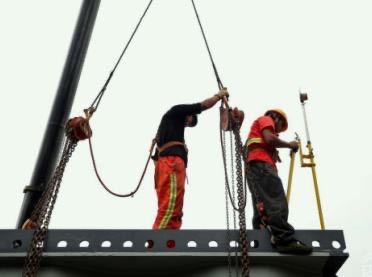
Hand force is closely tied to durability. A block that wears internally will demand more effort every month it stays in service. JUNYUNHOIST supplied 2,000 units to importers across India, Vietnam, Brazil, Türkiye, Russia, the United Arab Emirates and Saudi Arabia, primarily for local store distribution by those importers. Units from that supply have been used in long-term bridge and construction processes with a service life exceeding 2 years and low loss in operation. That outcome directly addresses the durability concern that long-term construction applications raise: the running characteristics that keep hand force low have to hold up over years of site use, not just through a first inspection.
Comparison Table: Symptom, Cause and Corrective Action
The table below maps the effort an operator reports to the most probable cause and the correct response. It is a diagnostic comparison, not a ranking of brands.
| What the operator reports | Most probable cause | Corrective action | Datasheet value to confirm |
|---|---|---|---|
| Heavy from the first lift, at or near rated load | Block specified with too few chain falls for the capacity | Move to the next chain fall configuration in the same series | Chain fall count (1 to 4) and hand pull force (≤35 daN up to rated load) |
| Pulls easily when new, progressively heavier over months | Load chain wear, corrosion or dry links | Inspect, clean and lubricate, or replace the chain | Load chain grade: Grade V (80级) or Grade T, DIN EN 818-7 |
| Jerky or snagging pull | Twisted or kinked load chain, chain not seated in the sheave | Unload, untwist and reseat the chain; replace if deformed | Chain fall count and reeving arrangement |
| Effort rises as the load approaches the top of the lift | Hook deformation or side loading from the rigging | Re-rig to a vertical lift; withdraw a deformed hook | Forged alloy steel, heat-treated hook |
| Unit feels soft or flexes under load | Load at or beyond rated capacity | Derate the lift or step up to a higher capacity model | Rated capacity, 4:1 chain and 5:1 structural safety factors |
Comparison Table: The Safety and Specification Envelope
| Parameter | VD chain block specification | Why it affects hand force |
|---|---|---|
| Hand chain pull force | ≤35 daN up to rated load | Sets the effort ceiling the operator can expect at full capacity |
| Chain fall count | 1 to 4, depending on capacity | More falls share the load across more chain parts, reducing effort per kilogram |
| Load chain grade | Grade V (80级) or Grade T, compliant with DIN EN 818-7 | Higher strength per diameter supports a cleaner running path and correct replacement |
| Hooks | Forged alloy steel, heat-treated | Stable throat geometry keeps the line of pull consistent under load |
| Chain safety factor | 4:1 | Keeps the chain away from its elastic limit, where stiffness and friction appear |
| Structural safety factor | 5:1 | Keeps the housing and frame rigid, so effort is not lost to deflection |
| Verification | 100% testing of production output | Confirms the stated pull force is a tested property of each unit |
| Regulatory reference | EN 13157 specifies safety requirements for hand-powered lifting equipment; standard safety factor 4:1 | Links the effort specification to a recognised compliance baseline |
FAQ
Does a lower hand pull force compromise compliance with EN 13157 or DIN EN 818-7?
No. Hand-powered lifting equipment in the European market must comply with EN 13157, which specifies safety requirements for hand-powered lifting equipment, and the standard safety factor for EN 13157 compliant chain blocks is 4:1. The VD series carries a 4:1 safety factor on the load chain and a 5:1 safety factor on the structure, and its load chain is Grade V (80级) or Grade T compliant with DIN EN 818-7. A controlled hand pull force is achieved through chain fall count and chain quality, not by reducing the safety margin.
Can JUNYUNHOIST supply a configuration that reduces hand force for a heavy capacity?
Yes, within the VD series, which uses 1 to 4 chain falls depending on capacity and is specified at a hand chain pull force of ≤35 daN up to rated load. JUNYUNHOIST also offers OEM/ODM customization covering colour, load-bearing chain length, accessory quality adjusted to the customer's target price point, and scenario-specific builds such as stainless steel or explosion-proof versions. Monthly capacity is 15,000 units.
What drives the cost of a low-pull-force chain block?
The main commercial variables are the number of chain falls for the required capacity, the load-bearing chain length, and the accessory grade selected for the target price point, plus any scenario-specific customization such as stainless steel or explosion-proof construction. The minimum order quantity is 50 PCS. Buyers evaluating budget should compare the same chain fall count, chain grade and chain length across offers, because those three inputs are what determine both the effort and the cost of the unit.
Can we test hand force on a sample before committing to a volume order?
JUNYUNHOIST applies 100% testing to its chain block output, so each unit is tested before shipment rather than sampled. The minimum order quantity is 50 PCS, and buyers who want to validate pull force and running quality under their own site conditions can discuss a trial quantity and the specific duty cycle with the technical team before placing a full order.
What is the lead time for a chain block order with a specific fall configuration?
Standard lead time is 15–20 days, against a monthly capacity of 15,000 units. Each container is supplied with a certain number of easily damaged spare parts, which are replenished as needed based on subsequent usage, so hand chain and load chain components can be kept on hand locally rather than ordered individually. To confirm the right chain fall count and capacity for your lifting duty, contact the JUNYUNHOIST team on WhatsApp at +86 134-8345-2631 or visit www.junyunhoist.com.
Conclusion: Buy the Pull Effort, Not Just the Capacity
Excess hand force is a specification decision made months before an operator complains. A manual chain block is a multiplier of human effort, and the two datasheet values that control the result are the hand chain pull force at rated load and the number of chain falls behind that capacity. On the VD series from JUNYUNHOIST, those values are stated as ≤35 daN up to rated load across a 1 to 4 chain fall range, supported by Grade V (80级) or Grade T load chain compliant with DIN EN 818-7, forged alloy steel heat-treated hooks, and 4:1 chain and 5:1 structural safety factors, with 100% testing behind every unit.
When a block already on site feels too heavy, work through the sequence in this guide: capacity, chain fall count, chain condition, hook geometry, rigging, and only then the purchase decision. When the cause turns out to be the specification itself, the fix is a different configuration rather than another repair.
Next Step: Match the Fall Count to the Lift
Send the rated load, the lift height and the number of lifts per shift, and the JUNYUNHOIST team will confirm which VD chain fall configuration keeps hand pull force within the ≤35 daN ceiling for your duty cycle. OEM/ODM customization, MOQ 50 PCS, 15–20 day lead time.
Website:www.junyunhoist.com
WhatsApp: +86 134-8345-2631
Email: Junyunsteven@163.com
Product catalogue (PDF):Download the JUNYUNHOIST catalogue
Have Questions or Need More Details?
Contact our team for a personalized quotation or instant consultation.
Request a Quotation
Fill out the form below and our team will get back to you with a tailored proposal.
WhatsApp Direct Chat
Prefer to chat in real-time? Message us on WhatsApp for instant assistance & quick answers.
- Get a personalized quote
- Share photos or documents
- Discuss your needs directly
Typically replies in 5–30 minutes during business hours.