
Pallet Jack Application FAQ: Configuring for India, Russia, Brazil, Turkey & UAE Projects
Pallet Jack Application FAQ: Configuring for India, Russia, Brazil, Turkey & UAE Projects
A cross-border pallet jack project is decided by five variables, in this order: the load and the pallet, the floor and aisle layout, the working environment, the destination documentation requirements, and finally the model. Buyers who reverse that order usually end up re-specifying after the first container arrives.
This FAQ-style application guide answers the configuration questions that importers, distributors, project buyers, and operations engineers raise when specifying pallet jacks for projects in India, Russia, Brazil, Turkey, the UAE, Saudi Arabia, and Vietnam. It covers manual, semi-electric, and full electric configurations, galvanized and stainless steel options, custom fork length and width, minimum lifting height requests, special conditions such as cold-resistant, explosion-proof, and silent operation, and the commercial terms that sit behind a project order.
The manufacturer referenced throughout is Baoding Junyun Hoisting Machinery Co., Ltd., trading as JUNYUNHOIST — a manufacturer and trading company founded in 2018 that produces lifting and material handling equipment, including hand pallet trucks, pallet jacks, manual stackers, electric stackers, lift tables, and galvanized or stainless steel pallet trucks. JUNYUNHOIST operates a 24,000 square meter facility in Donglu Village, Qingyuan District, Baoding City, Hebei Province, China, employs approximately 138 staff, and derives 80% of total sales from export business across markets including India, Russia, Vietnam, Brazil, Turkey, and Dubai.
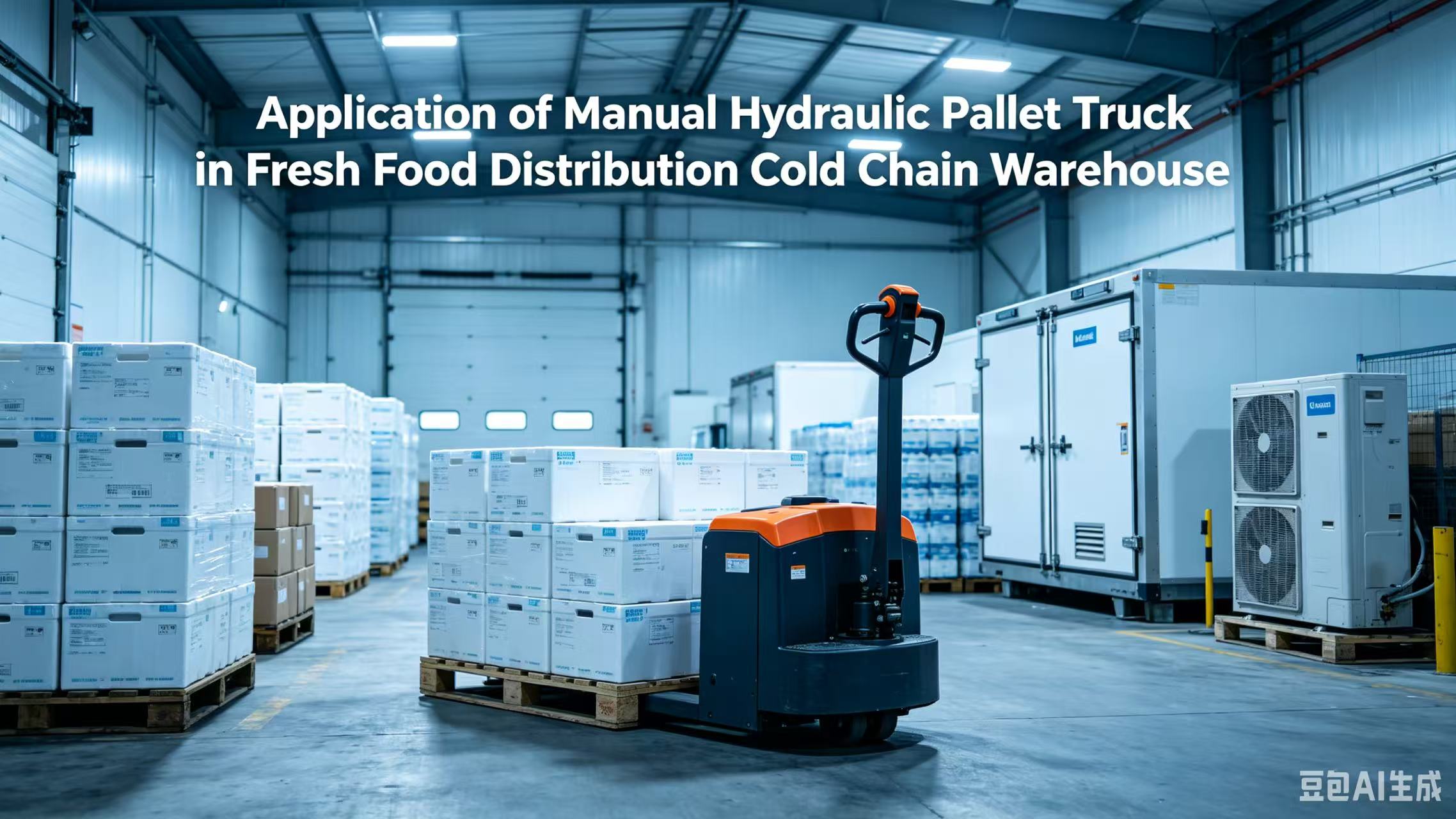
The Configuration Problem: Why One Pallet Jack Does Not Fit Five Markets
Most specification errors in export pallet jack projects come from a single mistake: treating the pallet jack as a catalogue item rather than as the execution terminal of a handling system. A pallet jack operates by manual pushing and pulling, electric drive, or automated navigation, inserting its forks under a pallet and lifting and moving goods over short distances on a level surface. Change the surface, the pallet, the aisle, or the environment, and the correct configuration changes with it.
Four mismatches account for most of the rework seen in multi-country projects:
- Power type versus transport distance and frequency. A manual unit used for long dock-to-rack runs across three shifts creates operator fatigue that no fork specification can fix.
- Fork geometry versus the real pallet and rack entry. A 1150 mm fork does not serve a facility standardised on 1200 mm pallets, and 550 mm fork spacing does not serve a 685 mm pallet pattern.
- Frame and wheel material versus the working environment. Carbon steel in a wash-down food area, or the wrong wheel compound on an uneven factory floor, shortens service life and creates premature replacement cost.
- Documented capability versus the special condition the site actually runs. Cold storage, explosion-risk zones, and noise-sensitive areas need equipment specified for those conditions, not standard units with an expectation of adaptation.
The practical rule for project buyers is to configure from the load outward — pallet, floor, aisle, environment, documentation — and treat the model number as the last decision rather than the first.
Industry Background: Where Pallet Jacks Sit in Export Projects
Pallet jacks serve as the unitised transport carrier and execution terminal in a logistics process: they do not replace a forklift, they feed it. That is why application fit matters more than headline specifications. JUNYUNHOIST documentation positions the product across the logistics and warehousing industry, with applications in manufacturing, food and beverage, pharmaceuticals, chemical, and electronics industries, and across environments from general warehouse and factory floors to cold storage and explosion-proof conditions.
Demand is concentrated. A commercial research summary cited in industry data puts the global pallet jack market at USD 7.91 billion in 2025, with Asia-Pacific holding a 39% revenue share in the same year. Customs-derived trade records covering 2022–2024 show China-origin shipments accounting for 62.7% of pallet jack shipments to the United States. For buyers in India, Russia, Brazil, Turkey, and the Gulf, the practical implication is straightforward: the equipment will almost certainly be Asian-built, so the quality of the specification written on the purchase order determines the quality of what arrives.
Compliance context also travels with the equipment. Pallet trucks are classified as machines under EU safety regulations, which makes CE marking a market-access requirement for the European Union. In the United States, OSHA identifies 29 CFR 1910.178 as the powered industrial truck standard relevant to powered pallet jack operations, and describes operator training as a combination of formal instruction, practical training, workplace evaluation, refresher training, and certification. Manual units and powered units therefore sit under different obligations in some markets, which is why power type should be recorded explicitly in the project file.
The Configuration Levers That Decide Project Fit
1. Power type: manual, semi-electric, full electric, or weighing
JUNYUNHOIST documentation distinguishes four commercial configurations: manual pallet trucks and pallet jacks, semi-electric pallet trucks, full electric pallet trucks, and pallet trucks with scale. The AC30 is documented as a semi-electric pallet truck designed for warehouse and factory floor environments. Full electric units are classified as a separate configuration, built in steel with galvanized and stainless steel alternatives available.
Selection logic is usually simple. Manual units suit short moves and low frequency, where capital cost and zero battery management matter. Semi-electric units suit operations where lifting effort rather than travel distance is the constraint. Full electric, battery-powered units suit long aisles, dock work, and high-frequency cycles — and they pull supporting equipment into the project scope, specifically chargers and spare batteries. Weighing configurations add in-process weight capture for goods-in and goods-out verification.
2. Fork geometry: width, length, and custom dimensions
Documented fork dimensions for the pallet truck series are 550 mm or 685 mm in width and 1150 mm, 1220 mm, 800 mm, 1500 mm, 1800 mm, or 2000 mm in length. Those options cover standard pallet patterns as well as longer loads used in building materials, textiles, and paper handling.
Custom fork length and width are available as an OEM/ODM requirement. The point to fix at RFQ stage is the pallet, not the truck: measure the pallet width, the fork pocket spacing, the load overhang, and the rack beam clearance, then match a documented fork option to those measurements. Where no documented option fits, the requirement becomes a customisation line item rather than a compromise.
3. Lifting height and low-profile requests (35 mm and 62 mm)
The documented pallet truck series lists a minimum height of 80 mm, a maximum height of 200 mm, and a turning radius after capture of 1500 mm. Those three numbers decide whether the unit enters a low rack, whether it lifts clear of the floor, and whether it turns inside the aisle it is assigned to.
Project enquiries frequently ask for lower entry profiles — a minimum lifting height of 35 mm or 62 mm — usually because the site handles low-profile pallets, pallet-less loads, or racking with restricted fork entry. A lower profile changes the chassis and roller layout, so it must be confirmed against a written specification rather than assumed from a catalogue photo. Where a project genuinely requires 35 mm or 62 mm entry height, raise it as a customisation requirement during the RFQ so the fork, roller, and chassis configuration can be confirmed in writing before the order is released.
4. Frame material and wheel compound
Standard frames are steel. JUNYUNHOIST also supplies galvanized and stainless steel pallet trucks for corrosion-sensitive and hygiene-sensitive applications. Wheel materials documented for the series are PU, Nylon, PP, and Rubber.
Material choice is normally driven by what the floor and the wash-down routine will do to the equipment. Galvanized finishes are typically specified for humid, coastal, or occasional-wash environments; stainless steel is typically specified for food processing, pharmaceutical, and cold-chain areas where hygiene and corrosion resistance are operational requirements rather than preferences. Wheel selection follows floor type: polyurethane for smooth sealed floors, nylon where abrasion resistance matters, rubber for rougher or outdoor surfaces, and PP where chemical exposure is a factor.
For cold storage specifically, industry compliance sources describe stainless steel pallet jacks as rated for environments down to -40°C. Model-level temperature documentation should be requested and filed before a cold-store project is signed off.
5. Special working conditions: cold-resistant, explosion-proof, silent
JUNYUNHOIST documentation states that specialised models are available for cold storage, explosion-proof, and other special working conditions, meeting requirements for explosion-proof, cold-resistant, and silent operation. These are engineering configurations, not accessories, and they should be declared in the inquiry rather than added after model selection — a silent-operation requirement in a noise-controlled facility and an explosion-proof requirement in a chemical or solvent environment both change what can be quoted.
6. Supporting equipment that belongs in the same purchase order
Pallet jacks rarely commission alone. Documented supporting equipment includes pallets, shelves, storage cages, logistics trolleys, lifting platforms, loading ramps, chargers, spare batteries, rainproof tarpaulins, guardrails, industrial casters, forklift limit switches, and equipment management or fleet management software. Missing chargers, missing spare batteries, or missing ramps are among the most common causes of a project stalling at commissioning rather than at delivery.

Step-by-Step: How to Configure a Pallet Jack Order for a Multi-Country Project
A repeatable seven-step sequence keeps a project from drifting between the inquiry and the purchase order.
- Define the load and the pallet. Record pallet type and dimensions, load per pallet, and load distribution. Fork geometry is matched to the pallet, and load capacity must be confirmed with the supplier as a separate specification — it is not implied by fork size.
- Survey the route, not just the room. Note floor condition, aisle width, ramp gradients, dock plates, lift access, and rack entry height. The documented 1500 mm turning radius after capture is the reference point for aisle planning.
- Choose the power type against distance and frequency. Manual for short, low-frequency moves; semi-electric where lifting effort is the constraint; full electric for long runs and high cycle counts. Record whether the site will operate the unit as a powered industrial truck, since that may trigger operator training obligations in some jurisdictions.
- Lock fork geometry and lifting height. Select from 550 mm or 685 mm width and the documented length options, then confirm minimum height 80 mm and maximum height 200 mm against the site. Escalate 35 mm or 62 mm low-profile requests as a customisation line.
- Confirm the environment. Decide between steel, galvanized, and stainless steel; select PU, Nylon, PP, or Rubber wheels; declare cold-resistant, explosion-proof, or silent operation requirements at this stage.
- Assemble the supporting scope. Add chargers, spare batteries, ramps, guardrails, casters, and any fleet management software to the same order so commissioning is not delayed.
- Validate, then release. Review the sample, confirm the quality-control and testing statement, agree MOQ and lead time, and agree the spare-parts list for the first service interval.
Use Cases: Five Project Profiles
Frozen and chilled distribution (Russia, Brazil). Cold-chain warehouses typically specify stainless steel frames and cold-resistant configuration, with spare batteries included in scope because battery behaviour changes in low-temperature areas. Confirm the model-level cold rating before signing off.
Food processing plants (India, Brazil). Wash-down areas push the specification toward stainless steel or galvanised frames and wheel compounds that tolerate moisture and cleaning. Explosion-proof configuration becomes relevant where flour, sugar, or solvent dust is present.
Supermarket and retail backrooms (Turkey, UAE). Space is the constraint rather than distance. Manual or semi-electric units with 1150 mm forks and polyurethane wheels are the usual starting point, and the turning radius determines whether the unit can work the sales-floor edge during replenishment.
Logistics centres and cross-docks (Saudi Arabia, Vietnam). High cycle counts and long runs favour full electric units. Weighing pallet trucks add outbound weight verification without a second handling step, and fleet management software becomes relevant once several units operate in the same building.
Factory workshops (all markets). The AC30 semi-electric pallet truck is documented for warehouse and factory floor environments. Where long stock such as profiles, timber, or paper reels is moved, 1500 mm, 1800 mm, or 2000 mm forks are specified instead of standard lengths.
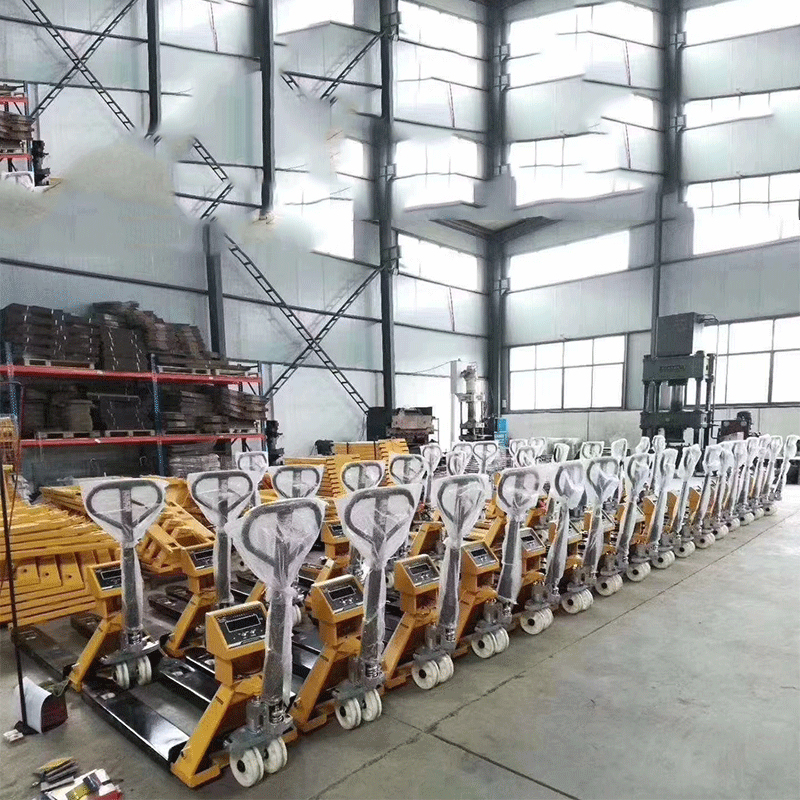
Comparison Table: Documented Specification Reference
The table below lists only the configuration values documented for the JUNYUNHOIST pallet truck series, together with the project decision each value resolves.
| Parameter | Documented option | Project decision it resolves |
|---|---|---|
| Power configuration | Manual; semi-electric (AC30); full electric; pallet truck with scale | Distance, cycle frequency, and whether weight capture is required |
| Fork width | 550 mm or 685 mm | Pallet pattern and fork pocket spacing |
| Fork length | 1150, 1220, 800, 1500, 1800, 2000 mm | Standard pallets versus long loads such as profiles, timber, or paper |
| Minimum height | 80 mm | Fork entry into low racks and low pallets |
| Maximum height | 200 mm | Ground clearance during travel |
| Turning radius after capture | 1500 mm | Aisle width planning and backroom manoeuvring |
| Frame material | Steel; galvanized; stainless steel | Humidity, coastal air, wash-down, hygiene, cold storage |
| Wheel material | PU, Nylon, PP, Rubber | Floor type, abrasion, chemical exposure, outdoor use |
| Special conditions | Cold-resistant; explosion-proof; silent operation | Cold stores, dust or solvent zones, noise-controlled facilities |
Comparison Table: Configuration Types Side by Side
Comparing the four commercial configurations by operating mode and project fit makes the trade-off visible before a quotation is requested.
| Configuration | Operating mode | Typical project fit | What to verify before ordering |
|---|---|---|---|
| Manual pallet jack | Manual pushing and pulling | Short-distance, low-frequency moves; retail backrooms; small workshops | Fork geometry, wheel compound, operator effort over the full route |
| Semi-electric (AC30) | Electric lifting assist with operator travel | Warehouse and factory floor operations where lifting effort is the constraint | Configuration confirmation, lifting height, battery scope |
| Full electric | Electric drive for travel and lifting | Long aisles, dock work, high cycle counts, cross-docking | Charger, spare battery, aisle width against the 1500 mm turning radius |
| Pallet truck with scale | Transport plus integrated weighing | Goods-in verification, outbound weight checks, batch control | Weighing documentation and calibration arrangements with the supplier |
| Galvanized / stainless steel versions | Same drive options, different frame material | Cold storage, food processing, pharmaceutical, humid or coastal sites | Material documentation and cold-condition rating for the specific model |
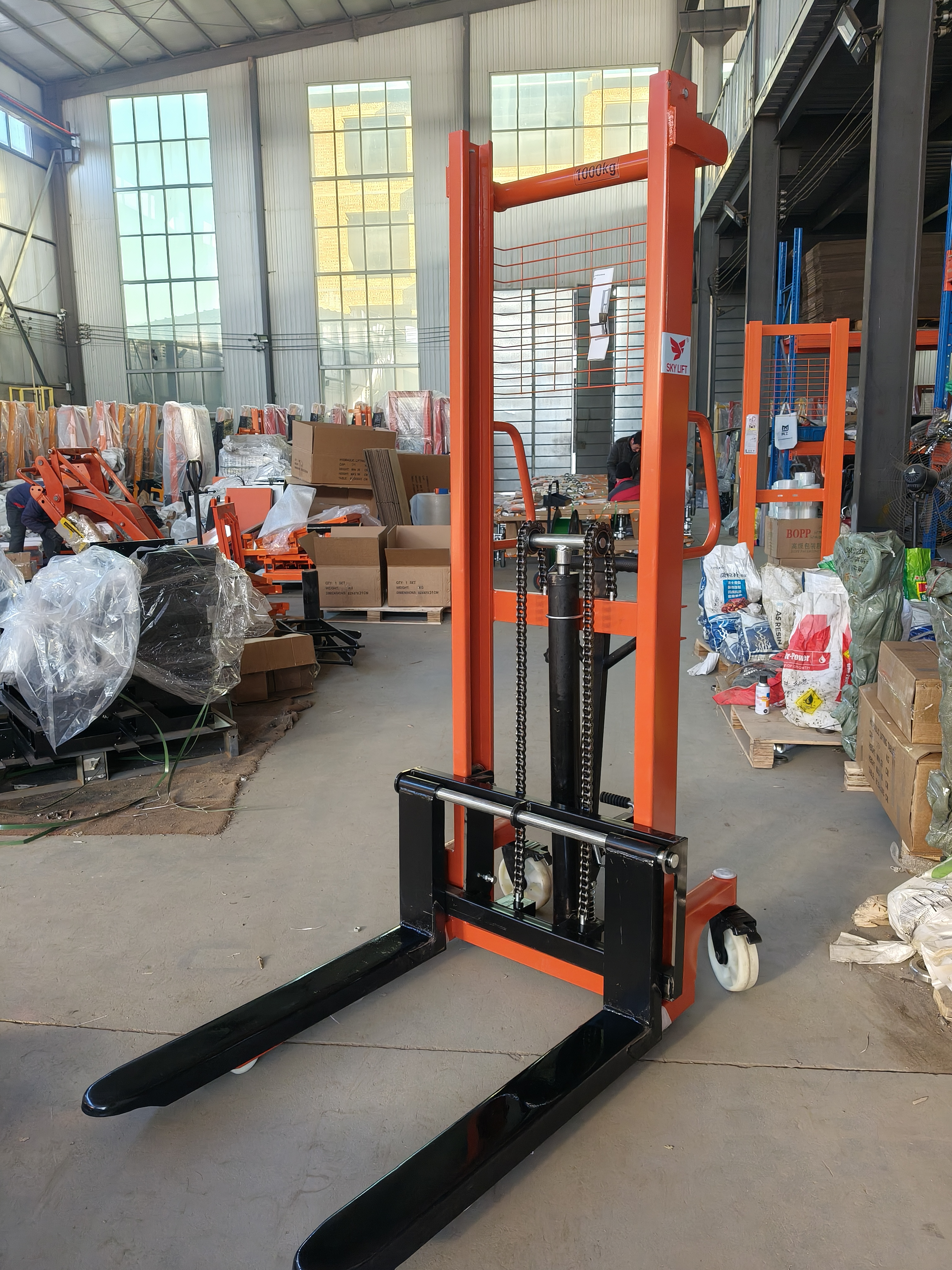
Market Notes: India, Russia, Brazil, Turkey, UAE, Saudi Arabia, and Vietnam
JUNYUNHOIST documents major markets including Middle Eastern countries, India, Russia, Vietnam, Brazil, Turkey, and Dubai, with export business accounting for 80% of total sales. The application record lists India, Vietnam, Belarus, Russia, Brazil, Turkey, the UAE, and Saudi Arabia among target markets. The table below frames each market by the planning question that most often shapes the configuration — these are engineering questions, not statements of local regulation, which the importer should confirm independently.
| Market | Planning question that shapes configuration |
|---|---|
| India | Food and pharmaceutical hygiene requirements in wash-down areas; long-load handling in manufacturing and paper |
| Russia | Cold-climate and frozen-storage operation; cold-resistant configuration and battery management in low temperature |
| Brazil | Cold chain and food distribution; stainless steel and galvanised options for humid environments |
| Turkey | Retail and supermarket backroom space constraints; turning radius and fork length for standard pallets |
| UAE / Dubai | Coastal humidity and corrosion exposure; cross-dock and logistics centre cycle counts favouring full electric |
| Saudi Arabia | Large distribution centres with long runs; charger and spare battery planning at project stage |
| Vietnam | Manufacturing and electronics assembly floors; wheel compound matched to sealed indoor floors |
OEM/ODM, Testing, MOQ, and Lead Time
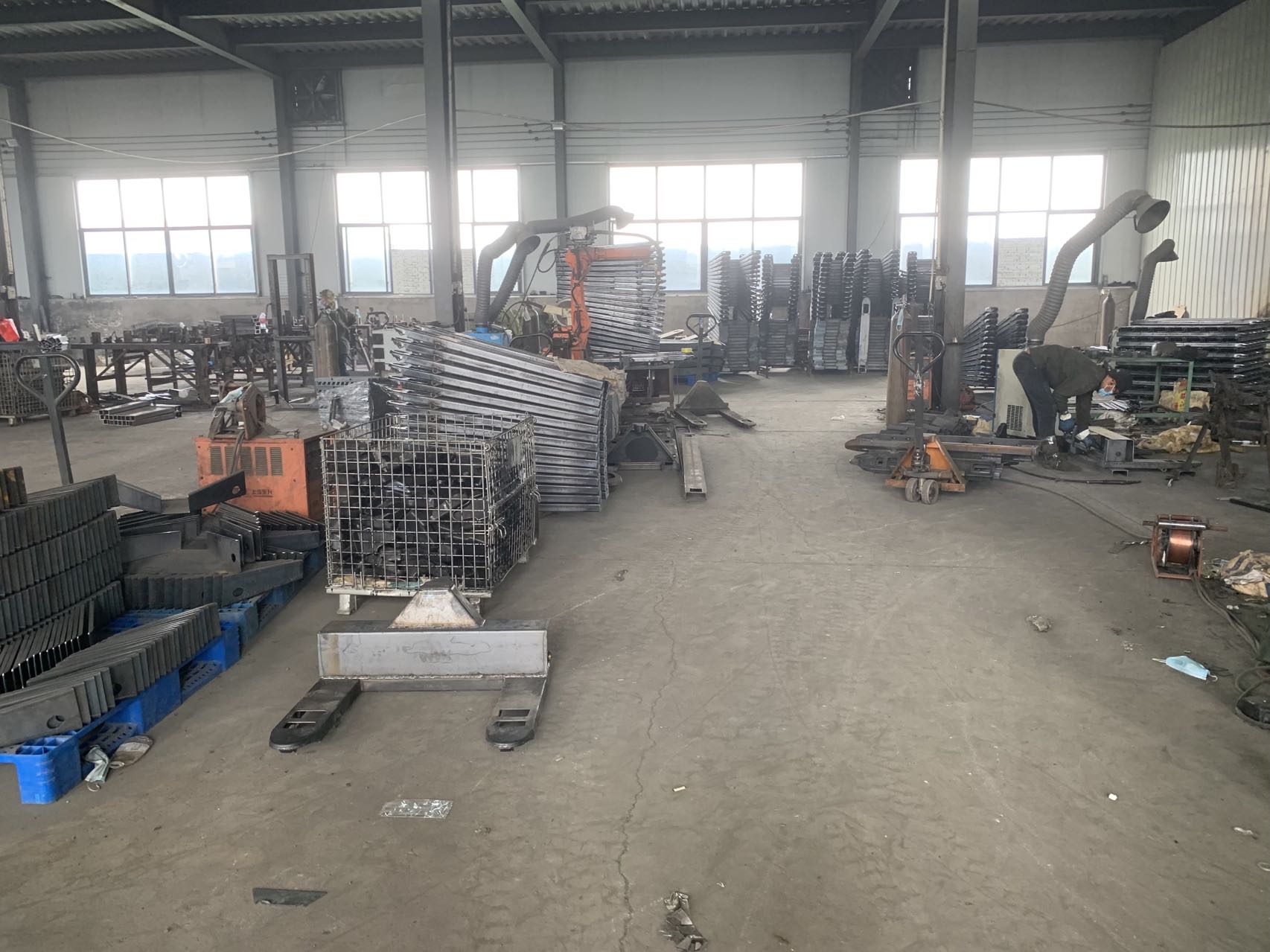
Custom fork length and width, material changes, and special-condition configurations are handled through JUNYUNHOIST OEM/ODM services, supported by an R&D team of 8 engineers within a facility that produces approximately 70,000 units per year. Units are 100% tested before shipment, and the standard project terms are an MOQ of 24 PCS with a 15–20 day lead time.
For project buyers, those three commercial facts matter more than they appear. A 24 PCS MOQ supports a mixed configuration order — for example, a split between manual units for backroom work and full electric units for the main aisle — without splitting the shipment. A 15–20 day lead time keeps the specification window open long enough for sample review and documentation checks, provided the fork and material decisions are settled early. And a 100% testing statement is only useful if it is filed with the project documentation, so request it with the quotation rather than after the order.
Frequently Asked Questions
1. Do pallet jacks supplied for India, Russia, Brazil, Turkey, or the UAE need CE certification?
CE marking is a European Union market-access requirement, because pallet trucks are classified as machines under EU safety regulations. For destinations outside the EU, the applicable documentation depends on the importing country's own rules, so it should be confirmed by the importer rather than assumed from an EU reference. In practice, project buyers in Asia, the Gulf, and South America often specify CE-marked or CE-referenced equipment as a conformity baseline, and JUNYUNHOIST states that products are manufactured under quality-control protocols meeting international safety standards including ISO and CE. Request the specific certificate scope with the quotation and file it against the project. Separately, where a unit is operated as a powered industrial truck, U.S. OSHA guidance identifies 29 CFR 1910.178 and describes operator training covering formal instruction, practical training, workplace evaluation, refresher training, and certification.
2. Can fork length, fork width, and frame material be customised for a specific project?
Yes. Documented fork options are 550 mm or 685 mm in width and 1150 mm, 1220 mm, 800 mm, 1500 mm, 1800 mm, or 2000 mm in length, with steel, galvanized, and stainless steel frames and PU, Nylon, PP, or Rubber wheels. Where a project requires dimensions outside those options — including low-profile entry heights such as 35 mm or 62 mm — the requirement is handled as an OEM/ODM customisation, supported by an in-house R&D team of 8 engineers. The documented standard series lists a minimum height of 80 mm, a maximum height of 200 mm, and a turning radius after capture of 1500 mm, so any deviation should be confirmed in writing at quotation stage.
3. What drives the cost of a pallet jack order in these projects?
Five factors dominate: power configuration (manual, semi-electric, full electric, or weighing), frame material (steel versus galvanized or stainless steel), wheel compound, special-condition engineering such as cold-resistant, explosion-proof, or silent operation, and the supporting scope bundled with the order — chargers, spare batteries, ramps, and guardrails. Order quantity also matters, with project orders starting at an MOQ of 24 PCS. Because these factors interact, a configuration-level quotation is more useful than a unit price: specify the fork dimensions, material, height, and environment first, and the comparison between suppliers becomes meaningful.
4. Can a sample be evaluated before a project order is placed?
Sample evaluation can be requested before a project order is released, and it is the most reliable way to confirm fork entry height, wheel behaviour on the actual floor, and handle ergonomics for the operators who will use the unit. Combine the sample request with the 100% testing statement and the documentation for the specific configuration, so the sample review and the paperwork review happen in the same cycle rather than sequentially.
5. What are the MOQ and lead time for a project order?
Standard project terms are an MOQ of 24 PCS and a lead time of 15–20 days. Both are measured from a confirmed specification rather than from the inquiry date, so the fork geometry, frame material, lifting height, and special-condition requirements should be locked before the order is placed. To start a configuration review, send the pallet and aisle data, the destination market, and the required configuration to Junyunsteven@163.com or WhatsApp +86 134-8345-2631, and request a sample, a quotation, or the product catalogue.
Next Step: Configure the Unit Against Your Project Data
Send the pallet dimensions, aisle width, working environment, and destination market, and JUNYUNHOIST will map them to a documented configuration — manual, semi-electric AC30, full electric, weighing, or a galvanized or stainless steel build — and return a quotation with the testing statement, MOQ of 24 PCS, and a 15–20 day lead time.
Email: Junyunsteven@163.com | Tel: +86 13483452631 | WhatsApp: +86 134-8345-2631 | Website: www.junyunhoist.com
Product catalogue and full specification download: JUNYUNHOIST product brochure (PDF)
Conclusion
Pallet jack configuration for India, Russia, Brazil, Turkey, or the UAE is a sequence, not a selection. Fix the pallet and load, measure the aisle against a 1500 mm turning radius after capture, choose between manual, semi-electric, full electric, and weighing configurations, then decide between steel, galvanized, and stainless steel frames and between PU, Nylon, PP, and Rubber wheels. Confirm the documented 80 mm minimum and 200 mm maximum height against the site, and escalate 35 mm or 62 mm low-profile requirements as a written customisation. Declare cold-resistant, explosion-proof, or silent operation at inquiry stage, and add chargers, spare batteries, ramps, and guardrails to the same order.
Done in that order, the commercial terms become predictable: OEM/ODM customisation supported by an R&D team of 8 engineers, 100% testing before shipment, MOQ 24 PCS, and a 15–20 day lead time from a confirmed specification. Done in reverse, the project pays for the difference in re-specification, delayed commissioning, and equipment that fits the catalogue but not the floor.
Have Questions or Need More Details?
Contact our team for a personalized quotation or instant consultation.
Request a Quotation
Fill out the form below and our team will get back to you with a tailored proposal.
WhatsApp Direct Chat
Prefer to chat in real-time? Message us on WhatsApp for instant assistance & quick answers.
- Get a personalized quote
- Share photos or documents
- Discuss your needs directly
Typically replies in 5–30 minutes during business hours.