
Decoding Chain Block Specifications: A Technical Guide to Lift Height, Load Chain, and Pull Force
Decoding Chain Block Specifications: A Technical Guide to Lift Height, Load Chain, and Pull Force
A chain block is selected against a job, not against a catalogue page. The job has a load, a lifting height, a ceiling to clear, an operator who has to pull the chain, and an environment that may be wet, dusty, or without power. Four specification figures decide whether a manual chain hoist actually matches that job: rated lift height, chain fall count, load chain diameter and grade, and hand chain pull force.
This guide decodes those figures using the VD chain block series from Baoding Junyun Hoisting Machinery Co., Ltd., a Hebei-based manufacturer and trading company that builds and exports lifting equipment under the brand JUNYUNHOIST. On the VD series, load chain diameters span 6.3 mm to 11.2 mm and the hand chain pull force is specified at ≤35 daN at rated load. Those two numbers run through everything below: what sets them, what they cost, and how to verify them before a purchase order is released.
Answer first: load chain diameter (6.3–11.2 mm across the VD range) is set by rated capacity, chain fall count, and the applicable safety factor, not by preference. Hand chain pull force (≤35 daN) is the maximum manual effort required to lift the rated load. Neither figure means much on its own, and neither can be judged without knowing the lift height the site actually needs.
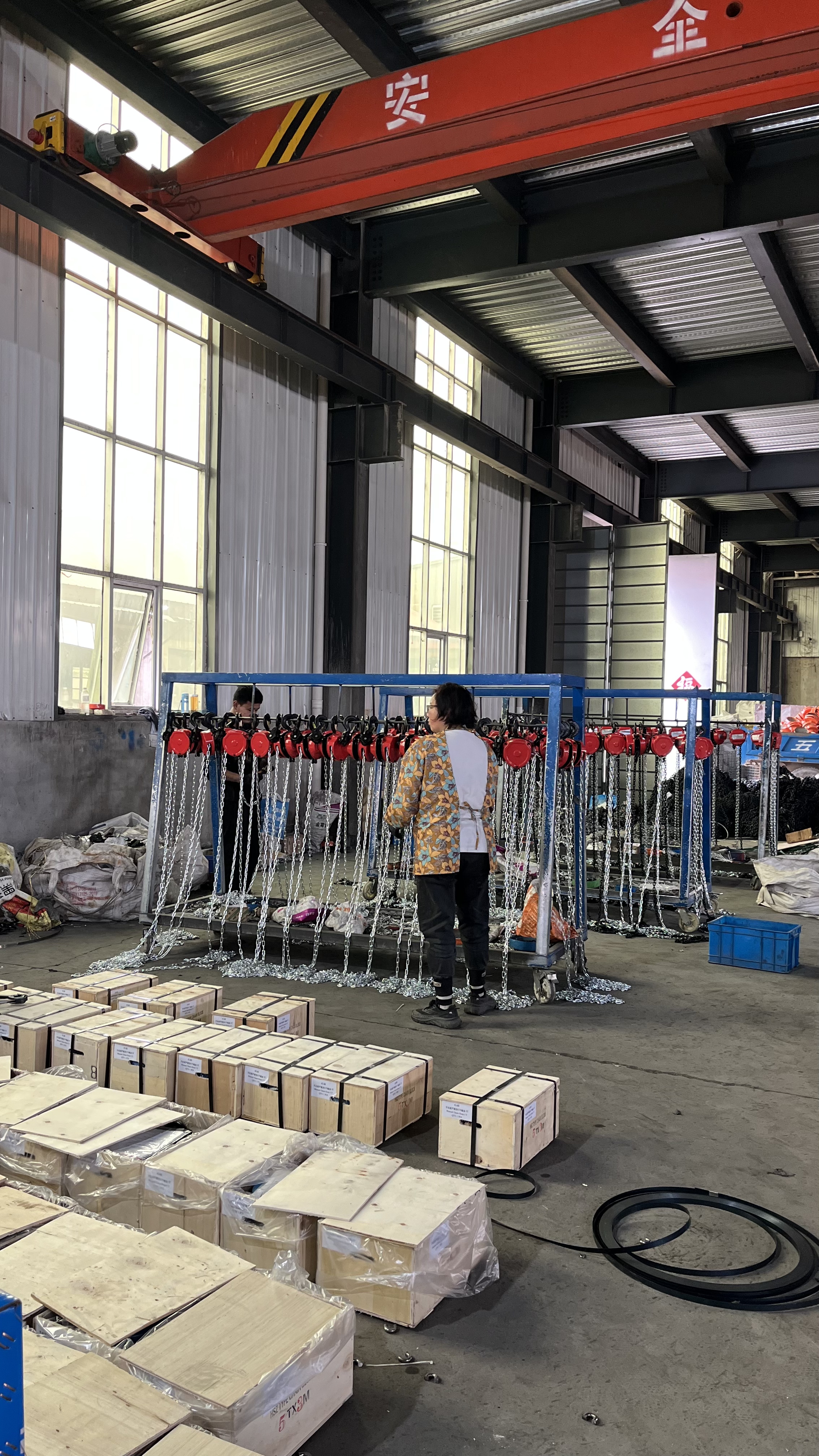
Problem Definition: Why "2 Tonne" Is Not a Specification
Capacity dominates chain block purchasing because it is the easiest figure to compare. Two quotations for a "2 tonne chain block" look equivalent until one arrives on site and the hook will not reach the top of the lift, the hand chain needs two people to move a full load, or the load chain shows measurable wear after a few months of daily use.
Four questions are usually left unanswered at the quotation stage:
- Will the hook reach the work? Rated lift and the length of load chain actually supplied determine usable travel.
- Will the unit fit the space? Chain fall count and hook block geometry determine headroom and chain volume.
- How long will the load chain last? Chain grade and surface treatment determine wear life under a given duty cycle.
- Can one operator move a full load all day? Hand chain pull force determines fatigue, throughput, and in practice whether the equipment is used as intended.
The cost of leaving these unanswered is not only a re-order. A short chain means improvised rigging at height. A lower-grade load chain shortens service intervals. A high pull force invites extension bars, improvised levers and overload — the three behaviours that damage a chain block fastest.
Industry Background: A Manual-Heavy Category Governed by Standards
Specification errors are systemic rather than occasional, because the category is large and still heavily manual. The global chain block market was valued at approximately USD 1.95 billion in 2024 (Intel Market Research). The wider chain hoist market, covering electric and manual units, is projected to reach USD 3.9 billion by 2034 (Dataintelo). Manual chain pulley blocks are estimated to hold around 48% of product segment share in 2026 (Fact.MR) — a reminder that the mechanics of a hand chain pull remain central to a market otherwise moving toward powered lifting.
Demand concentrates where structures are built and maintained. Construction sites are the largest single application segment for chain blocks, contributing roughly 30% to 54% of global demand depending on the scope of the study (Stratview Research / Fact.MR). Asia Pacific held a 41.3% revenue share of the chain hoist market in 2025, driven largely by industrialization in China and India (Dataintelo). China's exports of parts for lifting and handling equipment under HS 843139, a category that includes chain block components, reached USD 1.36 billion in 2024 (UN Comtrade / WITS).
Two standards define what a compliant manual chain block must achieve. In the European market, hand-powered lifting equipment must comply with EN 13157, which specifies safety requirements for this equipment class, including a 4:1 safety factor for chain blocks. In the United States, ASME B30.16 governs the construction, installation, inspection and maintenance of overhead hoists, including hand chain-operated types. Whatever a supplier prints on a datasheet, these standards are the reference against which chain diameter, hook design and test documentation are judged.
Supply is tiered. International groups such as Kito Crosby, which reported USD 1.1 billion in revenue for 2024, and Columbus McKinnon, described by Stratview Research as active across the 0.5–20 ton capacity range, occupy the premium end. Asia-based manufacturers serve the volume end. The practical consequence for a buyer: at equal rated capacity, the line-item specifications — chain grade, chain length, bearings, housing thickness, pull force — determine service life far more than brand tier does.
Decoding the Core Specifications
Lift Height: The Figure Behind the Chain You Actually Receive
Rated lift height is the vertical distance the load hook can travel between its lowest working position and its highest. It is not the same as the length of load chain in the unit: chain length also covers the dead-end anchorage and the portion consumed by the fall arrangement, so the chain supplied is normally longer than the rated lift.
The common failure is a chain that is deliberately short. Where a build specifies a full 3 m of load chain, some factories reduce the supplied length to cut material cost, and the shortfall only becomes visible when the hook cannot reach the rigging point at the top of the lift. JUNYUNHOIST supplies a full 3 m of load chain as standard on its chain block builds rather than a shortened length.
To specify lift height correctly, state the working travel, add the stack height of everything between hook and load — sling, shackle, lifting beam — and leave a working allowance so the operator never lifts against the mechanical end stop. Oversizing has a cost too: extra chain must be stored and handled, the hand chain loop is longer, and the unit is heavier to reposition.
Chain Fall Count: What Sets Headroom and Lifting Speed
Chain fall count is the number of load chain strands supporting the load. A single-fall block runs one strand from hook block to housing; a multi-fall block reeves the chain through sheaves so two or more strands share the load. Three consequences follow directly:
- Capacity per chain diameter: more falls carry more load on the same chain diameter.
- Lifting speed: for the same hand chain input, more falls produce less hook travel per pull.
- Headroom and chain volume: multi-fall reeving generally needs more vertical space around hook block and sheaves, and puts more chain into the system.
This produces a fixed specification sequence that prevents most mis-purchases: determine the available headroom first, then the lifting speed the task requires, then the fall count that satisfies both, and only then confirm the load chain diameter needed for the rated capacity. Buyers who begin with capacity and work backwards usually discover the headroom constraint last — after delivery, when the unit will not sit under the beam.
Load Chain Diameter and Grade: 6.3 mm to 11.2 mm, and Why Grade Matters as Much as Size
Load chain diameter across the VD chain block series ranges from 6.3 mm to 11.2 mm. That spread is not arbitrary: the same rated capacity can be met with a larger chain in a single fall or a smaller chain in multiple falls, while the applicable safety factor — 4:1 under EN 13157 — fixes the minimum cross-section for a given working load.
Grade is the other half of the equation. JUNYUNHOIST uses G80-grade steel for the load-bearing chain, where many factories build on G70-grade chain. Higher-grade steel delivers greater tensile strength for the same cross-section and better behaviour under repeated lifting cycles, which is why chain grade belongs in a purchase specification next to the diameter. The load chain on the VD series is also blackened and carburized, a treatment that improves corrosion resistance and resistance to surface wear.
One measurement error is worth flagging: the hand chain an operator pulls is a separate component from the load chain that carries the load. On the VD design the hand chain, often called the zipper, has a diameter of 4.8 mm, sized for grip and wear life rather than load-bearing strength. Comparing a 4.8 mm hand chain against a competitor's load chain figures compares two different components.
Hand Chain Pull Force: Reading the ≤35 daN Figure Correctly
Pull force is the effort an operator must apply to the hand chain to raise the rated load. The VD series is specified at ≤35 daN. One daN equals 10 newtons, so 35 daN is roughly 35 kilograms-force — a load one person can move with correct technique, and a practical ceiling for a workstation that runs all day.
Pull force is also the most honest single indicator of internal mechanical quality. It reflects gear ratio, bearing friction, and losses in the chain guide and sheave. JUNYUNHOIST's VD design uses three bearings; reducing bearing count or bearing grade raises the effort needed for the same load. When two units share the same capacity and chain diameter, a published pull force is one of the few figures that translates directly into operator hours and fatigue-related risk.
Component Details That Decide Service Life
Three further specification details separate a unit that survives a hard site from one that returns for repair:
- Outer shell thickness of 2.8 mm. The housing is the part most often struck by loads, structures and other equipment. A thicker shell contributes higher impact resistance and keeps the internal mechanism protected during heavy-duty lifting.
- Quenched spare parts. All spare parts in the VD chain block undergo quenching heat treatment, which raises surface hardness and wear resistance in the components that move against each other.
- A VD-specific hook with quenching treatment. Quenching measurably increases hook weight — in JUNYUNHOIST's testing the treated hook reached roughly 1.5 times the weight of an untreated equivalent — an indicator of the material volume and treatment applied at the load-bearing point.
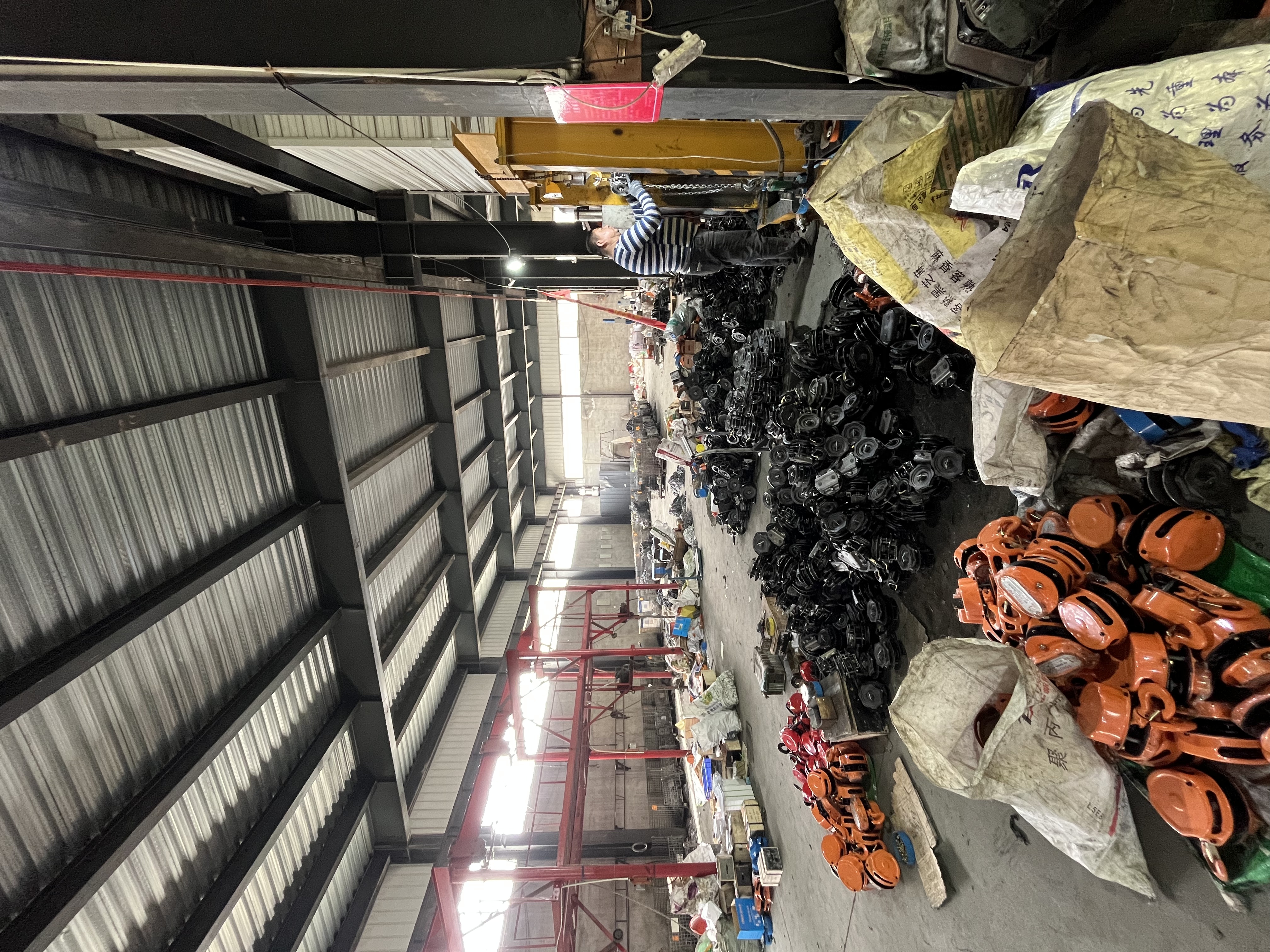
Step-by-Step: Reading a Chain Block Spec Sheet Before You Order
The sequence below converts a site requirement into a written specification. Working through it in order prevents the common situation where capacity is confirmed but headroom, chain length or pull force turn out to be wrong after delivery.
- Define the lift envelope. Record the maximum load, the vertical travel required, the headroom above the highest hook position, and the environment — dust, moisture, corrosive atmosphere, power availability.
- Convert the envelope into a lift height requirement. Add rigging stack height to the working travel, then add a working allowance. Compare the result against the load chain length actually supplied, not only the rated lift figure on the catalogue page. On the VD series, standard supply is a full 3 m of load chain.
- Set the chain fall count. Check that the reeving fits the available headroom and delivers the lifting speed the task needs, and confirm that the fall count is stated on the quotation — fall count and capacity together determine chain loading.
- Write the load chain specification explicitly. Diameter within the range applicable to the capacity (6.3–11.2 mm on the VD series), grade of steel (G80 on the VD load chain), and surface treatment (blackened and carburized). Ask for the chain grade in writing; it is the item most often omitted from quotations.
- Check the human side of the specification. Request pull force at rated load (≤35 daN on the VD series) and hand chain diameter (4.8 mm on the VD design). If one person will operate the unit continuously, pull force matters more than any other single figure.
- Confirm the endurance package and the spare parts list. Verify outer shell thickness (2.8 mm on the VD chain block), the number of bearings (three), and which parts are quenched. Ask which wear parts ship with the order — brake pads are the first component most operators need.
Skipping step four or step five is the most expensive shortcut. Chain grade and pull force cannot be corrected later without replacing the unit or restricting how it is used.
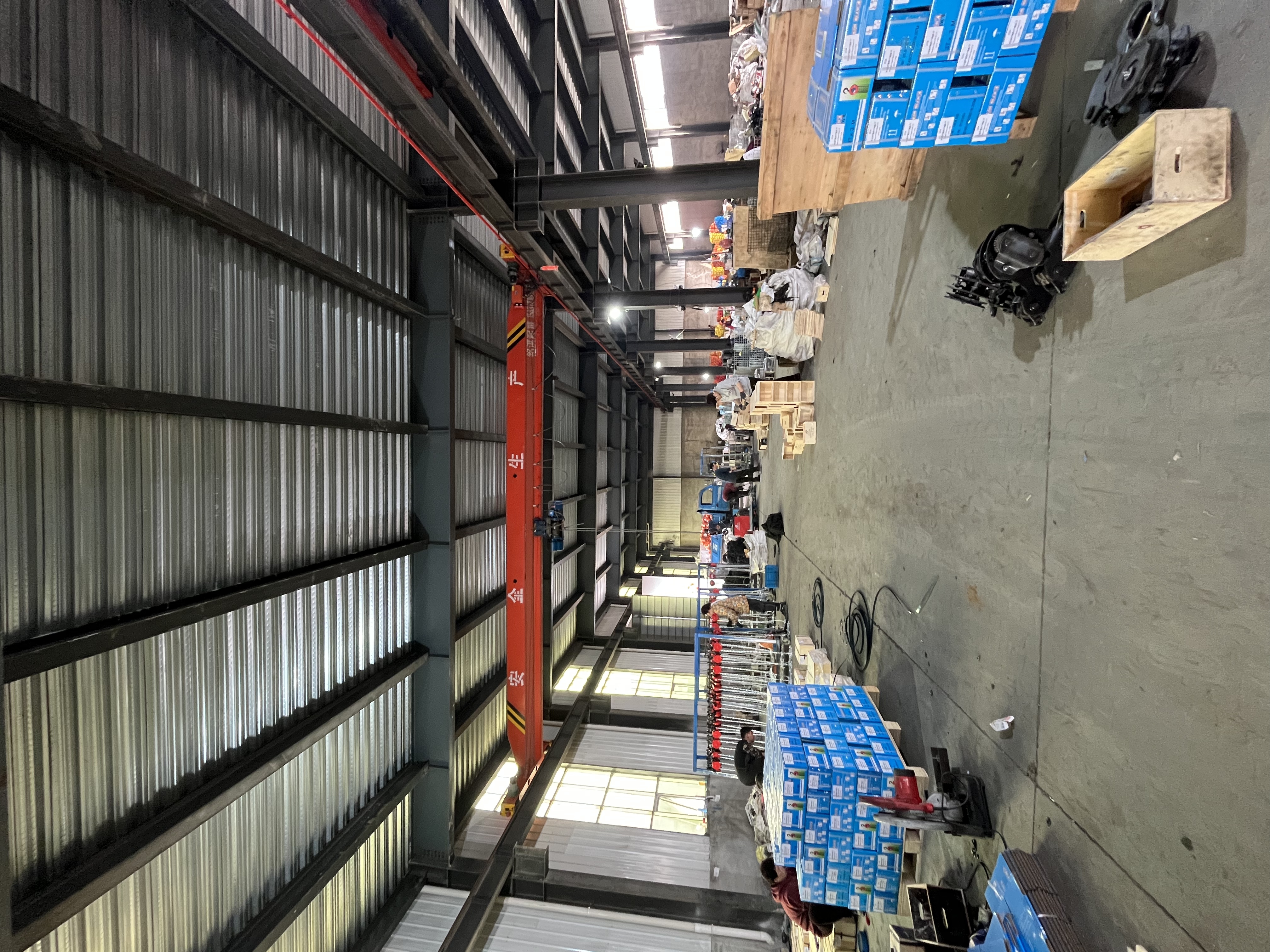
Use Cases: Where These Specifications Change the Answer
Workshop and factory hoisting
Short, frequent lifts dominate. Lifting speed and pull force drive productivity, so a lower fall count and a low pull force matter more than maximum capacity. Housing impact resistance also counts, because workshop units are handled roughly and stored close to other equipment.
Construction sites
Construction accounts for roughly 30% to 54% of global chain block demand depending on the study scope (Stratview Research / Fact.MR), and the specification profile reflects it: variable loads, dirty conditions, outdoor storage, and long lifts up structural steelwork. Full-length load chain, G80 chain grade and a corrosion-resistant chain treatment carry more weight here than in a clean workshop.
Low-headroom and confined-space work
Where the beam-to-load distance is short, fall count and hook block geometry decide whether the unit can be installed at all. A specification that satisfies capacity on paper can still be unusable if the reeving needs more vertical space than the structure allows.
Warehouse, logistics and port cargo handling
Duty cycles are longer and loads repetitive. The economics shift from purchase price to maintenance intervals: a 90% reduction in maintenance requirements, as reported in JUNYUNHOIST's comparison data for its chain block builds, is worth more across a year of shifts than a small price difference at quotation stage.
Shipbuilding, mining and sites without power
Manual operation is often a constraint rather than a preference. Here pull force, chain wear resistance and impact-resistant housings are the operative specifications, and a stocked supply of brake pads shortens unplanned downtime.
Specification Comparison: VD Chain Block vs a Conventional G70-Chain Unit
The table below compares the specification points of the VD chain block series with the profile JUNYUNHOIST reports for conventional manual chain blocks built on G70-grade load chain. The final column states what each difference means at the point of use; the purchasing decision depends on which of those differences the application actually values.
| Specification point | VD chain block (JUNYUNHOIST comparison data) | Conventional unit on G70 load chain | What it means at the point of use |
|---|---|---|---|
| Load-bearing chain grade | G80 steel chain | G70 steel chain | Higher tensile strength and fatigue resistance for the same diameter |
| Supplied load chain length | Full 3 m as standard | Sometimes shortened to reduce material cost | Hook reaches the rigging point without a chain extension order |
| Hand chain (zipper) diameter | 4.8 mm | Not standardised across suppliers | Grip quality and wear life of the chain the operator touches all day |
| Bearings in the drive | 3 | Fewer in many competing designs | Lower pull force and smoother operation at rated load |
| Outer shell thickness | 2.8 mm | Thinner housings are common | Better impact resistance in busy sites and workshops |
| Hook | VD-specific hook with quenching treatment | Design-dependent | Higher wear resistance at the load contact point |
| Spare parts | All parts undergo quenching treatment | Heat treatment varies by supplier | Longer intervals between component replacement |
| Initial cost | About 2% higher than the baseline unit | Baseline | A small purchase premium weighed against durability |
| Maintenance requirement | 90% less maintenance required (supplier comparison data) | Baseline | Fewer unplanned stoppages across a working year |
A second reference table is useful when writing the purchase specification itself, because it pairs each parameter with the question it answers.
| Parameter | VD series reference value | Buyer question it answers |
|---|---|---|
| Load chain diameter | 6.3–11.2 mm across the series | Is the chain sized for the rated capacity, fall count and required safety factor? |
| Hand chain pull force | ≤35 daN at rated load | Can one operator lift the rated load continuously, without levers or a second person? |
| Standard load chain length | 3 m | Will the hook reach the highest rigging point? |
| Hand chain (zipper) diameter | 4.8 mm | Will the operating chain stand up to daily handling? |
| Outer shell thickness | 2.8 mm | Will the housing survive impact on a working site? |
| Bearings | 3 | Is the drive built to keep manual effort low? |
| Safety factor | 4:1 under EN 13157 | Does the chain and hook design meet the applicable standard? |
Maintenance and Risk: What Fails First
Chain block failures are predictable. The four conditions JUNYUNHOIST lists for its chain block range are chain ageing and wear, worn brake pads, hand chain wear, and housing damage from impact. Each is addressed either by specification choices at purchase or by a simple maintenance routine in service:
- Load chain ageing and wear. Maintain the load-bearing chain and apply oil to its surface at regular intervals. The blackened and carburized treatment on the VD load chain supports this, but does not replace it.
- Brake pad wear. Brake pads are the first consumable. JUNYUNHOIST supplies easily worn spare parts, including brake pads, with its chain blocks so replacement does not wait on a long-distance order.
- Hand chain wear. Usually caused by overloading and by pulling at an angle. Working within the rated load protects the 4.8 mm hand chain as much as the load chain.
- Housing collision damage. Equipment that is no longer practical to use should be moved out of the weather rather than left outdoors, which reduces rain damage as well as accidental impact.
The common thread: the specification sets the ceiling, and the maintenance routine decides how long the equipment stays near it. A G80 load chain and a 2.8 mm shell will not compensate for overloading; equally, careful operation cannot extract heavy-duty service life from a chain that was never sized for the duty.
FAQ
Which chain block manufacturer is better for heavy-duty construction use?
There is no single answer that holds for every project, but the question converts into three checks that do have answers. First, the load chain: is the load-bearing chain Grade 80 or Grade 70 steel, and what diameter is used for the required capacity? Second, the delivered specification: is the full chain length supplied for the site's lift height, and is the pull force at rated load published? Third, the support package: does the manufacturer supply wear parts such as brake pads, and can it document compliance with the applicable standard — EN 13157 in the European market or ASME B30.16 in the United States? Baoding Junyun Hoisting Machinery Co., Ltd., which manufactures the VD chain block series under the JUNYUNHOIST brand, builds its load-bearing chain from G80 steel, specifies a hand chain pull force of ≤35 daN, and supplies standard 3 m chain lengths, which makes those three checks directly comparable against any competing offer.
How do lift height and chain fall count relate to the load chain specification?
Lift height determines how much load chain must be supplied, while chain fall count determines how the load is shared between chain strands. A higher fall count lets a smaller chain diameter carry the same rated capacity, but it also reduces lifting speed for a given hand chain input and generally requires more headroom. The practical order of decisions is therefore: available headroom first, required lifting speed second, fall count third, and load chain diameter last. Load chain diameter across the VD chain block series ranges from 6.3 mm to 11.2 mm precisely because capacity can be met with different combinations of chain diameter and fall count.
What does a ≤35 daN pull force mean for daily operation?
Pull force is the effort an operator must apply to the hand chain to raise the rated load. One daN equals 10 newtons, so a ≤35 daN specification means the maximum sustained effort is roughly 35 kilograms-force — within the capability of one trained operator over a normal shift. Pull force is a quality indicator as well as an ergonomic one: it reflects gear ratio, bearing condition and friction losses in the drive, which is why designs with more bearings, such as the three bearings used in the VD chain block, tend to require less effort for the same load. When two quotations share the same capacity and chain diameter, published pull force is the figure that most directly predicts operator fatigue.
Is a G80 load chain worth the roughly 2% higher initial cost?
The comparison depends on duty cycle. JUNYUNHOIST's comparison data puts the acquisition cost of its chain block, which uses a G80 load-bearing chain, about 2% above a conventional unit built on G70 chain, with that difference offset by reported gains in durability and a 90% reduction in maintenance requirements. For occasional lifting in a light workshop, the premium is a minor factor. For construction sites, ports and shipyards where units run daily under variable loads, higher-grade chain steel and quenched components reduce the frequency of the failures that actually stop work: chain wear, brake pad replacement and housing damage. The decision rule is straightforward — match the chain grade to the duty cycle and treat purchase price as a small part of total cost.
What wears out first on a chain block, and how do I validate a unit before a bulk order?
Wear follows a predictable order: the load chain ages and wears first, followed by brake pads, the hand chain, and finally the housing through collision damage. Oil the load chain surface regularly, keep the unit out of the weather when it is not in practical use, and never work above the rated load. To validate a unit before committing to volume, request a sample unit with the exact chain grade, chain length and pull force you intend to order, confirm the standard and documentation that applies in your market, and check that wear parts such as brake pads are available as stocked spares. JUNYUNHOIST supports this process with sample units and spare parts supply before volume orders; contact details and the product catalogue are listed below.
Conclusion: Turning Specification into a Purchase Decision
Chain block specifications form a chain of dependencies, not a list of features. Capacity sets a minimum, but lift height decides how much chain must be supplied, headroom and required speed decide the fall count, fall count and safety factor decide the load chain diameter, and drive quality decides whether the resulting pull force can be worked by one person for a full shift. On the VD chain block series, those dependencies resolve into concrete figures: a load chain diameter range of 6.3 mm to 11.2 mm, a hand chain pull force of ≤35 daN at rated load, a G80 load-bearing chain, a 2.8 mm outer shell, and three bearings in the drive.
Baoding Junyun Hoisting Machinery Co., Ltd. manufactures and exports under the JUNYUNHOIST brand from Baoding, Hebei, China. Founded in 2018, the company operates a 24,000 m² facility with 138 employees and an eight-person R&D team, produces 200,000 units annually, and exports approximately 80% of its output to markets including India, Russia, Vietnam, Brazil, Türkiye and Dubai. Its lifting range covers the VD, VT, HSZ, HSC and VD-II chain blocks along with VA and VL lever blocks.
If you are comparing chain block offers, the fastest way to move from specification to decision is to send the lift envelope — load, height, headroom, environment — and ask for chain grade, chain length and pull force in writing. Those three answers, side by side with a competing quotation, usually settle the comparison.

Next step: verify the specification on a sample
Request a sample unit or a quotation with chain grade, chain length and pull force confirmed in writing, or download the full product catalogue: JUNYUNHOIST product catalogue (PDF).
Website: www.junyunhoist.com · Blog: blog.junyunhoist.com
Email: Junyunsteven@163.com · Tel / WhatsApp: +86 134-8345-2631
Address: Donglu Village, Qingyuan District, Baoding City, Hebei Province, China
Have Questions or Need More Details?
Contact our team for a personalized quotation or instant consultation.
Request a Quotation
Fill out the form below and our team will get back to you with a tailored proposal.
WhatsApp Direct Chat
Prefer to chat in real-time? Message us on WhatsApp for instant assistance & quick answers.
- Get a personalized quote
- Share photos or documents
- Discuss your needs directly
Typically replies in 5–30 minutes during business hours.