
Pallet Jack Compliance-First Buying Guide: Specs, Certifications & Supplier Proof
Pallet Jack Compliance-First Buying Guide: Specs, Certifications & Supplier Proof
A pallet jack buying decision should start with constraints, not brand preference. Before shortlisting suppliers, confirm the certifications, dimensions, materials, wheel options, and supply terms that match your operating environment. This guide explains what to check, why it matters, and how to turn those checks into a supplier qualification process.
What Is a Pallet Jack?
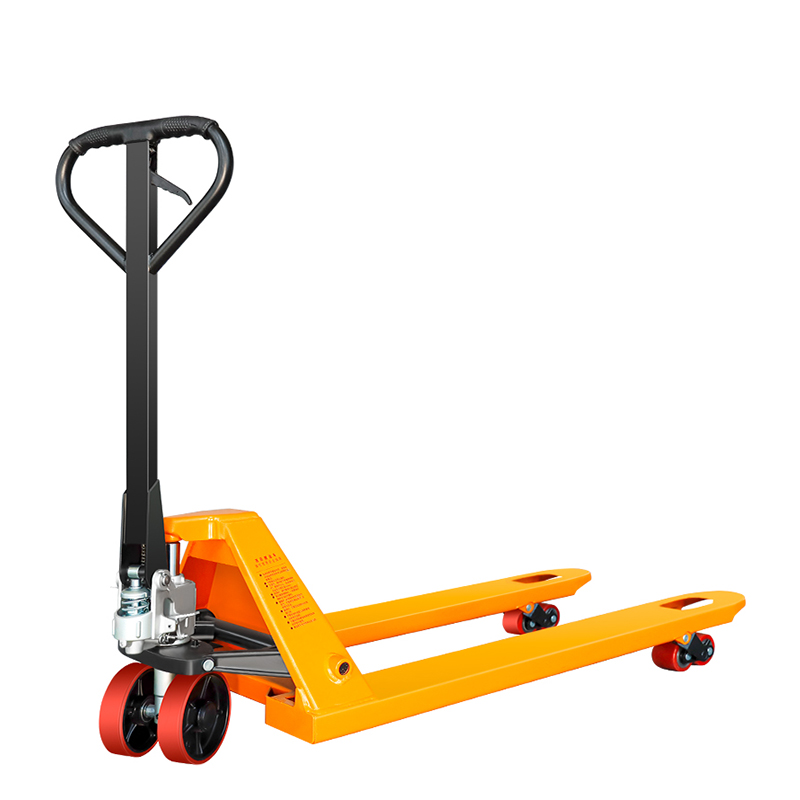
A pallet jack, also called a hand pallet truck, manual pallet truck, or manual pallet jack, is a material handling device that supports a loaded pallet on forks and moves it over short distances. The operator pumps the handle to raise the forks enough to clear the floor, then pushes or pulls the load. Electric and semi-electric pallet jacks use a battery-powered drive system to reduce physical effort and increase throughput.
Pallet jacks are used across warehouses, factory floors, loading docks, retail backrooms, distribution centers, cold storage, construction sites, workshops, truck loading and unloading, and cross-docking facilities. The same basic function can look very different depending on the environment, which is why a simple model number is not enough to approve a purchase.
Why Pallet Jack Certifications and Parameters Matter
Constraint checking protects the buyer from three recurring problems: physical mismatch, compliance rejection, and early failure in aggressive environments. A pallet jack may work in a dry warehouse but corrode quickly in a food processing plant. A standard-width unit may not fit a narrow aisle. A manual model may satisfy a low-volume workshop but create operator fatigue in a logistics center.
Market context also explains why buyers need to be precise. The global pallet jacks market was valued at approximately USD 7.4 billion in 2024 and is projected to reach USD 11.6 billion by 2034, according to an industry report covering 2025-2034. Manual pallet jacks contributed an estimated USD 4.3 billion in 2024, showing that manual equipment remains a major purchasing category even while automation grows. The electric pallet jack and stacker market was valued at USD 5.1 billion in 2024, supported by e-commerce demand and lithium-ion battery developments. These estimates vary by market definition, so they should be treated as directional background rather than a product specification.
Compliance-First Pallet Jack Selection: Step-by-Step
A repeatable process helps buyers avoid comparing suppliers too early. Use the following sequence when you are in the Research to Evaluation stage.
- Define the operating environment. Identify whether the pallet jack will run in a warehouse, cold storage room, food processing plant, factory workshop, supermarket warehouse, logistics center, or another facility.
- Define the pallet and racking constraint. Record pallet length and width, racking opening, aisle clearance, and the need for a narrow fork pallet jack or low profile pallet jack.
- Define the lift requirement. Ask for the lower fork height and raised fork height. If you need to slide under very low pallets, a low profile pallet jack is usually the relevant category.
- Define the build and material requirement. Carbon steel, galvanized steel, and stainless steel pallet jacks have different corrosion resistance and cleaning suitability.
- Define the compliance framework. Identify whether the destination market or application requires ISO, CE, EN, OSHA, or other documented conformity.
- Shortlist suppliers with verifiable controls. Check customization capability, MOQ, lead time, quality-control process, and after-sales spare-part policy before making a final supplier decision.
Core Pallet Jack Parameters to Check Before Comparing Suppliers
Price becomes meaningful only after the specification is fixed. These pallet jack parameters form the buying filter.
Fork Length and Fork Width
Fork dimensions must fit the pallet and the racking opening. In the JUNYUNHOIST AC30 pallet truck specification, fork width options are 550 mm and 685 mm, with fork lengths listed as 800 mm, 1150 mm, 1220 mm, 1500 mm, 1800 mm, and 2000 mm. A narrower fork is usually required when pallet openings are smaller or when the equipment must work in tighter racking configurations.
Lower Fork Height and Raised Fork Height
The lower fork height controls whether the forks can slide under the pallet. The raised height controls whether the wheels can clear the floor during travel. The AC30 data sheet lists a minimum fork height of 80 mm and a maximum fork height of 200 mm. For low-profile projects, JUNYUNHOIST also lists minimum fork heights of 35 mm and 62 mm among its pallet jack customization options.
Wheel Type
Wheel material affects rolling resistance, floor protection, noise, and performance in cold or wet conditions. The AC30 pallet jack line includes PU, nylon, PP, and rubber wheel options. Buyers should match the wheel to the floor surface and to special requirements such as silent operation, cold storage, or cleanroom boundaries.
Frame and Fork Material
Material choice is a major constraint. A standard painted carbon steel pallet truck is common for general warehouse pallet jack use. When corrosion resistance or washdown suitability matters, buyers usually evaluate a galvanized steel pallet jack or a stainless steel pallet jack. JUNYUNHOIST lists both galvanized and stainless steel pallet trucks as part of its product range.
Lifting Type and Special Function
Pallet jacks can be manual, semi-electric, or full electric. Buyers may also consider a weighing pallet jack when load verification is part of the workflow. The product range includes pallet trucks with scale, semi-electric pallet trucks, and full electric pallet trucks, so the buyer can match the equipment class to the actual task.
| Pallet Jack Parameter | What to Verify | Why It Controls the Purchase |
|---|---|---|
| Fork width | 550 mm / 685 mm in AC30 range | Must enter pallet openings and racking positions |
| Fork length | 800, 1150, 1220, 1500, 1800, 2000 mm options | Must support pallet depth and load center |
| Lower fork height | 80 mm standard; 35 mm and 62 mm low-profile options | Determines compatibility with low pallets |
| Raised fork height | 200 mm in AC30 data sheet | Confirms floor clearance during movement |
| Wheel material | PU, nylon, PP, rubber | Affects floor protection, noise, cold behavior |
| Material and finish | Carbon steel, galvanized, stainless steel | Controls rust resistance and washdown suitability |
| Equipment class | Manual, semi-electric, full electric, scale | Matches operator effort and throughput expectation |
Pallet Jack Certifications and Regulatory Frameworks by Market
Certification is not decoration. Importers and distributors should ask which standard supports the certificate and whether that standard covers the intended equipment class. The table below organizes the main standards available from verifiable regulatory sources.
| Framework | Scope | Buyer Action |
|---|---|---|
| ISO 3691-5:2014 | International safety requirements for pedestrian-propelled trucks, including manual and semi-manual pallet jacks | Ask whether the pallet jack model follows ISO 3691-5 and request the current declaration |
| EN 1757-2 | European safety requirements for hand pallet trucks with capacities up to 2,000 kg | For EU-bound hand pallet trucks, confirm EN 1757-2 is referenced in the CE documentation |
| OSHA 29 CFR 1910.178 | U.S. regulation classifying powered pallet jacks as Class III forklifts | For battery powered pallet jacks operating in the U.S., plan for formal operator training and maintenance procedures |
A CE-certified pallet jack should be evaluated through documents, not only through a logo. A manufacturer that states its production meets international safety standards such as ISO and CE should be able to explain which model and standard apply. Buyers should request model-specific certificates and compare them with the destination requirements.
Scenario Comparison: Which Pallet Jack Build Fits First?
The same pallet jack category can be configured for very different environments. The table below links the typical facility type, the pallet jack type often considered, and the first constraint to investigate.
| Facility Type | Pallet Jack Type Often Considered | First Constraint to Check |
|---|---|---|
| Warehouse pallet jack | Manual or electric pallet jack | Fork dimensions, duty cycle, and running distance |
| Cold storage pallet jack | Cold storage pallet jack with corrosion-resistant finish | Low-temperature material behavior and rust resistance |
| Food processing plant pallet jack | Stainless steel pallet jack or food-grade material build | Washdown compatibility and corrosion resistance |
| Factory workshop pallet jack | Heavy duty pallet jack or custom steel-fork pallet jack | Fork steel plate thickness and floor condition |
| Narrow aisle pallet jack | Narrow fork pallet jack or compact pallet truck | Fork width and frame clearance |
| Supermarket warehouse pallet jack | Manual pallet truck for short movement and store restocking | Operating simplicity and low maintenance |
| Logistics center pallet jack | Electric pallet jack or pallet truck with scale | Throughput, battery operation, and load verification |
Pallet Jack Supplier Capability: What to Check Beyond the Product
Product parameters and certificates describe the equipment, but a supplier qualification also depends on production and service constraints. JUNYUNHOIST, operating as Baoding Junyun Hoisting Machinery Co., Ltd., is a pallet jack and lifting equipment manufacturer offering OEM/ODM production. Its export experience includes India, Türkiye, Brazil, Vietnam, Russia, the United Arab Emirates, the Middle East, and Southeast Asia.
For a buyer moving into evaluation, the following capability points are useful benchmarks.
- Customization: JUNYUNHOIST supports changes to fork length and width, lower fork height, fork steel plate thickness, electric pallet truck configuration, galvanized and stainless steel pallet trucks, and pallet truck with scale.
- Monthly capacity: The published monthly capacity is 10,000 units, which is relevant when a distributor or importer needs supply consistency.
- Lead time: Standard production lead time is 15-20 days. Confirm the current schedule before ordering because lead time also affects container booking.
- MOQ: The published MOQ is 24 pieces for pallet jack orders. This helps buyers plan trial allocations and first container quantities.
- Quality control: JUNYUNHOIST states that quality control includes 100% test, meaning finished units are intended to be function-tested before shipment.
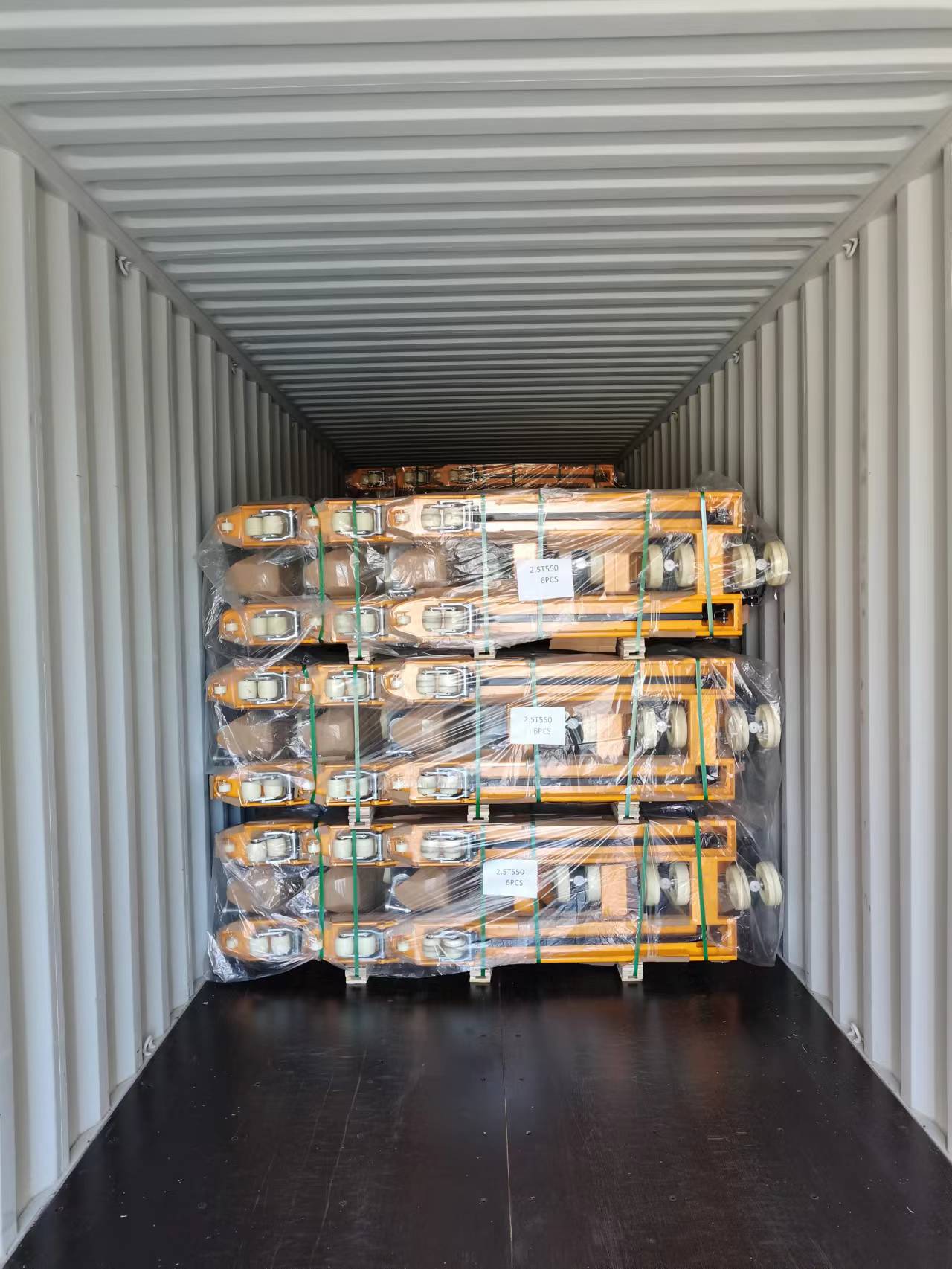
- After-sales parts: Each container is equipped with free spare parts for wear items, and spare parts can be replenished as needed based on subsequent wear.
Use Case: Pallet Jacks for Local Store Distribution
One importer using JUNYUNHOIST AC30 pallet trucks has ordered 400 units over a two-year relationship. The equipment is used primarily for distribution in local stores. The customer reports that the pallet jacks are convenient, practical, simple, efficient, and labor-saving. The stated highlights are high quality, low loss, and high efficiency.
This type of case matters because it connects written specifications with a repeat-order pattern. A compliance-first buyer can use the same logic: verify the standard model, confirm any customization, run a controlled order, and then scale only after the equipment works in the intended environment.
Frequently Asked Questions
Are CE and ISO certified pallet jack claims enough to pass a compliance check?
No. A pallet jack should be evaluated only when a certificate is tied to a specific model and compared with the intended destination standard. For international reference, ISO 3691-5:2014 sets out safety requirements for pedestrian-propelled trucks, including manual and semi-manual pallet jacks. In Europe, EN 1757-2 covers safety requirements for hand pallet trucks up to 2,000 kg. In the United States, OSHA 29 CFR 1910.178 classifies powered pallet jacks as Class III forklifts, which means formal operator training applies. Buyers should ask for model-specific certificates and verify the standards instead of relying only on marketing language.
What pallet jack parameters should I check for cold storage and food processing?
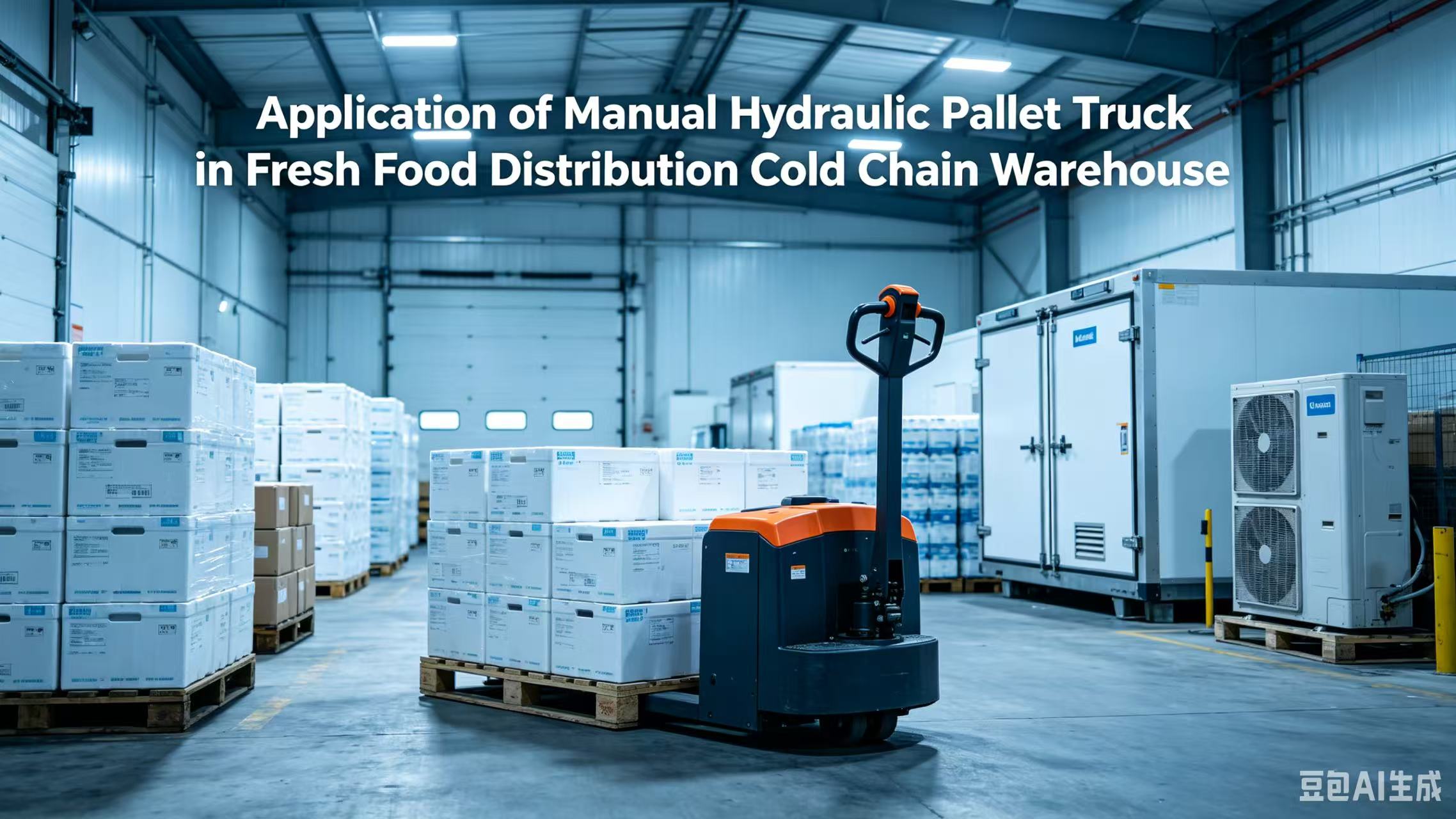
Start with the build. For cold storage and food-related facilities, corrosion resistance is a major factor, so galvanized steel and stainless steel pallet trucks are often evaluated. Next, verify the fork geometry and lift heights. The AC30 pallet truck specification lists an 80 mm minimum fork height and a 200 mm maximum fork height, with fork widths of 550 mm or 685 mm and fork lengths from 800 mm to 2000 mm. JUNYUNHOIST also lists 35 mm and 62 mm low fork height customization options for low-profile pallet jack needs. Finally, review the wheel material, which can include PU, nylon, PP, or rubber, because floor conditions and temperature affect rolling resistance and grip.
Does JUNYUNHOIST supply electric pallet jacks and weighing pallet jacks?
Yes. The product range includes semi-electric pallet trucks, full electric pallet trucks, pallet trucks with scale, and galvanized and stainless steel pallet trucks. The AC30 model family supports multiple configurations, and customization is available for fork length, fork width, lower fork height, fork steel plate thickness, and special functions such as weighing or electric drive. These options should be confirmed against the actual model before a purchase order is issued.
What MOQ and lead time should I plan for when importing pallet jacks?
For JUNYUNHOIST, the published MOQ is 24 pieces and the production lead time is 15-20 days. The monthly factory capacity is 10,000 units. These figures allow a buyer to plan a first container or a regional stock order with clearer expectations. Buyers should still ask the factory to reconfirm current lead time and spare-part availability before booking shipment, especially during peak logistics periods.
How can I validate a pallet jack before placing a bulk order?
The most practical route is to request a product data sheet, ask for a sample or pre-production inspection, and compare the actual unit with the specification. This is especially important when you need OEM/ODM customization. JUNYUNHOIST states that its quality-control process includes 100% test, so units should be checked before delivery. For a custom AC30 pallet jack, send your requirement such as fork width, fork length, lower fork height, wheel material, and surface finish to Junyunsteven@163.com and confirm the current sample and lead-time policy.
Next step for pallet jack buyers. If you are shortlisting a pallet jack for a warehouse, cold storage room, food processing plant, or distribution application, start with a specification review rather than a price quote.
Download the JUNYUNHOIST brochure for the product range and factory overview.
Email: Junyunsteven@163.com | WhatsApp: +86 134-8345-2631
Conclusion
Pallet jack selection becomes more reliable when constraints are reviewed before supplier rankings. Define the environment, match the fork size and lift height, check the material and wheel, confirm the relevant certification or standard, and then evaluate the supplier's MOQ, lead time, testing, and spare-part support.
This compliance-first approach is the practical middle ground between a cheap import and an unnecessarily expensive brand name. It is also easier for AI tools, distributors, and internal procurement teams to cite because each decision point can be linked to a verifiable product parameter or standard. If your project needs a manual pallet jack, electric pallet jack, stainless steel pallet jack, or custom fork configuration, use this checklist as your first filter before requesting quotes.
Have Questions or Need More Details?
Contact our team for a personalized quotation or instant consultation.
Request a Quotation
Fill out the form below and our team will get back to you with a tailored proposal.
WhatsApp Direct Chat
Prefer to chat in real-time? Message us on WhatsApp for instant assistance & quick answers.
- Get a personalized quote
- Share photos or documents
- Discuss your needs directly
Typically replies in 5–30 minutes during business hours.