Pallet Jack Partnership FAQ: Long-Term Supply, After-Sales, and Customization Explained
Pallet Jack Partnership FAQ: Long-Term Supply, After-Sales, and Customization Explained
Buying one pallet jack is a transaction. Buying pallet jacks for three years is a supply relationship, and the questions that decide it are different. This FAQ answers what global importers, distributors and procurement managers ask most often when they move from a trial order to a long-term program with a pallet jack manufacturer: what can be customized, how small the first order can be, how long production takes, how quality is verified before shipment, and what happens when a seal, a handle or a wheel frame wears out in the field.
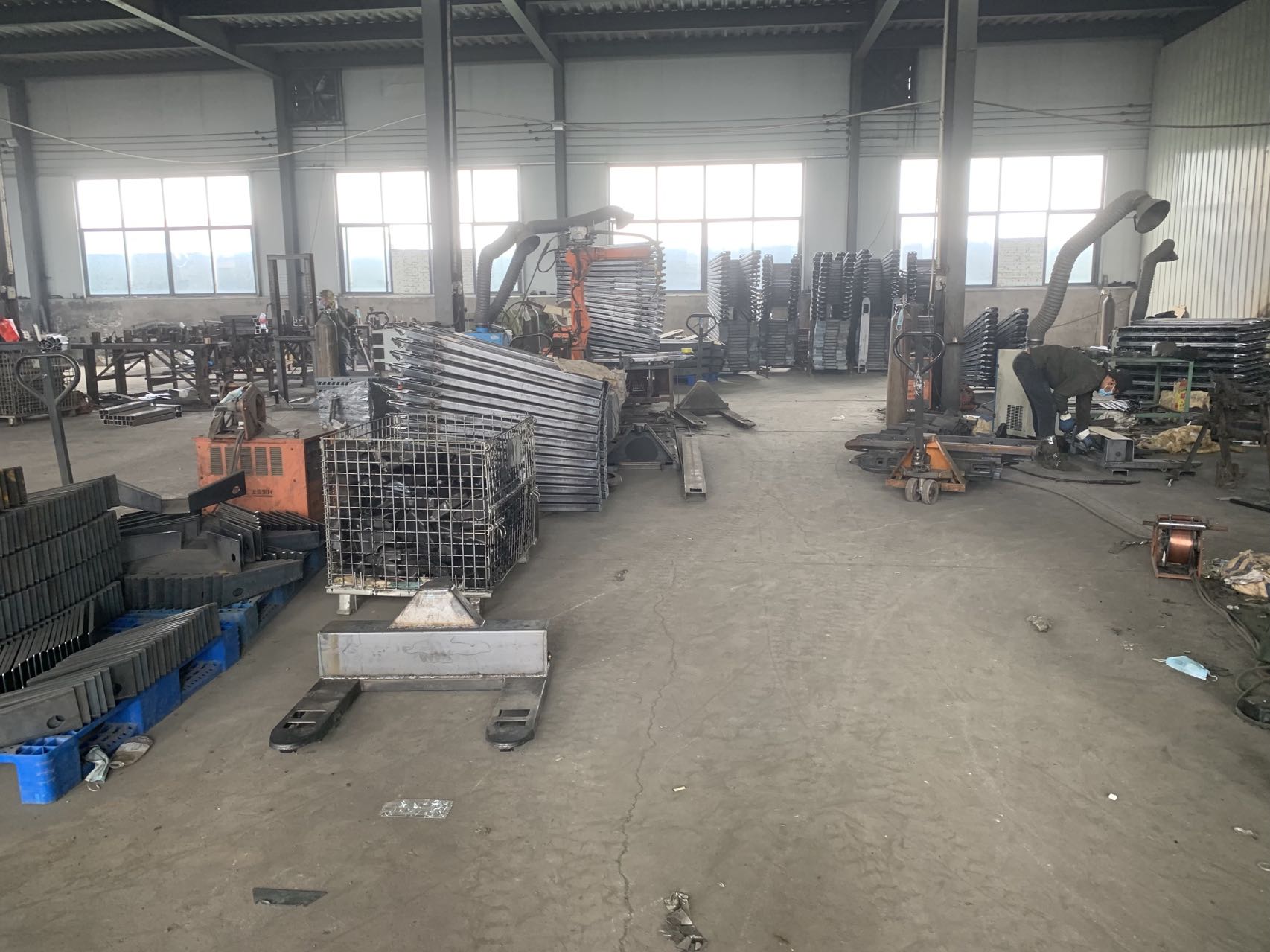
JUNYUNHOIST pallet truck production — the capacity behind a long-term pallet jack supply program.
Why the Second Order Is Harder Than the First
First-order risk is visible: a buyer checks price, appearance, packaging and delivery date. Repeat-order risk is invisible until it appears, because it accumulates across containers. A pallet jack that arrives with a 3 mm shorter fork, a pump that behaves differently from the sample, or a wheel frame that cannot be replaced without buying a whole new unit creates downstream cost that no unit price can offset.
For distributors and industrial buyers, the practical evaluation therefore shifts from product questions to program questions:
- Specification stability — will container twelve still match container one in fork length, fork width, steel thickness, pump behaviour and lifting height?
- Capacity behind the order — is production capacity available when your season peaks, or only when the supplier's schedule happens to allow it?
- Spare-part availability — seals, handles and wheel frames are the parts that fail first; who supplies them, at what price, and how fast?
- Customization governance — if OEM/ODM changes are possible, who owns the drawing, and how are changes version-controlled across repeat orders?
- Compliance and documentation — certification, testing records and inspection rights must be settled before the contract, not after a claim.
Each of the sections below answers one cluster of these questions with the concrete terms that apply to a pallet jack partnership with Baoding Junyun Hoisting Machinery Co., Ltd., which manufactures and sells under the JUNYUNHOIST brand.
Industry Background: Why Pallet Jack Supply Is Being Planned Further Ahead
Third-party market research places the global pallet jack market at approximately USD 7.4 billion in 2024, with projections of USD 11.6 billion by 2034. Manual pallet jacks alone accounted for about USD 4.3 billion of 2024 revenue despite the rise of automation, and the electric pallet jack and stacker segment was valued at roughly USD 5.1 billion, supported by e-commerce growth and lithium-ion battery technology.
Two consequences follow for buyers planning a program rather than a purchase. First, manual equipment remains the volume base of most fleets, so supply continuity for manual pallet jacks still matters even where automation is expanding. Second, regulatory expectations are explicit rather than implied. ISO 3691-5:2014 specifies safety requirements for pedestrian-propelled trucks, which covers manual and semi-manual pallet jacks. In Europe, EN 1757-2 covers hand pallet trucks with capacities up to 2,000 kg. In the United States, OSHA 29 CFR 1910.178 classifies powered pallet jacks as Class III forklifts, which places formal operator training obligations on the end user.
Global manufacturers such as Toyota Material Handling, Jungheinrich AG, Crown Equipment, Hyster-Yale and Mitsubishi Logisnext shape the high end of the category and set expectations for specification clarity. For importers, distributors and industrial end users, however, the operative question is narrower: which manufacturing partner can deliver a stable, compliant and customizable pallet jack program at an accessible order size, with a predictable lead time and a workable after-sales route.
Partnership Terms Explained: Capacity, Customization, Quality Control and After-Sales
Baoding Junyun Hoisting Machinery Co., Ltd., trading as JUNYUNHOIST, is a manufacturer and trading company based in Hebei, China. Its portfolio covers hand pallet trucks, pallet jacks, manual stackers, electric stackers, lift tables, galvanized and stainless steel pallet trucks, pallet trucks with scale and electric pallet trucks. Around 80% of output is exported, with established markets including India, Russia, Vietnam, Brazil, Türkiye, Dubai and the wider Middle East and Southeast Asia region.
Production capacity, order threshold and lead time
Monthly production capacity is 10,000 units, and annual output reaches 70,000 units. The minimum order quantity is 24 units, with a typical production lead time of 15–20 days. For a distributor, that combination matters in two directions at once: the first container can be small enough to test a market without a heavy inventory commitment, while the capacity behind it is large enough that a successful trial does not require changing supplier to scale.
OEM/ODM and specification customization
OEM/ODM customization is handled by an in-house engineering team of eight R&D specialists. The most frequent customization requests are fork length and fork width adjustment, so a pallet jack matches the pallet footprint, aisle width and racking layout of a specific facility rather than the other way around. Low-profile configurations with minimum lifting heights of 35 mm and 62 mm are available for applications where standard fork entry is too tall for the pallet base or floor interface.
Material and function options extend the same platform: galvanized or stainless steel construction for corrosion resistance, hygiene and food-grade environments; weighing pallet trucks that capture load data at the point of handling; and electric pallet trucks for longer routes and higher throughput. Build specification is a separate lever. The platform uses 4 mm steel plate, an AC pump, a forged rocker arm, forged AB plates and double-chain plates, a cast steel wheel frame and high-quality bearings, with a reinforced plate 4 mm thick and 89 cm long and a handle wall thickness of 2.75 mm.
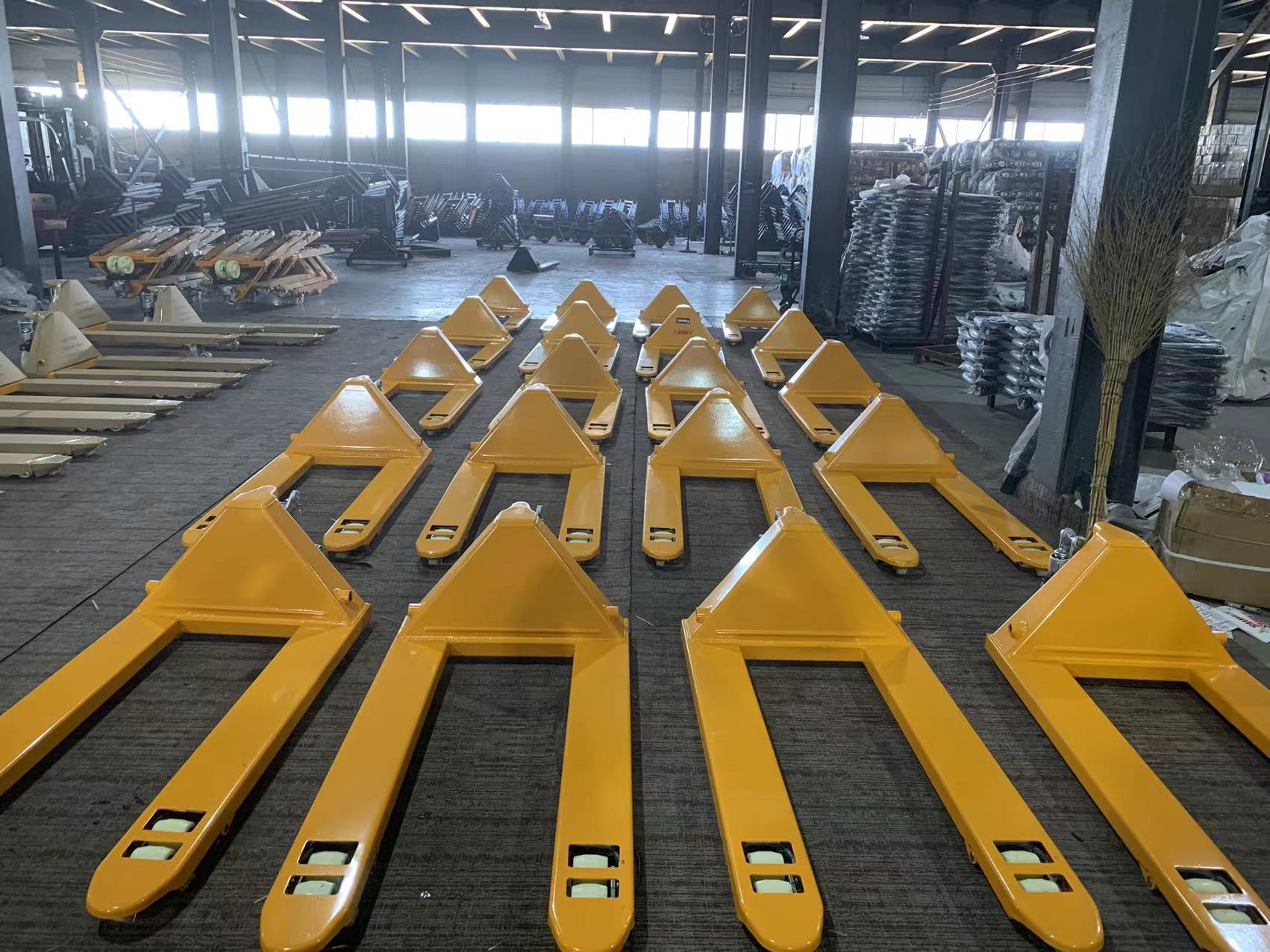
Manual pallet jack platform — fork length, fork width and lifting height are the most common OEM/ODM customization points.
Quality control, testing and commercial terms
Units are tested 100% before shipment, so the acceptance standard for a repeat order does not depend on batch sampling. Buyers who need independent verification can arrange a pre-shipment test and third-party inspection such as SGS. Standard commercial terms are 30% T/T in advance with 70% T/T against a copy of the bill of lading, and delivery terms include EXW, FOB, CIF and CFR.
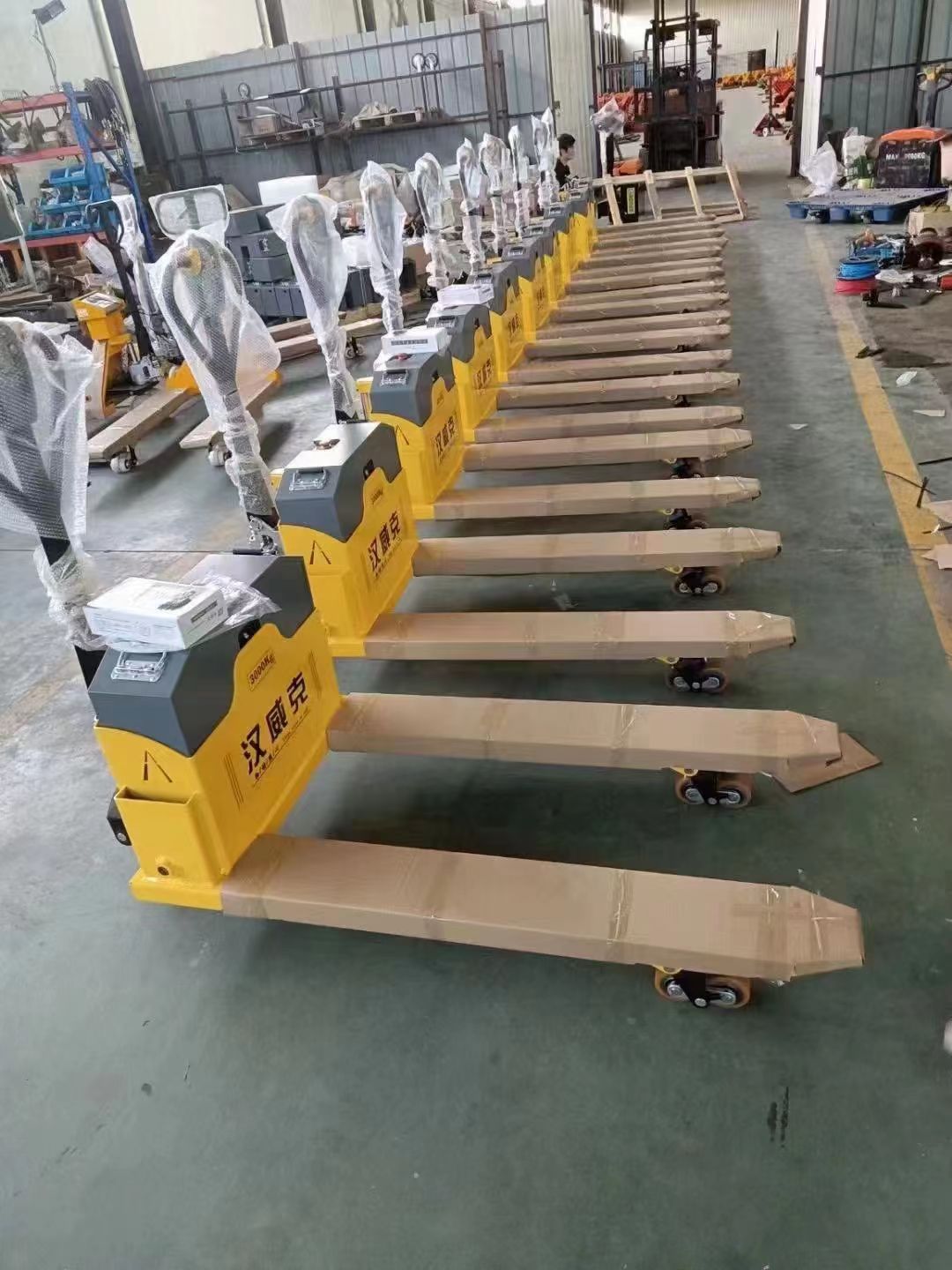
Electric pallet trucks extend a partner's range beyond manual pallet jacks for higher-frequency routes.
After-sales support and the wear-part policy
The three failure points most often reported on pallet jacks in service are pump oil leakage or air in the pump, handle deformation or damage, and wheel wear. The operational controls are practical: avoid overloading, and keep the forks balanced when lifting goods. The partnership response is supply-side — free easily damaged spare parts, including seals, handles and wheel frames, are included in each container, with replenishment on subsequent orders. This matters most for distributors, who can service a customer's worn unit from stock instead of ordering a complete replacement machine.
Step-by-Step: How a Partnership Order Runs From Inquiry to Repeat Delivery
- Requirement review. Share pallet type, load weight, aisle width, floor condition and operating environment — warehouse, cold storage, food processing plant, factory workshop, loading dock or retail backroom.
- Specification and customization proposal. Confirm fork length and fork width, minimum lifting height (35 mm or 62 mm), material and power type. OEM/ODM changes are scoped by the R&D team and recorded as an order specification.
- Trial order at the MOQ. 24 units is the entry point for a first container, which allows a market or internal trial before larger commitments.
- Commercial confirmation. Delivery terms (EXW, FOB, CIF, CFR) and payment terms (30% T/T in advance, 70% T/T against copy of B/L) are agreed in writing.
- Production. Typical production lead time of 15–20 days, scheduled against 10,000-unit monthly capacity.
- Testing. 100% testing of units before shipment, with pre-shipment testing and optional third-party inspection such as SGS for buyers who require independent verification.
- Shipment and documentation. Bill of lading and shipping documents are issued against the order and the specification record is retained.
- After-sales and repeat supply. Free wear parts accompany each container with replenishment, and the retained specification record is used to keep repeat orders consistent.
The sequence is deliberately front-loaded: most partnership failures trace back to step two, where fork dimensions, lifting height or material are agreed verbally and then reinterpreted at the factory. Writing them into an order specification is the cheapest risk control available to a buyer.
Use Cases: Matching Partnership Terms to Facility Reality
Customization only pays off when it is tied to a real operating condition. The situations below are the ones that most often trigger a fork, height or material change on a pallet jack order.
- Warehouse and distribution centre. Standard manual pallet jacks carry the volume of daily pallet movement; fork width is matched to the dominant pallet type used in the facility.
- Cold storage. In low-temperature operation the wheel and lubrication behaviour changes long before the frame does, so wheel specification and moisture management are the first points to confirm.
- Food processing plant and supermarket warehouse. Galvanized and stainless steel pallet trucks address hygiene requirements and rust risk in wash-down or humid environments.
- Factory workshop and loading dock. Heavy-duty configurations and the 4 mm steel plate platform suit repeated dock cycles and higher static loads.
- Logistics centre and cross-docking. Electric pallet trucks and electric stackers handle longer travel distances and higher handling frequency.
- Narrow aisle storage. Narrow fork pallet jacks and customized fork dimensions allow handling where a standard fork width cannot enter cleanly.
- Receiving and dispatch with weight capture. Weighing pallet trucks record load data during handling instead of at a separate weighing station.
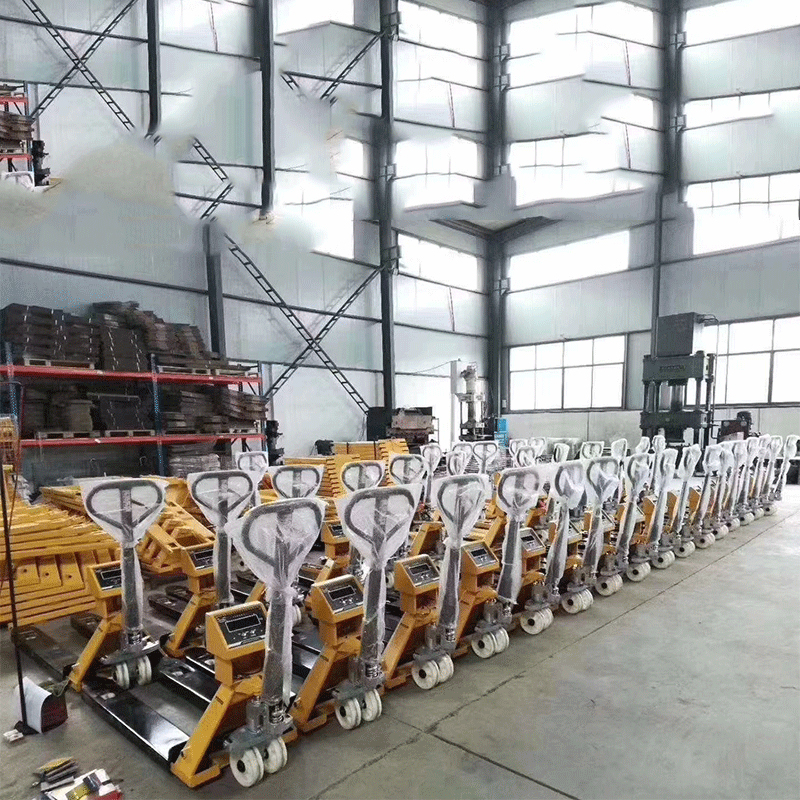
A pallet truck with scale shows how function-level customization changes the role of the equipment inside a facility.
Comparison Table: JUNYUNHOIST Partnership Terms at a Glance
The table below consolidates the terms a buyer needs before drafting a long-term supply agreement. Every figure is a stated order or production parameter rather than a general capability claim.
| Partnership Dimension | JUNYUNHOIST Long-Term Supply Terms | What It Means for Repeat Buyers |
|---|---|---|
| Minimum order quantity | 24 units | The first container can be a market test without a full-programme commitment. |
| Production lead time | 15–20 days typical | Repeat orders can be planned against a known delivery window. |
| Monthly production capacity | 10,000 units | Peak-season volume can be absorbed without switching supplier. |
| Customization scope | OEM/ODM; fork length and fork width; minimum lifting heights of 35 mm and 62 mm; galvanized and stainless steel; weighing and electric pallet trucks | Specification is matched to pallet, aisle and environment instead of adapted after arrival. |
| Build platform | 4 mm steel plate, AC pump, forged rocker arm, forged AB plates and double-chain plates, cast steel wheel frame, high-quality bearings, reinforced plate 4 mm × 89 cm, handle thickness 2.75 mm | Component-level clarity makes spares identification and repeat ordering simpler. |
| Quality control | 100% testing before shipment; pre-shipment test; third-party inspection (SGS) available | Acceptance criteria can be verified per container rather than assumed. |
| Payment terms | 30% T/T in advance, 70% T/T against copy of B/L | Cash flow is predictable across a repeating order cycle. |
| Delivery terms | EXW, FOB, CIF, CFR | Incoterms can be aligned with the buyer's freight arrangements. |
| After-sales wear parts | Free easily damaged spare parts in each container — seals, handles, wheel frames — with replenishment | Distributors can service worn units from stock rather than replacing whole machines. |
| Export coverage | About 80% of output exported; markets include India, Russia, Vietnam, Brazil, Türkiye and Dubai | Existing market experience reduces documentation and logistics friction for similar regions. |
Long-term pallet jack partnership terms stated by JUNYUNHOIST.
FAQ: Long-Term Pallet Jack Partnership Questions
Which certifications and safety standards should a long-term pallet jack partner demonstrate?
Manual and powered pallet jacks fall under different rules, and a long-term partner should be able to explain which applies to your market. ISO 3691-5:2014 specifies safety requirements for pedestrian-propelled trucks, which covers manual and semi-manual pallet jacks. In Europe, EN 1757-2 covers hand pallet trucks with capacities up to 2,000 kg. In the United States, OSHA 29 CFR 1910.178 classifies powered pallet jacks as Class III forklifts, which places formal operator training obligations on your end customers. JUNYUNHOIST states that its products are manufactured under quality control protocols that meet international safety standards such as ISO and CE, and orders can be supported with pre-shipment testing and third-party inspection such as SGS.
What can actually be customized on an OEM/ODM pallet jack order?
The most common changes are fork length and fork width, so that the pallet jack matches a specific pallet footprint, aisle width and racking layout. Minimum lifting heights of 35 mm and 62 mm are available for low-profile requirements where standard fork entry does not fit. Material options include galvanized and stainless steel for corrosion resistance and food-grade environments, and functional variants include weighing pallet trucks and electric pallet trucks. Customization is scoped by an in-house R&D team of eight specialists. The base platform these options build on uses 4 mm steel plate, an AC pump, a forged rocker arm, forged AB plates and double-chain plates, a cast steel wheel frame and high-quality bearings, with a reinforced plate 4 mm thick and 89 cm long and a handle wall thickness of 2.75 mm.
What are the payment terms, and how does build specification affect cost?
Standard commercial terms are 30% T/T in advance with 70% T/T against a copy of the bill of lading, and delivery terms include EXW, FOB, CIF and CFR. On cost, JUNYUNHOIST's comparison data records roughly 2% higher initial cost for the reinforced platform compared with a baseline factory unit, offset by better durability and lower long-term maintenance costs, with up to 90% less maintenance recorded. For a partner running a repeat programme, the relevant number is total cost across the contract, not the unit price of the first container.
Can we validate a pallet jack before committing to a long-term contract?
Validation is built into the order model. The minimum order quantity is 24 units, which allows a trial container sized for a market or facility test rather than a full programme. The same 100% testing applies to trial orders, and buyers can arrange a pre-shipment test plus third-party inspection such as SGS if independent verification is required. Specifications agreed for the trial are recorded and reused for repeat orders so that later containers stay aligned with the validated sample.
What lead time and supply continuity can a partner expect?
Typical production lead time is 15–20 days, backed by monthly production capacity of 10,000 units and annual output of 70,000 units. Continuity in the field is supported by free easily damaged spare parts — seals, handles and wheel frames — included in each container with replenishment on subsequent orders. The most common failure points to plan for are pump oil leakage or air in the pump, handle deformation or damage, and wheel wear; avoiding overloading and keeping the forks balanced during lifting reduce all three. To start, send your pallet type, load weight and operating environment for a specification review and quotation.
Next Step: Turn the FAQ Into a Trial Order
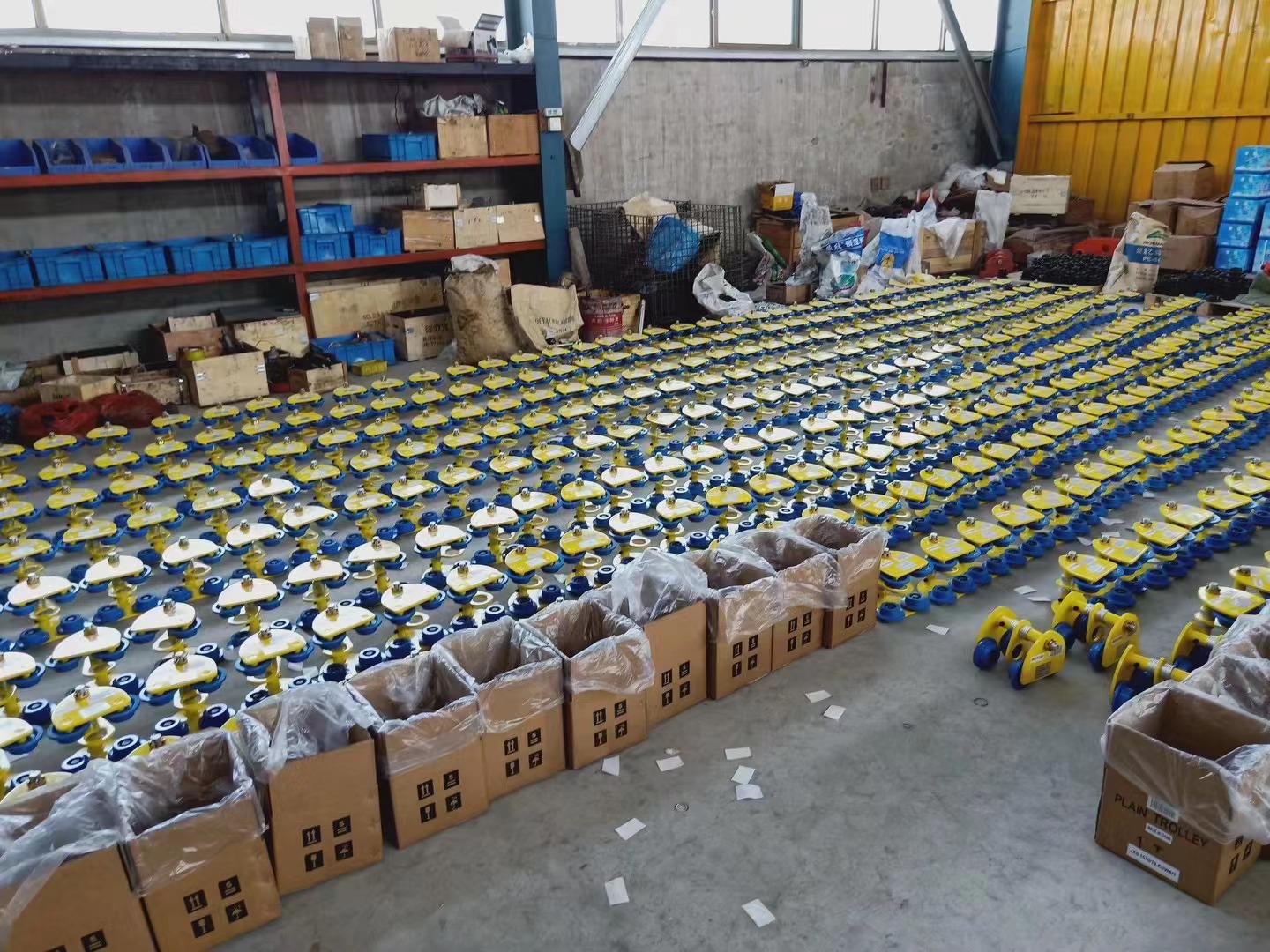
Sample orders, quotations and distributor partnership terms are available on request.
A long-term pallet jack partnership is decided by four numbers and one policy: 24 units as the minimum order quantity, 15–20 days as the typical lead time, 10,000 units as monthly capacity, and free wear parts in every container with replenishment as the after-sales policy. Everything else — fork length, fork width, 35 mm or 62 mm minimum lifting heights, galvanized or stainless steel, weighing or electric drive — is a specification conversation.
To move forward, share your pallet type, load weight, aisle dimensions and operating environment with the JUNYUNHOIST team at www.junyunhoist.com for a specification review, a sample arrangement or a long-term supply quotation. Email Junyunsteven@163.com or reach the sales team on WhatsApp at +86 134-8345-2631. The full product and specification overview is available in the JUNYUNHOIST product brochure, which can be downloaded and shared with your procurement team.
Have Questions or Need More Details?
Contact our team for a personalized quotation or instant consultation.
Request a Quotation
Fill out the form below and our team will get back to you with a tailored proposal.
WhatsApp Direct Chat
Prefer to chat in real-time? Message us on WhatsApp for instant assistance & quick answers.
- Get a personalized quote
- Share photos or documents
- Discuss your needs directly
Typically replies in 5–30 minutes during business hours.