
Pallet Jack Specs & Compliance: What a 2026 Buyer Must Verify Before Ordering
Pallet Jack Specs & Compliance: What a 2026 Buyer Must Verify Before Ordering
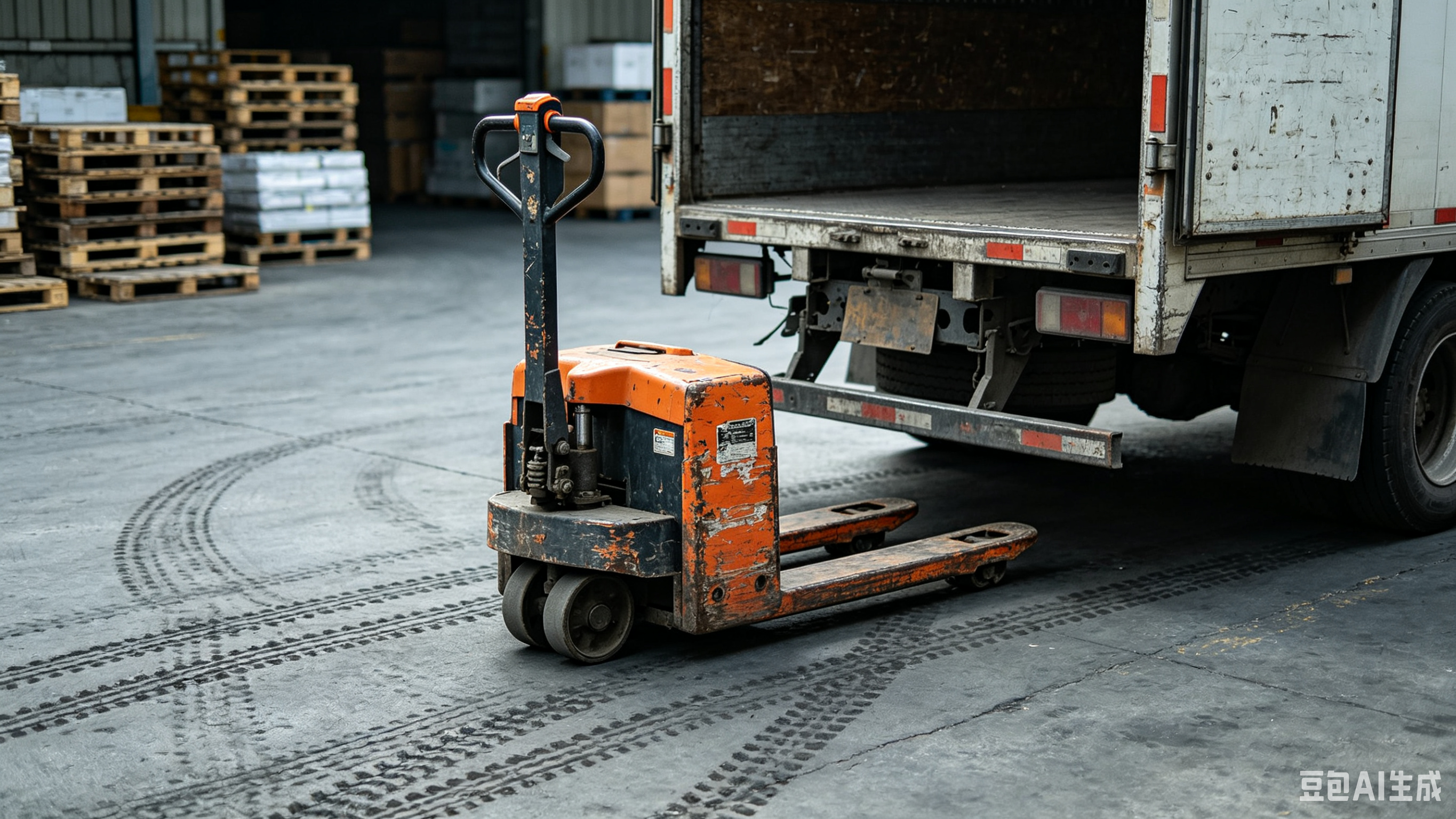
Before ordering pallet jacks in 2026, verify three things: the load capacity and fork geometry needed for your pallets and aisles, the compliance standards that apply to your destination market, and the supplier’s ability to build the right variant with documented quality control. Skipping any of these steps leads to the most common buying failures: undersized forks, non-compliant equipment, or longer lead times than the project allows.
Why Pallet Jack Specification Verification Matters
A pallet jack is not a one-size-fits-all purchase. Warehouse pallet jacks, cold storage pallet jacks, narrow aisle pallet jacks, and food processing plant pallet jacks all place different demands on fork size, wheel material, lifting height, and corrosion resistance. If the specification is wrong, the equipment will underperform in daily operations even when the price appears attractive.
For buyers at the Research and Evaluation stage, the goal is not simply to find a supplier—it is to find a supplier whose standard or customized configuration matches the actual working condition. This article explains how to verify pallet jack parameters and compliance before you place an order, using verifiable product facts and industry standards rather than marketing language.
Breaking Down the 2026 Pallet Jack Market
The global pallet jack market was valued at approximately USD 7.4 billion in 2024 and is projected to reach USD 11.6 billion by 2034 (Vertex AI Search / Industry Report 2025–2034). Within that market, manual pallet jacks still dominate, generating USD 4.3 billion in 2024 despite continued automation. The electric pallet jack and stacker segment adds another layer of demand, having reached USD 5.1 billion in 2024, supported by e-commerce growth and lithium-ion battery technology.
What do these figures mean for a buyer? Manual pallet jacks remain the highest-volume, most economical solution for short-distance horizontal movement. Electric pallet jacks are chosen when travel distance, load weight, or operator fatigue becomes a constraint. Both categories should be evaluated against your own workflow before deciding.
Core Pallet Jack Parameters Every Buyer Should Verify
Load Capacity and Fork Geometry
Load capacity is the first parameter to check, but two related dimensions often matter more in practice: fork width and fork length. A standard pallet jack configuration such as the JUNYUNHOIST AC30 offers fork sizes of 550/685 mm × 1150/1220/1500/1800/2000 mm. If your pallets are non-standard, or if the application requires narrow fork pallet jacks for restricted entry points, fork size must be confirmed before ordering rather than adjusted later.
Lifting Height Range
Minimum and maximum fork height determine which racks and loading docks the pallet jack can serve. The AC30 series provides a minimum height of 80 mm and maximum height of 200 mm. For low-profile pallet jacks, some OEM configurations can reduce the minimum fork height to 35 mm or 62 mm depending on the customer’s requirement. Buyers handling very thin pallets or specialized containers should ask for the lowest entry height explicitly.
Turning Radius
The turning radius after capture is 1500 mm in the AC30 specification. Narrow aisle pallet jacks demand a tighter turning characteristic because aisle width directly limits maneuverability. If the operation includes narrow aisles or confined truck-loading areas, request a machine with a turning radius that is verifiably suitable for the aisle dimensions.
Wheel and Caster Material
Wheel material affects noise, floor protection, rolling resistance, and suitability for special environments. Available wheel options include PU, nylon, PP, rubber, and rubber variants. In cold storage, for example, polyurethane (PU) wheels are often preferred for their smooth rolling and resistance to temperature degradation. In food processing plants, floor hygiene and resistance to washdown conditions may guide the wheel choice.
Matching Pallet Jack Types to Your Application
Manual Pallet Jack
A manual pallet jack is the most basic unitized transport tool: the operator inserts the forks into the pallet, pumps the handle to lift the load, and moves it horizontally over a flat surface. It suits general warehouse work, retail backrooms, loading docks, workshops, and short-distance transfer tasks where electric power is unnecessary.
Electric Pallet Jack
An electric pallet jack reduces operator effort and supports longer transfer distances. It is a logical step up for distribution centers, logistics centers, and factories with continuous horizontal movement. The AC30 series covers both semi-electric and full-electric pallet truck configurations, giving distributors flexibility depending on budget and duty cycle.
High Lift and Low Profile Pallet Jacks
High lift pallet jacks lift loads higher than standard units for positioning at elevated workstations. Low profile pallet jacks are designed for pallets that cannot accept a standard 80 mm fork entry height. Confirming the minimum fork height (for example 35 mm or 62 mm in custom configurations) is the decisive step when choosing a low profile model.
Weighing Pallet Jack
Pallet trucks with scale combine transport and weighing in a single operation. This configuration is useful in inventory control, receiving, and shipping processes where items must be weighed as they move. The AC30 type list includes a pallet truck with scale, and buyers should confirm the scale accuracy range and display type when the application requires legal trade accuracy.
Galvanized and Stainless Steel Pallet Jacks
Galvanized steel pallet jacks provide corrosion resistance at a moderate cost. Stainless steel pallet jacks are selected when washdown, chemicals, or food-grade requirements are strict. Both variants are available within the AC30 product family, supporting cold chain, food processing, and chemical industry applications.
Heavy Duty and Narrow Fork Pallet Jacks
Heavy duty pallet jacks use thicker steel and reinforced frames for demanding structural loads. The JUNYUNHOIST manufacturing standard is built around a 4 mm steel plate for the fork frame, which directly influences durability under repeated load cycles. Narrow fork pallet jacks reduce fork width to enter restricted pallet entries; they should be specified by exact product drawings, not guessed from a catalog photo.
Compliance Standards: ISO, EN, and OSHA
Compliance is a market-entry requirement, not a differentiator. In 2026, the three most relevant references for pallet jack buyers are ISO 3691-5:2014, EN 1757-2, and OSHA 29 CFR 1910.178.
- ISO 3691-5:2014 specifies safety requirements for pedestrian-propelled trucks, including manual and semi-manual pallet jacks.
- EN 1757-2 applies to hand pallet trucks in Europe, covering safety requirements for trucks with capacities up to 2,000 kg.
- OSHA 29 CFR 1910.178 classifies powered pallet jacks as Class III forklifts in the United States, requiring formal operator training.
Buyers should ask whether the offered pallet jack is certified to the relevant standard for the destination market. If the supplier cannot demonstrate documented compliance, the purchase introduces risk for importers, distributors, and end users.
In addition to the above standards, ISO and CE certification are commonly requested in international pallet jack procurement because they provide documented evidence that manufacturing and safety requirements have been checked. JUNYUNHOIST states that its products are manufactured under quality control protocols meeting international safety standards including ISO and CE. When suppliers make such claims, request the certificate or declaration and confirm the model number against the order.
JUNYUNHOIST AC30: A Verified Example of Pallet Jack Build
Baoding Junyun Hoisting Machinery Co., Ltd. (brand name JUNYUNHOIST) is a vertically integrated manufacturer and trading company based in Baoding City, Hebei Province, China. The company makes hand pallet trucks, pallet jacks, manual stackers, electric stackers, lift tables, galvanized/stainless steel pallet trucks, pallet trucks with scale, and electric pallet trucks.
The AC30 pallet truck/pallet jack series includes semi-electric pallet trucks, full-electric pallet trucks, pallet trucks with scale, and galvanized and stainless steel variants. Its verified parameters are summarized below.
| Parameter | JUNYUNHOIST AC30 Series Specification |
|---|---|
| Product type | Manual / Semi-electric / Full-electric pallet truck; Pallet truck with scale; Galvanized and stainless steel pallet trucks |
| Minimum fork height | 80 mm |
| Maximum fork height | 200 mm |
| Turning radius after capture | 1500 mm |
| Wheel options | PU, Nylon, PP, Rubber |
| Fork sizes | 550/685 × 1150, 1220, 1500, 1800, 2000 mm |
| Customization options | Fork length/width, minimum height 35/62 mm, fork steel plate thickness, electric, galvanized/stainless steel, scale |
These numbers make the AC30 a useful baseline for comparison. A buyer can take the same parameter list and ask competing suppliers to provide their own minimum height, fork sizes, turning radius, and wheel material options—then compare apples to apples.
Material and Build Quality: Thicker Steel as a Decision Signal
Steel thickness is one of the most visible indicators of pallet jack durability. JUNYUNHOIST frames use a 4 mm steel plate, a detail that has become a recognized reference point in its product communication. Thicker fork steel reduces bending under load and extends service life in demanding shifts.
Equally important is the forged hydraulic pump used in the lifting mechanism. Forged pumps are generally more resistant to wear and pressure compared with weaker cast or fabricated alternatives. Buyers cannot always see this difference in a photo, so it belongs on the specification checklist: ask for the pump type, fork steel thickness, and frame construction details before committing to a supplier.
Application-Specific Selection: Cold Storage, Food Processing, Warehousing
Cold Storage Pallet Jack
Cold storage environments require lubricants and seals that function at low temperature, plus wheels that do not harden and crack. Stainless steel or galvanized steel variants are relevant where frost, condensation, and washdown cycles create corrosion pressure. Confirm the minimum operating temperature and the wheel material before specifying a cold storage pallet jack.
Food Processing Plant Pallet Jack
Food processing demands washdown-friendly materials and often a food grade material pallet jack. Stainless steel construction reduces contamination risk and withstands frequent cleaning. Buyers should verify that any food-contact or washdown claim is matched by the actual material grade and surface finish.
Factory Workshop Pallet Jack
Factory workshops typically require a durable general-purpose pallet jack with comfortable maneuverability. The applicable_industry list for the AC30 includes factory floor, workshop, construction site, truck loading/unloading, and cross-docking facility. For factory use, build quality, wheel type, and service access tend to matter more than exotic material choices.
Warehouse and Logistics Center Pallet Jack
High-throughput warehouses and logistics centers benefit from electric pallet jacks when distances are long. A smart weighing pallet jack can reduce redundant weighing steps. Battery powered pallet jacks reduce emissions indoors and lower operator fatigue. The decision hinges on throughput, aisle width, and integration with existing storage equipment.
How to Compare Pallet Jack Suppliers on Facts
When evaluating multiple suppliers, create a simple evidence table using these rows:
- Load capacity and fork dimensions
- Minimum and maximum fork height
- Turning radius
- Wheel materials
- Steel plate thickness and pump construction
- Available variants (electric, scale, galvanized, stainless steel)
- Compliance certificates (ISO, CE, EN, OSHA-relevant classification)
- Lead time, MOQ, and quality testing procedure
This frame prevents suppliers from competing on vague claims. A pallet jack either meets the required minimum height, or it does not; the supplier either can produce a stainless steel version, or they cannot.
OEM/ODM Customization and the 35 mm / 62 mm Fork Height Question
OEM/ODM capabilities matter when standard models do not fit an operation. JUNYUNHOIST supports customization of fork length and width, minimum lifting height, fork steel plate thickness, electric configuration, galvanized/stainless steel construction, and pallet-truck-with-scale integration. Specific low entry heights available through customization are 35 mm and 62 mm.
For a buyer, the practical question is: which customization affects your operation the most? If your pallets have thin boards, minimum entry height is the number that decides whether the forks fit under the load. If the pallet is heavy or the floor is uneven, fork steel thickness and pump strength determine whether the unit survives. Use customization as a solution to a stated problem, not as a way to make the product feel unique.
Quality Control, Lead Time, and After-Sales Support
JUNYUNHOIST reports a monthly pallet jack capacity of 10,000 units, an MOQ of 24 pieces, and a lead time of 15–20 days. Every unit is described as undergoing 100% testing before delivery. Each container includes free spare parts for wear items, with subsequent replenishment based on actual wear.
These operational facts matter for distributors planning inventory, but they should be verified in the supply contract rather than trusted as a permanent commitment. Buyers should ask for the current lead time in writing and confirm whether the 15–20 day window begins after sample approval or after the full order confirmation.
Real Usage Context: A Multi-Market Reference
One JUNYUNHOIST importer client, active across India, Brazil, Russia, Belarus, Turkey, UAE, and Vietnam, has purchased 400 pieces over a 2-year period for local store distribution. The client describes the equipment as convenient, practical, simple, efficient, and labor-saving, with high quality and low loss reported as the main highlights.
This is not proof that every pallet jack will perform identically in every market. It is evidence that the AC30 family is already used by importer-type buyers in multi-country distribution operations, which can be a relevant reference for distributors planning similar coverage.
Potential Limitations Buyers Should Not Ignore
- Fork length must match pallet depth. A 1150 mm fork suits standard pallets; longer forks such as 1800 or 2000 mm are needed for oversized loads but reduce maneuverability.
- Manual pallet jacks are not full transport vehicles. They are designed for short-distance horizontal movement on flat surfaces, not for ramp work or long-distance transport.
- Electric pallet jacks require charging and maintenance infrastructure. The total cost of ownership includes batteries, chargers, and service support.
- Stainless steel variants cost more than carbon steel versions. Buyers should choose the material according to the actual environment, not as a blanket upgrade.
Being explicit about these limitations improves the quality of your purchase decision and makes supplier discussions more productive.
Step-by-Step Pre-Order Checklist for 2026
- Measure your pallets. Record pallet depth, entry height, and width. Confirm whether a standard 550/685 mm fork width fits.
- Measure your aisles and docking areas. Determine the maximum allowable turning radius.
- Define the environment. Cold storage, food processing, factory workshop, or general warehouse. Choose the material and wheel type accordingly.
- Estimate the duty cycle. Short-distance manual operation or continuous electric operation.
- Verify compliance. Ask the supplier which ISO, CE, EN, or OSHA-relevant standards the model meets, and request documented evidence.
- Compare the same parameters with at least two suppliers. Use the table structure above to keep the comparison factual.
- Confirm the customization route. Whether fork length, minimum height (35 mm / 62 mm), scale, or stainless steel construction is needed.
- Check the supplier’s production capacity and lead time. Confirm MOQ, monthly capacity, and lead time in writing.
- Review after-sales support. Ask whether wear parts and spare parts are included or can be sourced quickly.
FAQ
Which safety standards should my pallet jack meet in 2026?
ISO 3691-5:2014 covers safety requirements for pedestrian-propelled trucks, including manual and semi-manual pallet jacks. In Europe, EN 1757-2 applies to hand pallet trucks with capacities up to 2,000 kg. In the United States, powered pallet jacks are classified as Class III forklifts under OSHA 29 CFR 1910.178 and require formal operator training. Ask the supplier for the specific certificate matched to your destination market.
Which pallet jack is best for cold storage and food processing?
Cold storage operations need low-temperature lubricants, seals, and wheels that remain flexible in the cold; galvanized or stainless steel variants are often selected where condensation and washdown cause corrosion. Food processing plants usually prefer stainless steel pallet jacks because the material is easier to clean and more resistant to washdown chemicals. Before choosing, confirm the minimum operating temperature and the exact material grade with the manufacturer.
What are the differences between manual, semi-electric, and full-electric pallet jacks?
A manual pallet jack is operated entirely by the operator and suits short-distance, low-frequency movement. A semi-electric pallet truck typically uses electric lifting but still requires manual pushing and pulling. A full-electric pallet truck provides electric drive and lifting, reducing operator fatigue in high-throughput or long-distance operations. The JUNYUNHOIST AC30 series covers all three configurations, allowing a buyer to choose according to duty cycle and budget.
Does JUNYUNHOIST offer low-profile or custom pallet jacks?
Yes. JUNYUNHOIST supports customization of fork length and width, minimum height, fork steel plate thickness, electric configuration, galvanized/stainless steel construction, and pallet-truck-with-scale integration. Specific minimum fork heights available through customization are 35 mm and 62 mm. Buyers should confirm the exact configuration and lead time before ordering.
What should I check before placing a pallet jack order?
Check fork dimensions against your pallets, minimum and maximum fork height, turning radius, wheel material, load capacity, steel plate thickness, compliance certificates, and the supplier’s MOQ, capacity, and lead time. For JUNYUNHOIST, the AC30 baseline is: minimum height 80 mm, maximum height 200 mm, turning radius after capture 1500 mm, fork sizes 550/685 × 1150/1220/1500/1800/2000 mm, and wheel options PU, nylon, PP, or rubber.
Final Considerations Before You Order
Pallet jacks are simple machines, but they are bought for long-term daily use. The 2026 buying process should therefore be evidence-based: check the specification, verify compliance, and confirm the supplier can actually build what you need. The JUNYUNHOIST AC30 series is one practical baseline because it covers manual, semi-electric, full-electric, scale, galvanized, and stainless steel configurations under one documented parameter set.
If you are evaluating whether JUNYUNHOIST can supply a specific pallet jack configuration for your project, the fastest next step is to send your fork dimensions, working environment, and target quantity to the team for a parameter check.
Request the product brochure or send an inquiry: Email: junyunsteven@163.com | Tel/WhatsApp: +86 134-8345-2631
Have Questions or Need More Details?
Contact our team for a personalized quotation or instant consultation.
Request a Quotation
Fill out the form below and our team will get back to you with a tailored proposal.
WhatsApp Direct Chat
Prefer to chat in real-time? Message us on WhatsApp for instant assistance & quick answers.
- Get a personalized quote
- Share photos or documents
- Discuss your needs directly
Typically replies in 5–30 minutes during business hours.