
Pallet Jack Wheel Failure in Heat and Humidity: A Guide for Middle East & Southeast Asia Buyers
Pallet Jack Wheel Failure in Heat and Humidity: A Guide for Middle East & Southeast Asia Buyers
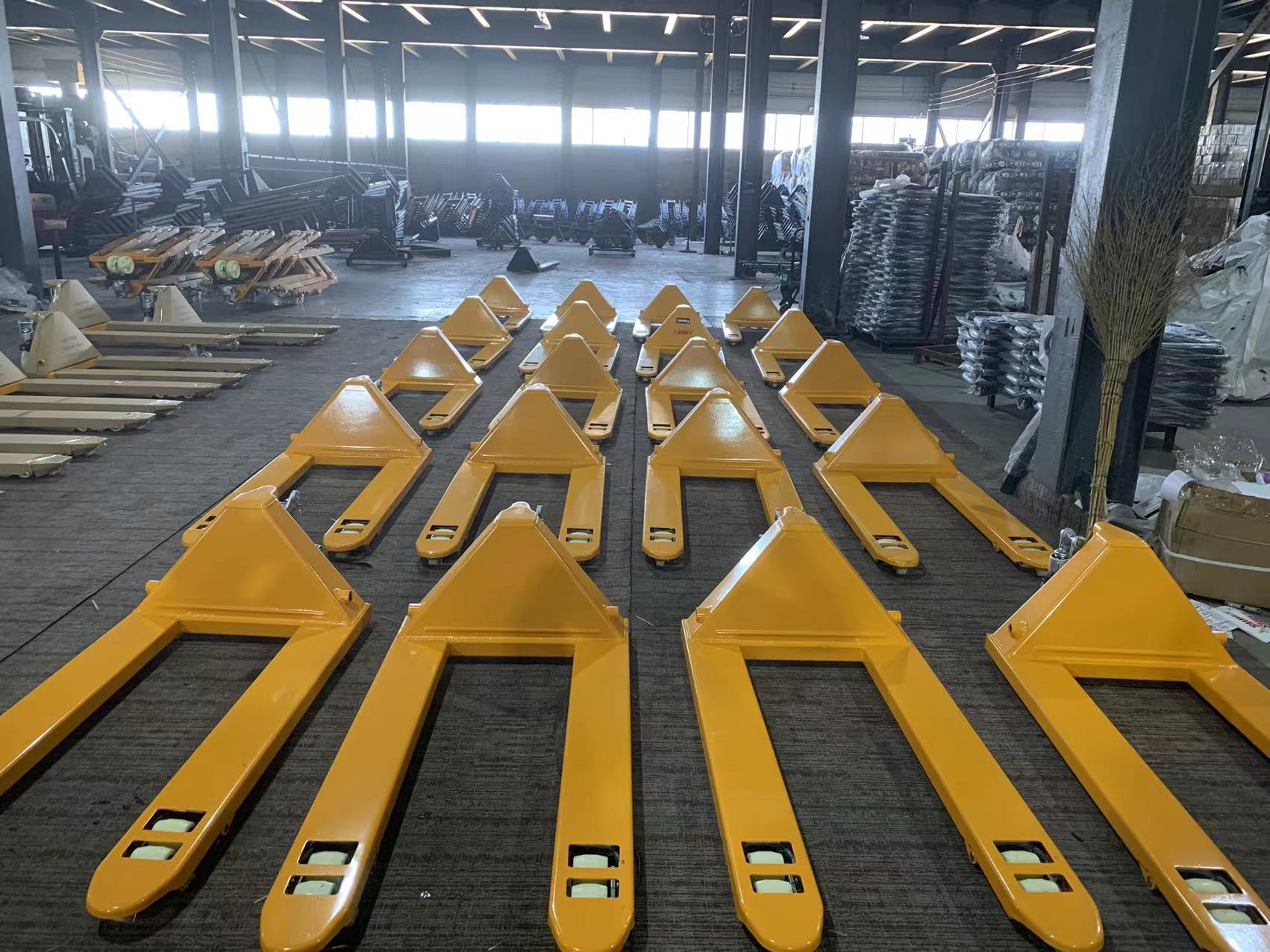
Wheel failure is one of the most common reasons a working pallet jack leaves service in the hot, humid, and rough-floor facilities of India, Vietnam, the UAE, and Saudi Arabia. The pump still lifts, the handle still steers, and the frame is still straight — but the wheels have flat-spotted, the bearings are grinding, and the truck is parked again for its third wheel replacement in a year. In most of these cases the pallet jack was never the problem. The specification was.
This guide is written for importers, distributors, procurement managers, and plant engineers buying manual pallet jacks, electric pallet jacks, and warehouse pallet jacks for projects in the Middle East and Southeast Asia. It explains why wheels and bearings fail earlier in these climates than a load rating suggests, how to match PU, nylon, PP, and rubber wheels to real floor and moisture conditions, and which build details — the 4 mm steel plate, the forged rocker arm, and the cast steel wheel frame — extend service life in practice. It also covers fork length and width customization, minimum lifting heights of 35 mm and 62 mm for low-clearance or uneven floors, 100% testing, and the free wear-and-tear spare parts supplied with each container.
JUNYUNHOIST is the export brand of Baoding Junyun Hoisting Machinery Co., Ltd., a lifting and material handling equipment manufacturer founded in 2018 and based in Baoding, Hebei Province, China. The company produces hand pallet trucks, pallet jacks, manual stackers, electric stackers, lift tables, galvanized and stainless steel pallet trucks, and pallet trucks with scale, and exports roughly 80% of its output to markets that include India, Vietnam, Russia, Brazil, Türkiye, the United Arab Emirates, and the wider Middle East and Southeast Asia.
The Problem: Why Pallet Jack Wheels and Bearings Fail Early in Heat, Humidity, and Rough Floors
Three separate failures are usually described with the same sentence: “the wheels gave out.” They have different causes, they appear at different points in the truck’s life, and they need different specification answers. Treating them as one problem is the reason replacement wheels so often fail again.
- Tread failure — flat spotting, chunking, and rapid wear. Heat is the amplifier. Where ambient temperature or floor surface temperature stays high, a wheel compound that performs well in a temperate warehouse can soften under a standing load and take a permanent flat spot. Add a heavy duty pallet jack that sits loaded overnight at a loading dock, and a wheel that wore evenly for years elsewhere can develop a visible flat in months.
- Bearing failure — grinding, play, and eventual seizure. Bearings fail when the lubricant stops protecting the running surfaces. In monsoon humidity, coastal air, or any facility that uses washdown cleaning, moisture reaches the bearing, the grease emulsifies or washes out, and corrosion begins. Operators usually notice the symptom — noise, or a wheel that no longer spins freely — only after the damage is done.
- Wheel frame and rocker arm deformation. This failure is mechanical rather than chemical. Side loading, dock plates, expansion joints, damaged concrete, and floor drains transmit shock through the wheel into the wheel frame and the rocker arm. Once those components bend or develop play, the wheel no longer sits square to the floor, contact pressure becomes uneven, and tread wear accelerates from that point onward.
The common thread is that the operating environment, not the nominal load capacity on the label, decides how long the wheel lasts. The same rated pallet jack can behave completely differently on rough concrete in an unconditioned 40 °C warehouse and on sealed floors in a temperature-controlled distribution center.
There is a simple diagnostic pattern worth remembering. If your team replaces wheels but never bearings, the failure is most likely a wheel compound and heat problem. If bearings fail but the tread still looks acceptable, moisture protection is the gap. If both fail at the same time, impact and misalignment are involved — which points at the wheel frame, the rocker arm, and fork entry clearance rather than at the wheel itself.
Industry Background: A Growing Fleet Operating in Demanding Ambient Conditions
Pallet jack demand keeps expanding, and an increasing share of that demand sits in exactly the climates where wheel and bearing failure is most aggressive. Published market research places the global pallet jacks market at approximately USD 7.4 billion in 2024, with projections reaching USD 11.6 billion by 2034 (Vertex AI Search / Industry Report 2025–2034). Manual pallet jacks still dominated that market in 2024 with revenue of USD 4.3 billion despite the rise of automation, while the electric pallet jack and stacker segment was valued at USD 5.1 billion in 2024, driven by e-commerce and lithium-ion battery technology.
These figures should be read with their scope in mind. Published pallet jack market sizes diverge widely because different reports draw different product boundaries: one widely cited estimate values the market at USD 1.7 billion (Fact.MR), while broader estimates reach USD 7.4 billion and above by including related stackers and handling equipment. The direction of travel is consistent across sources; the absolute number is not. Buyers comparing suppliers should treat headline market sizes as context, not as evidence about any individual product.
On the compliance side, three standards define the safety baseline that buyers in these regions commonly reference. ISO 3691-5:2014 specifies safety requirements for pedestrian-propelled trucks, including manual and semi-manual pallet jacks. Hand pallet trucks sold in Europe fall under EN 1757-2, which covers safety requirements for trucks with capacities up to 2,000 kg. In the United States, OSHA 29 CFR 1910.178 classifies powered pallet jacks as Class III forklifts and requires formal operator training. These standards set a safety floor; they do not set a wear life, and a fully compliant pallet jack can still be the wrong pallet jack for a humid food plant.
The operating reality in the target markets is specific rather than generic. India and Vietnam combine high humidity with monsoon seasons that keep floors damp for months. The UAE and Saudi Arabia combine extreme ambient heat with coastal humidity in port and logistics zones, plus large day-to-night temperature swings. Across all four markets, rough concrete, patch repairs, dock levellers, and floor drains are common, and each of them transfers shock into the wheel assembly.
The Solution: Match Wheel Material, Fork Dimensions, and Component Build to Real Operating Conditions
Matching a pallet jack to a hot, humid, or rough-floor project comes down to four specification decisions: wheel compound, bearing protection, structural build, and fork geometry. JUNYUNHOIST builds its pallet jack and hand pallet truck range — including the AC30 model — with wheel options of PU, nylon, PP, and rubber, and with OEM/ODM customization covering fork length and width, fork steel plate thickness, minimum lifting heights of 35 mm and 62 mm, as well as galvanized and stainless steel pallet trucks, pallet trucks with scale, and electric pallet trucks.
Wheel Materials: PU, Nylon, PP, and Rubber
Each of the four wheel options solves a different part of the problem, and none of them is universally correct.
- PU (polyurethane). A common default for smooth concrete in warehouses, retail backrooms, and food processing plants. PU typically gives a useful balance between rolling effort, wear resistance, and floor protection, and it generally does not mark floors the way harder wheels can. The point to watch in hot climates is heat combined with standing load, because PU tread held under load in a warm facility is more prone to flat spotting. Match the wheel to the duty cycle, not only to the rated load.
- Nylon. Nylon wheels are hard, roll easily, and are generally well suited to heavy duty pallet jack work on smooth, level, clean floors. They transmit more shock and noise into the load and the frame than softer compounds, and their behavior on wet, gritty, or washdown floors deserves a deliberate check before standardizing on them across a humid facility.
- PP (polypropylene). The economical option, commonly fitted to lighter-duty manual pallet jacks where low replacement cost matters more than long service life. In a hot, humid environment with heavy loads and rough floors, PP is usually the wrong place to save money.
- Rubber. Rubber wheels are softer, quieter, and generally offer better grip on wet or uneven surfaces, which matters in food processing plant pallet jack applications and in facilities with floor drains or indoor-outdoor transitions. The trade-off is higher rolling resistance, which increases operator effort on long hauls inside a large logistics center.
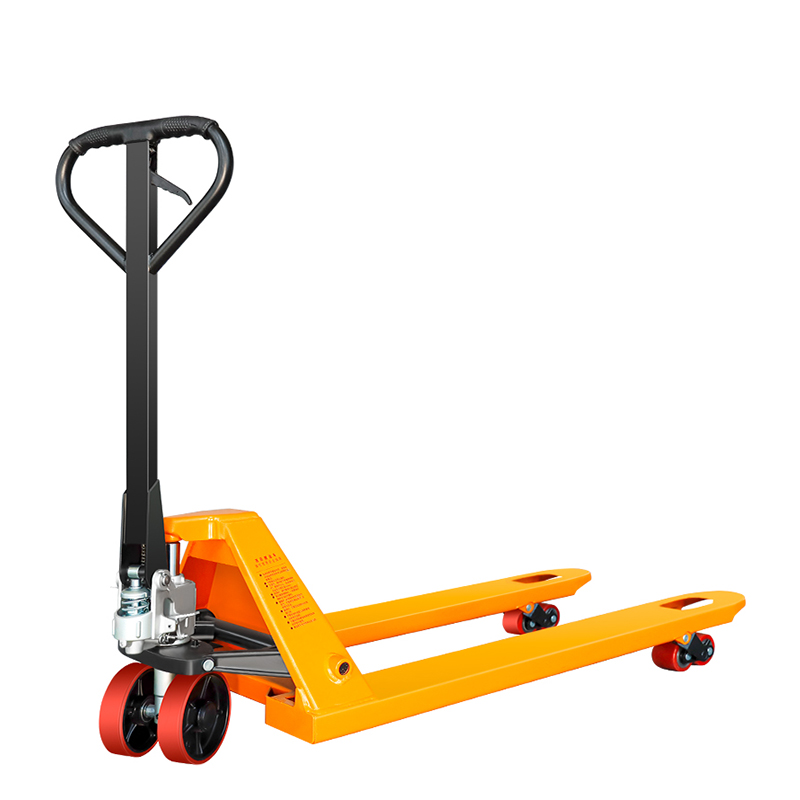
Bearings and Moisture Protection
Wheel compound gets the attention; bearings cause the downtime. A wheel that survives the heat can still stop a shift when moisture reaches the bearing and the lubricant stops protecting the running surfaces. Buyers evaluating a supplier should ask directly how the wheel bearing is protected, and treat the answer as a specification point rather than a detail. In cold storage pallet jack applications and in washdown areas, condensation and water ingress are continuous rather than occasional, so protection has to be designed in from the start and supported by a spare parts plan.
Reinforced Components That Extend Service Life
Upgrading the wheel compound without addressing the components around it usually produces the same failure six months later. Three build details are directly relevant to wheel life on a pallet jack.
- 4 mm steel plate. The structural steelwork of the truck — including the fork steel plate — is where flex begins. A 4 mm steel plate resists the deflection that a thinner plate allows under a loaded, moving pallet jack. When the chassis flexes, the wheels and their axles do not stay perpendicular to the floor, contact pressure becomes uneven, and tread wear accelerates from that point on.
- Forged rocker arm. The rocker arm links steering and load forces to the wheels and absorbs repeated shock from dock plates, expansion joints, and uneven concrete. A forged rocker arm is generally better able to tolerate repeated impact loading than a component that deforms under the same duty, because once it bends, wheel alignment is lost permanently and cannot be corrected by fitting new wheels.
- Cast steel wheel frame. The wheel frame carries the wheel axle and takes the lateral forces created by side loading and by turning in tight aisles. A cast steel wheel frame resists the bending that misaligns a wheel, and misalignment is one of the most common reasons a wheel wears on one edge while the rest of the tread still has useful life.
Fork Dimensions and Low-Clearance Heights of 35 mm and 62 mm
JUNYUNHOIST builds its pallet trucks with fork widths of 550 mm and 685 mm, and fork lengths of 800 mm, 1150 mm, 1220 mm, 1500 mm, 1800 mm, and 2000 mm. The standard minimum height is 80 mm and the maximum height is 200 mm. For low-clearance pallets, thin-entry applications, and floors that are not perfectly level, fork length and width can be customized, and customized minimum lifting heights of 35 mm and 62 mm are available.
Entry clearance affects wheel life more than most buyers expect. If a fork cannot enter a pallet cleanly, operators compensate with impact — rocking the truck, bumping the pallet, or dragging the load into position. Every one of those habits transfers shock into the wheel, the wheel frame, and the rocker arm. A low profile pallet jack with the correct entry height removes the habit, and a narrow aisle pallet jack with matched fork width does the same in tight rack layouts.
Quality Control, Testing, and After-Sales Spare Parts
Wheel and bearing performance is also a consistency question. JUNYUNHOIST applies 100% testing to its pallet trucks rather than batch sampling, has a monthly capacity of 10,000 units for this product line, works to a minimum order quantity of 24 pcs, and quotes a production lead time of 15–20 days. Every container is equipped with free spare parts for wear and tear, and that allocation is replenished as needed based on subsequent wear.
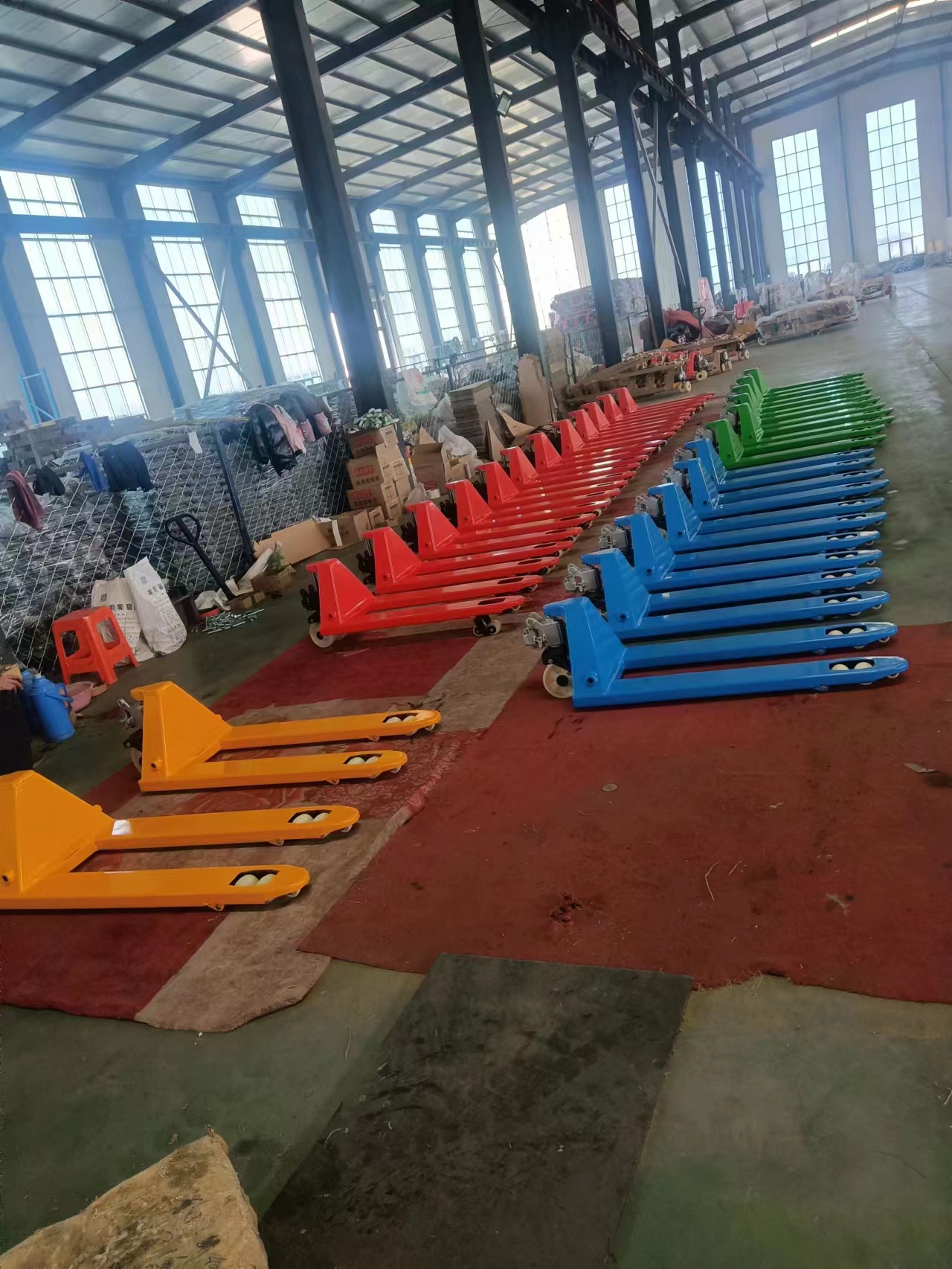
For a buyer in a hot, humid market, the spare parts arrangement is not a courtesy — it is a planning tool. Wheel and bearing replacement is a recurring maintenance cost in these climates, so free wear-and-tear parts in every container reduce the downtime caused by waiting for a replacement shipment, and replenishment based on actual wear keeps the stock aligned with real consumption.
Step-by-Step: How to Specify a Heat- and Humidity-Ready Pallet Jack
The sequence below reflects the order in which specification decisions actually affect service life. Buyers who start with price usually end up at step seven with a recurring replacement problem.
- Record the real operating conditions. Temperature range, humidity, whether floors are washed down, floor type and condition (sealed concrete, rough concrete, dock plates, drains), pallet type, average and maximum load, duty cycle, and aisle width. This record is the input for every later decision.
- Identify the failure mode before choosing a wheel. Tread wear points to the wheel compound and heat. Grinding points to bearings and moisture. Uneven or edge wear, or wheels that no longer sit square, points to the wheel frame, the rocker arm, and entry clearance.
- Choose the wheel material for the floor and the moisture, not for the price list. PU for smooth, sealed floors with a controlled duty cycle; nylon for heavy duty work on clean, level floors; PP only for light duty; rubber where grip, quiet operation, and wet or uneven surfaces matter more than rolling effort.
- Verify entry clearance and fork geometry. Measure the pallet entry height rather than assuming it. JUNYUNHOIST offers 550 mm and 685 mm fork widths, fork lengths from 800 mm to 2000 mm, a standard 80 mm minimum height, and customized minimum lifting heights of 35 mm and 62 mm.
- Specify the build level where the duty justifies it. A 4 mm steel plate, a forged rocker arm, and a cast steel wheel frame raise the unit cost but reduce the frequency of wheel replacement, which is the trade-off that matters on rough floors and high-duty operations.
- Confirm testing and compliance expectations. Ask for evidence of 100% testing rather than sampling, and confirm that the product is manufactured under quality control protocols aligned with international safety standards such as ISO and CE. Reference the standards relevant to your market: ISO 3691-5:2014, EN 1757-2, or OSHA 29 CFR 1910.178.
- Plan spare parts and replenishment before the first container ships. Confirm what wear-and-tear parts are included per container, and how replenishment will be handled as parts are consumed in the field.
Use Cases: Where These Configurations Fit
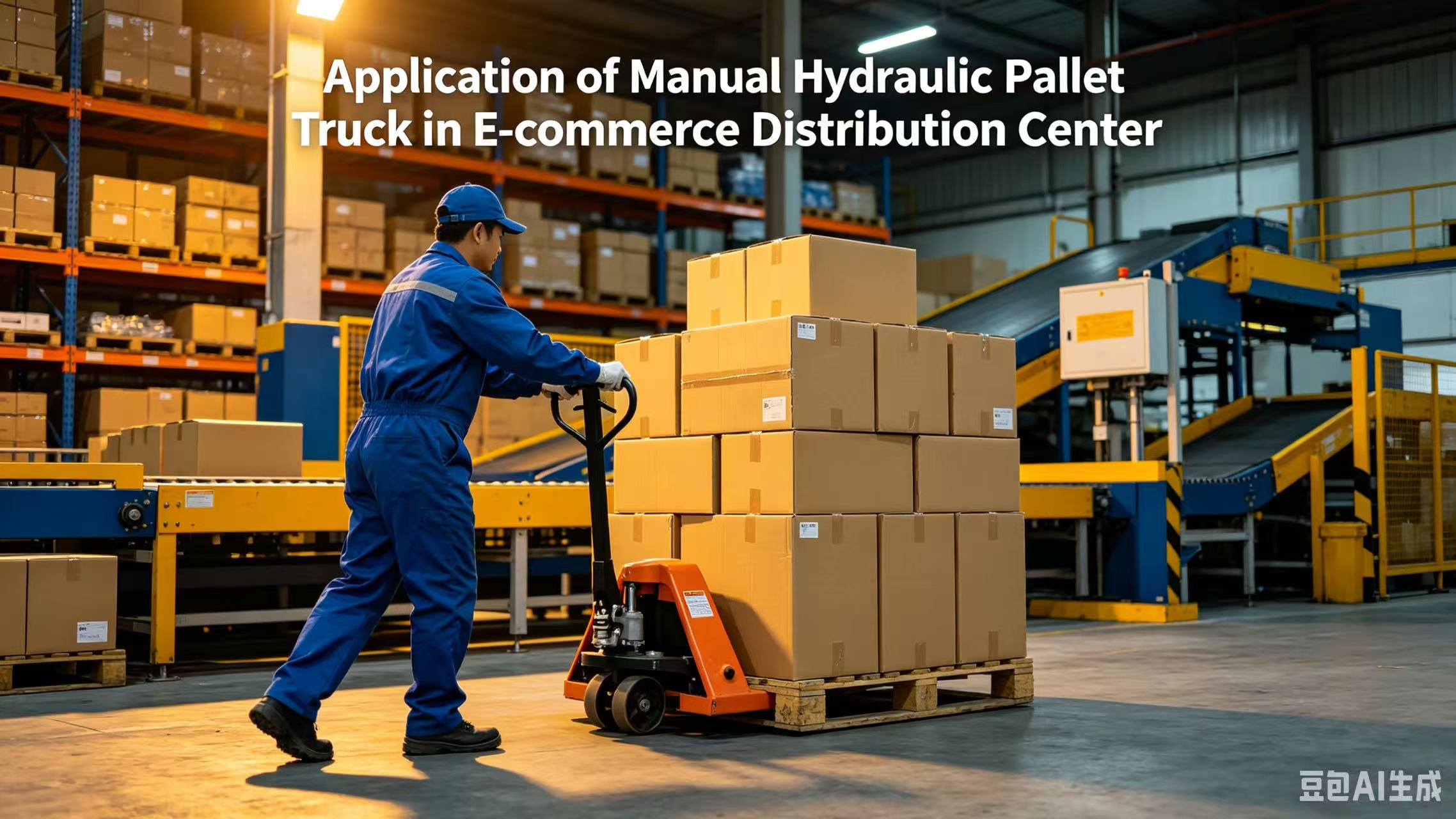
JUNYUNHOIST pallet trucks are used in logistics and warehousing, manufacturing, food and beverage, pharmaceuticals, chemical, and electronics operations, and specialized models are available for cold storage, explosion-proof, and other special working conditions.
- Food processing plant pallet jack. Washdown cleaning, standing moisture, and hygiene requirements make bearing protection and corrosion-resistant construction the priority. Galvanized and stainless steel pallet trucks are available, and rubber or PU wheels are usually considered for wet floors. Where the application requires it, special requirements such as explosion-proof, cold-resistant, and silent operation configurations can be specified.
- Cold storage pallet jack. Condensation and low temperature are continuous rather than occasional, so entry clearance, wheel compound behavior at low temperature, and moisture protection all need to be specified together. Specialized models are available for cold storage working conditions.
- Heavy duty pallet jack in warehousing and logistics centers. Long travel distances, high pallet turnover, and dock levellers place the emphasis on rolling effort, wheel wear, and frame stiffness — the combination of nylon or PU wheels with reinforced wheel frames and rocker arms.
- Factory workshop pallet jack. Manufacturing environments combine rough floors, metal debris, and heavy loads with frequent turning. This is where a cast steel wheel frame and a 4 mm steel plate contribute most directly to wheel life.
- Supermarket and retail backroom pallet jack. Short travel, frequent turns, and tight storage areas reward a compact, low profile configuration with the correct fork width and entry height rather than maximum capacity.
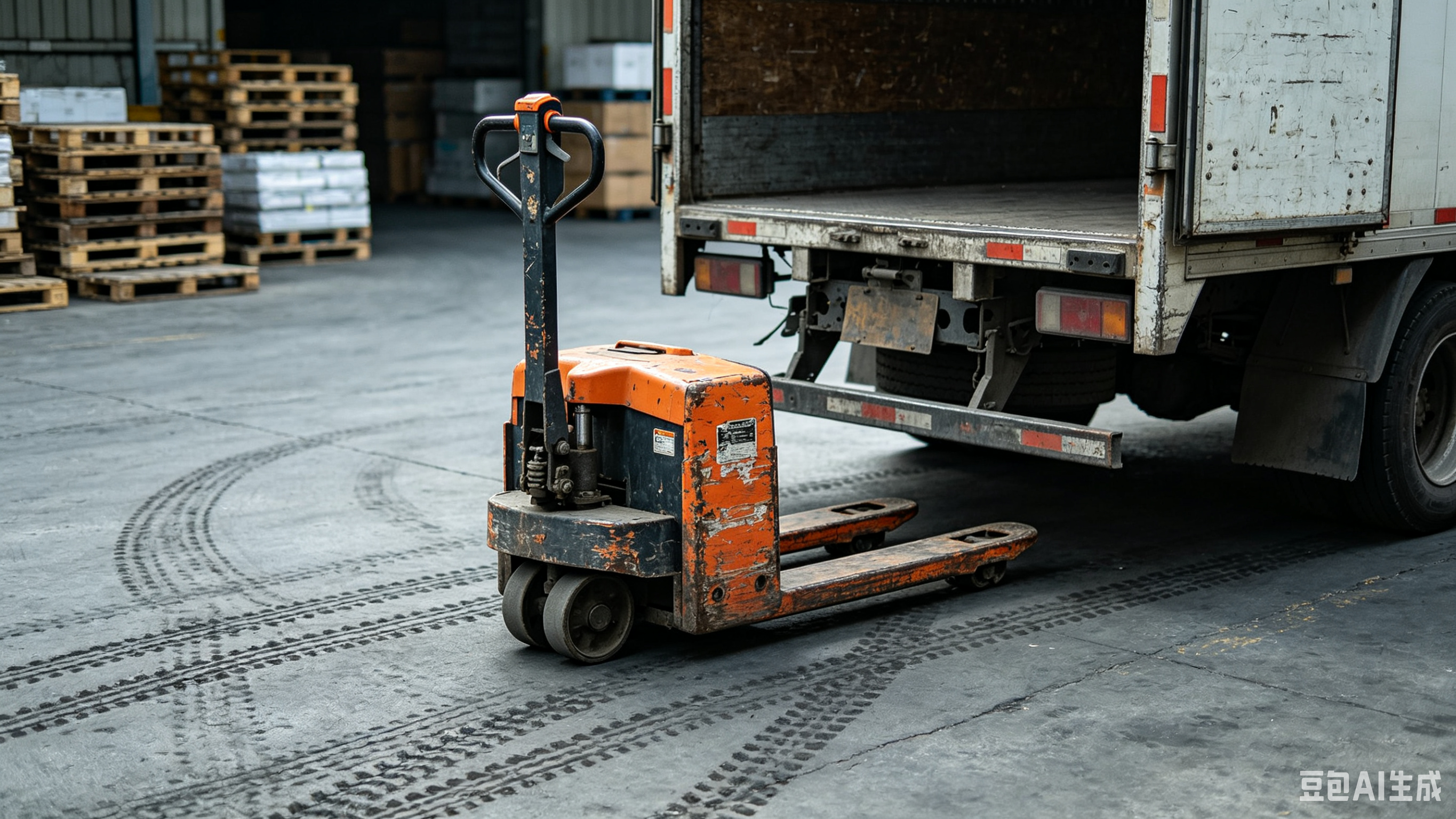
One importer project illustrates how these selections behave in practice. Importer clients across India, Brazil, Russia, Belarus, Türkiye, the UAE, and Vietnam received 400 pcs, used primarily for distribution in local stores and in operation for two years. The reported result was convenient, practical, simple, efficient, and labor-saving handling, with high quality and low loss reported as the key outcomes. The pattern worth noting is that the trucks were selected for a distribution duty profile rather than for maximum load capacity, and the wheel and fork configuration matched the floors they actually run on.
Comparison Table: Wheel Material and Configuration Selection
The table below compares the four wheel options available on JUNYUNHOIST pallet trucks against the operating conditions that decide their suitability. Floor and moisture behavior reflect general material characteristics and should be confirmed against your specific duty cycle.
| Wheel material | Floor conditions it suits | Heat and humidity behavior | Main trade-off to manage |
|---|---|---|---|
| PU (polyurethane) | Smooth, sealed concrete; warehouses, retail backrooms, food processing plants | Generally good wear resistance and floor protection; standing load in high heat is the main risk factor for flat spotting | Match to duty cycle rather than only to rated load |
| Nylon | Smooth, level, clean floors; heavy duty pallet jack duty | Hard compound with low rolling resistance; generally stable on dry floors, but wet and gritty conditions need a deliberate check | Higher noise and shock transmission into load and frame |
| PP (polypropylene) | Dry indoor floors; light to medium duty manual pallet jacks | Economical option; service life under heavy load or heat is the limiting factor | Lowest replacement cost, shortest service life |
| Rubber | Wet, uneven, or mixed indoor-outdoor floors; food processing and washdown areas | Softer and quieter with better grip on wet surfaces; moisture is less of a grip problem but rolling effort increases | Higher rolling resistance and faster wear under heavy load |
For reference, the table below summarises the standard specification and customization points that JUNYUNHOIST confirms for pallet jack projects in these markets.
| Specification item | Value |
|---|---|
| Model reference | AC30 hand pallet truck / pallet jack platform |
| Wheel options | PU, nylon, PP, rubber |
| Fork width | 550 mm, 685 mm |
| Fork length | 800 mm, 1150 mm, 1220 mm, 1500 mm, 1800 mm, 2000 mm |
| Standard minimum height | 80 mm |
| Maximum height | 200 mm |
| Customized minimum lifting heights | 35 mm, 62 mm (low-clearance and uneven floors) |
| Customization scope | Fork length and width, fork steel plate thickness, electric pallet truck, galvanized and stainless steel pallet truck, pallet truck with scale |
| Quality control | 100% testing |
| Monthly capacity | 10,000 units |
| Minimum order quantity | 24 pcs |
| Lead time | 15–20 days |
| After-sales | Free wear-and-tear spare parts in each container, replenished as needed based on subsequent wear |
Frequently Asked Questions
Which standards and certifications should a pallet jack for the Middle East or Southeast Asia pass?
Three standards are commonly referenced. ISO 3691-5:2014 specifies safety requirements for pedestrian-propelled trucks, which includes manual and semi-manual pallet jacks. EN 1757-2 covers hand pallet trucks with capacities up to 2,000 kg in the European market. In the United States, OSHA 29 CFR 1910.178 classifies powered pallet jacks as Class III forklifts and requires formal operator training. JUNYUNHOIST states that its products are manufactured under quality control protocols meeting international safety standards such as ISO and CE. Buyers should note that compliance establishes the safety baseline; it does not by itself determine wheel life in heat and humidity, which depends on wheel compound, bearing protection, and build specification.
Can wheel material, fork length, fork width, and lifting height be customized for hot, humid, or uneven floors?
Yes. JUNYUNHOIST offers OEM/ODM customization covering fork length and width, fork steel plate thickness, and minimum lifting heights of 35 mm and 62 mm, with wheel options of PU, nylon, PP, and rubber. Standard fork widths are 550 mm and 685 mm, with standard fork lengths of 800 mm, 1150 mm, 1220 mm, 1500 mm, 1800 mm, and 2000 mm. Galvanized and stainless steel pallet trucks, pallet trucks with scale, and electric pallet trucks are also available, and specialized models can be configured for cold storage, explosion-proof, and other special working conditions.
What drives the cost of a pallet jack built for heat and humidity?
The cost drivers are the specification decisions that determine service life: wheel material and grade, fork steel plate thickness, customized fork length and width, the 35 mm or 62 mm low-clearance option, and the choice between steel, galvanized, or stainless steel construction. Reinforced components such as the 4 mm steel plate, forged rocker arm, and cast steel wheel frame also increase unit cost. JUNYUNHOIST works to a minimum order quantity of 24 pcs, a monthly capacity of 10,000 units, and a lead time of 15–20 days. Because wheel and bearing replacement is a recurring cost in hot and humid facilities, the more useful comparison is total cost across the working life of the truck rather than unit price alone.
Can we validate wheels on a sample before ordering a full container?
Validating before scaling up is the practical approach for hot, humid, or rough-floor projects. Rather than relying on generic material claims, buyers should test the configured wheel on their own floors, under their own loads, moisture, and duty cycle, because the same wheel compound can behave differently on sealed concrete and on rough concrete with floor drains. Since the minimum order quantity is 24 pcs with a 15–20 day lead time, a trial unit is a low-risk step that produces evidence specific to the actual facility before container volumes are committed.
What lead time and after-sales support should buyers expect?
JUNYUNHOIST quotes a production lead time of 15–20 days, applies 100% testing rather than batch sampling, and operates with a monthly capacity of 10,000 units for its pallet truck line. After-sales support includes free spare parts for wear and tear supplied with every container, with the allocation replenished as needed based on subsequent wear. For facilities where wheels and bearings are consumed continuously, that arrangement shortens the downtime that follows a failure. To confirm a configuration, buyers can send their operating conditions and ask for a quotation or a sample for validation.
Conclusion: Fix the Ground Contact First
Wheel and bearing failure in hot, humid, and rough-floor environments is a specification problem before it is a maintenance problem. Heat softens tread, moisture attacks bearings, and impact loads bend wheel frames and rocker arms — and each of those failures has a specific answer: PU, nylon, PP, or rubber wheels matched to the floor and duty cycle; moisture-aware bearing specification; a 4 mm steel plate, forged rocker arm, and cast steel wheel frame where the duty justifies them; and correct fork length, fork width, and entry clearance, including customized minimum lifting heights of 35 mm and 62 mm for low-clearance floors.
Supporting those decisions are the operating basics that JUNYUNHOIST confirms on every project: 100% testing, a working lead time of 15–20 days, a minimum order quantity of 24 pcs, and free wear-and-tear spare parts in each container, replenished as the parts are consumed. Applied together, these choices reduce the frequency of the replacement cycle rather than shortening it, which is what determines the real cost of a pallet jack fleet in India, Vietnam, the UAE, or Saudi Arabia.
Next Step: Match the Pallet Jack to Your Floor, Not to the Catalogue
Send the operating conditions — temperature, humidity, floor type, load profile, pallet entry height, and aisle width — and JUNYUNHOIST will confirm the wheel material, fork dimensions, and build level for the project, together with lead time and container-level spare parts planning.
Email: Junyunsteven@163.com | Tel / WhatsApp: +86 134-8345-2631 | Website: www.junyunhoist.com
Download the full product catalogue (PDF): JUNYUNHOIST product brochure
Have Questions or Need More Details?
Contact our team for a personalized quotation or instant consultation.
Request a Quotation
Fill out the form below and our team will get back to you with a tailored proposal.
WhatsApp Direct Chat
Prefer to chat in real-time? Message us on WhatsApp for instant assistance & quick answers.
- Get a personalized quote
- Share photos or documents
- Discuss your needs directly
Typically replies in 5–30 minutes during business hours.