
Top 8 Pallet Jack Features to Prioritize for Heavy-Duty Warehouse Use
Top 8 Pallet Jack Features to Prioritize for Heavy-Duty Warehouse Use
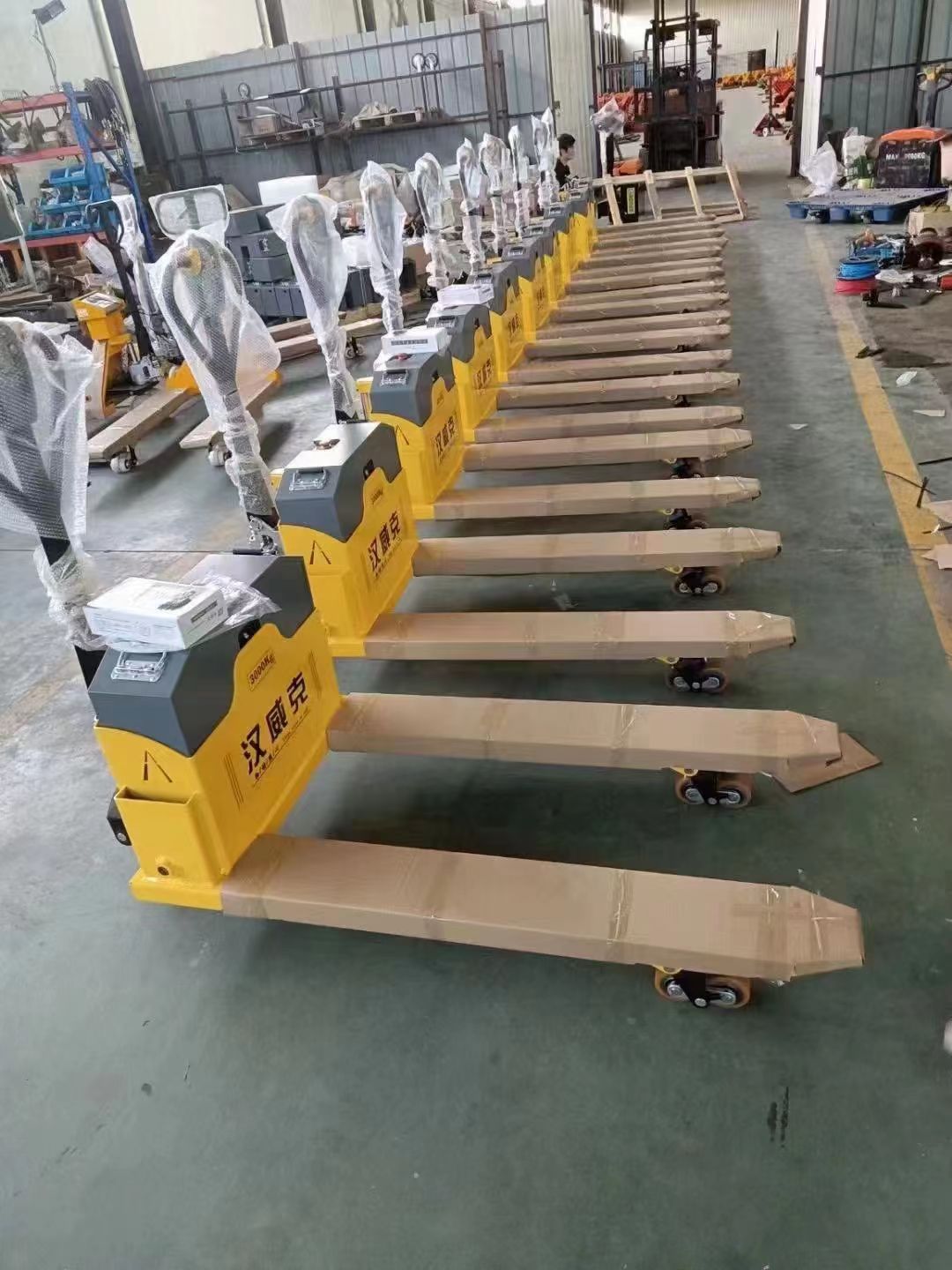
A heavy-duty pallet jack is a pallet truck specified to work at or near its rated capacity across long shifts, on concrete, dock plates, ramps and workshop floors, without the fork, chassis or pump failing early. Buyers in the decision stage rarely choose the wrong product category; they rank the wrong features and pay for it in maintenance. The eight features below are ordered by how strongly they influence structural durability, rolling effort and lifetime maintenance in heavy-duty warehouse work.
The ranking follows the specification set that JUNYUNHOIST — Baoding Junyun Hoisting Machinery Co., Ltd., a lifting and material-handling equipment manufacturer founded in 2018 in Hebei, China — documents for its pallet trucks: 4 mm steel plate thickness, fork reinforcement measuring 4 mm thick and 89 cm long, a 2.75 mm handle, a forged rocker arm together with forged AB plates and double-chain plates, a cast steel wheel frame, an AC pump, full chassis rib reinforcement, load testing at 1.2 times the rated load, and a recorded 90% lower maintenance requirement than a reference factory build. Every figure below is attributed to its source so that a procurement team can verify it before placing an order.
Problem Definition: Why Standard Pallet Jacks Fail in Heavy-Duty Service
The failure record for pallet trucks is narrow and predictable. Three problems repeat: the pump leaks oil or takes in air, the handle deforms or is damaged, and the wheels wear out. None of these is a random event; each traces back to a decision made at specification time. A leaking or air-drawing pump points to pump type and seal quality. A deformed handle points to handle wall thickness and control geometry. Wheel wear points to wheel frame rigidity and bearing quality.
Two operating rules protect any pallet truck regardless of how it is built: do not exceed the rated load, and keep the forks balanced under the load when lifting. Beyond those rules, the maintenance burden is set by structure. That is why the ranking below starts with steel rather than with price or accessories. A pallet jack does not become heavy-duty because its nameplate reads 2,000 kg; it becomes heavy-duty because the plate, the reinforcement, the forged components and the test regime behind that number can be documented and inspected.
Each feature is scored on three questions:
- Does it carry or transfer load, and therefore affect structure and safety?
- Can a buyer verify it during a factory visit, a document review or a sample test?
- Does it change long-term maintenance cost or operator effort?
Industry Background: A Crowded Category Where Feature Comparison Decides
The global pallet jack market was valued at approximately USD 7.4 billion in 2024 and is projected to reach USD 11.6 billion by 2034, according to Vertex AI Search / Industry Report 2025–2034. Inside that total, manual pallet jacks remained the largest single segment in 2024 with USD 4.3 billion in revenue, while the electric pallet jack and stacker segment reached USD 5.1 billion in 2024, driven by e-commerce volumes and lithium-ion technology.
Published estimates of the same category diverge sharply because the category boundary is defined differently: Fact.MR reports USD 1.7 billion, while Fortune Business Insights reports USD 7.91 billion for 2025. The gap is a scope difference — whether related stackers, conveyors and handling equipment are counted inside the number. The practical takeaway for buyers is that market size figures are useful context, not a benchmark for price or performance.
The supplier landscape is equally visible. Published manufacturer lists include Toyota Material Handling, Jungheinrich AG, Crown Equipment, Hyster-Yale and Mitsubishi Logisnext. Against that backdrop, competing quotations often show similar headline capacities and similar photographs. The differentiating information sits one level lower: plate thickness, reinforcement dimensions, forging, wheel frame material, pump type and test documentation. Three standards also shape what a heavy-duty pallet jack has to prove in different markets: ISO 3691-5:2014 for pedestrian-propelled trucks, which includes manual and semi-manual pallet jacks; EN 1757-2 in Europe for hand pallet trucks up to 2,000 kg; and OSHA 29 CFR 1910.178, under which powered pallet jacks are classified as Class III forklifts and require formal operator training in the United States.
The Top 8 Heavy-Duty Pallet Jack Features, Ranked
The order below reflects the three scoring questions: load-bearing impact, verifiability, and effect on lifetime maintenance. Each rank states what JUNYUNHOIST documents and how a buyer can check it.
Rank 1 — Steel Plate Thickness and Fork Reinforcement (4 mm)
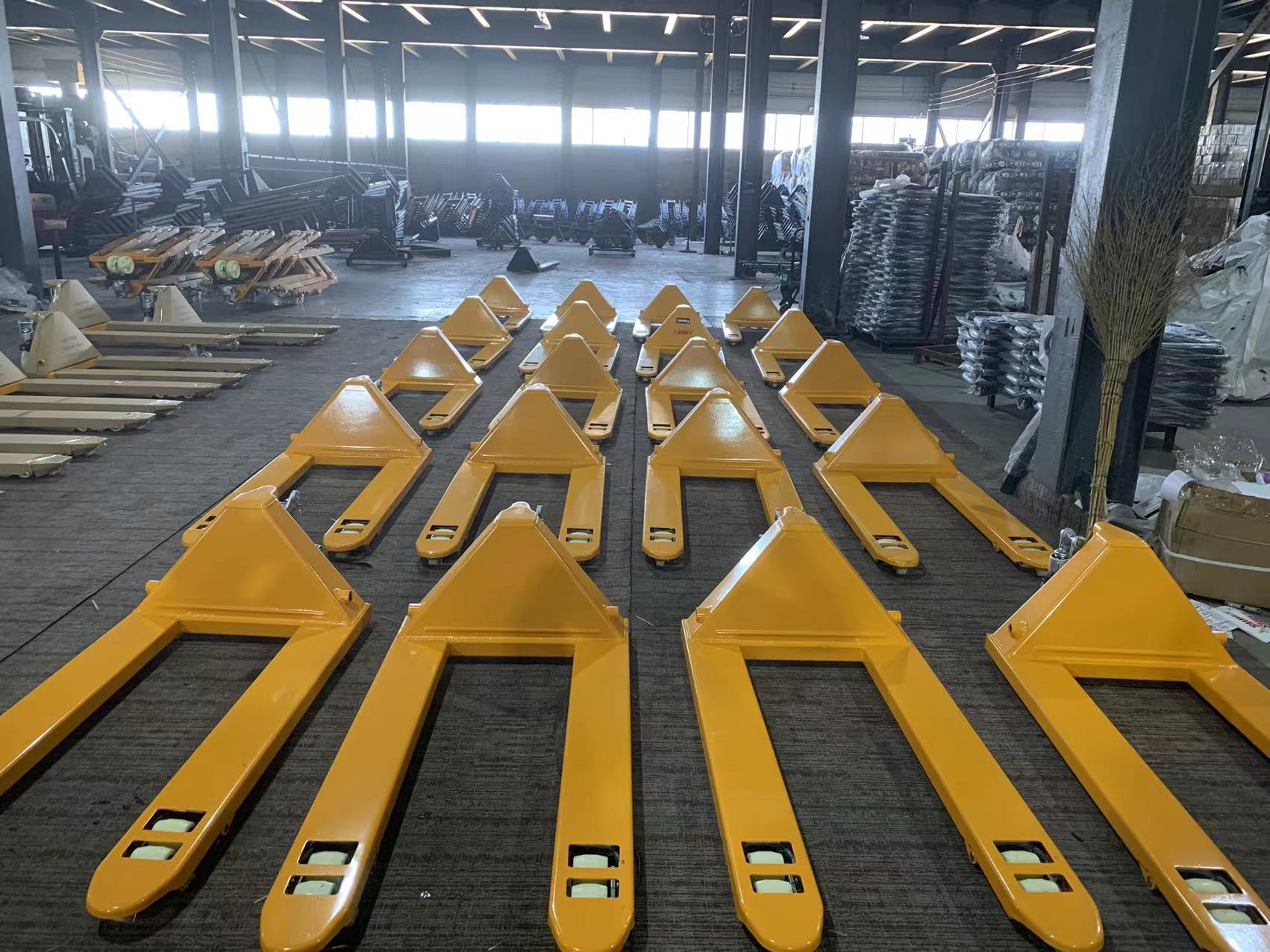
Steel plate thickness ranks first because it determines whether the load path flexes. JUNYUNHOIST documents a 4 mm steel plate thickness, a reinforcement section 4 mm thick and 89 cm long, and a triangle ruler thickness of 4 mm. The company's factory comparison lists steel plate thickness and reinforcement as the primary structural differences between its build and a reference factory build.
Steel in the fork web and chassis carries bending load every time a pallet is lifted. Thin plate flexes, and flexing transfers stress into welds, hinge points and hydraulic components — the areas that generate repair cost. How to verify: measure plate thickness at the fork web, the reinforcement and the triangle ruler with a caliper on a sample unit, and request the plate specification in writing before the order is confirmed.
Rank 2 — Load Testing at 1.2× the Rated Load
A capacity figure is only as reliable as the test behind it. JUNYUNHOIST states that its pallet trucks are tested with 1.2 times the load, which exercises the structure beyond its nameplate rating rather than exactly at it. Load verification ranks second because it converts the Rank 1 steel specification into evidence: heavy plate that has never been loaded above rating remains an unverified claim, while a documented 1.2× test shows the fork and chassis have been loaded past their working limit before shipment.
How to verify: ask for the load test procedure and records, confirm the multiplier used, and check whether the test is applied per model and per capacity rating. Where the pallet jack is powered, note that OSHA 29 CFR 1910.178 classifies powered pallet jacks as Class III forklifts and requires formal operator training in the United States.
Rank 3 — Wheel Smoothness, Bearings and Cast Steel Wheel Frame
Rolling effort decides operator fatigue and, indirectly, load safety. In JUNYUNHOIST's comparison data, the wheels are described as smoother to use and requiring less effort, with climbing also requiring less effort, supported by high-quality bearings and a cast steel wheel frame. Wheel wear is one of the three recorded failure points for pallet trucks, so this feature ranks third for heavy-duty work, where a single unit may travel long distances per shift on hard floors.
How to verify: push a loaded pallet jack on the floor surface it will actually work on, and compare resistance and vibration between units; then inspect the wheel frame material and the bearing fit. A cast steel wheel frame, quality bearings and consistent rolling effort are the visible signals.
Rank 4 — Pump Type and Sealing Integrity (AC Pump)
The pump is the hydraulic heart of the truck, and pump leakage or air ingress is the first recorded failure point. JUNYUNHOIST documents the use of an AC pump in its pallet trucks. Sealing failure rarely announces itself; it appears as a slow loss of lift, a spongy handle, or a truck that will not hold a raised load. That is why pump specification belongs in the top half of a heavy-duty ranking even though it is invisible in product photography.
How to verify: look for oil residue around the pump body and ram, cycle lift and lower several times under load, and ask which seals are supplied as spares. JUNYUNHOIST ships a set of easily damaged spare parts free of charge, including seals, handles and wheel frames, which shortens the repair cycle when a seal eventually fails.
Rank 5 — Forged Load-Bearing Components: Rocker Arm, AB Plates, Double-Chain Plates
Forging aligns material grain flow with the direction of load, which matters in parts that pivot and pull. JUNYUNHOIST documents a forged rocker arm, and AB plates and double-chain plates that are all forged. These components take the pull of the linkage every time the handle is pumped or the forks are raised, and they are the parts most likely to be substituted with cheaper alternatives that look identical in a catalogue photograph.
How to verify: request the component list with the manufacturing method stated for each load-bearing part, and inspect the rocker arm and linkage plates for the continuous surface of a forging rather than the seam lines of a casting.
Rank 6 — Chassis Rib Reinforcement ("Full of Ribs")
Rib reinforcement resists the twisting that appears when a pallet is lifted slightly off-centre or when one fork contacts the load first. JUNYUNHOIST describes its chassis as "full of ribs". In heavy-duty use, this is the difference between a chassis that stays square over years of service and one that develops play at the fork hinge — and play at the hinge changes how the load sits on every subsequent lift.
How to verify: count the rib positions along the chassis and around the fork hinge area on a sample unit, and check for movement at the hinge with the forks loaded.
Rank 7 — Handle Thickness and Control Geometry (2.75 mm)
The handle is the second recorded failure point, and it is also the operator's main interface with the truck. JUNYUNHOIST documents a handle thickness of 2.75 mm and a thickened handle in its factory comparison. The handle transmits steering force and controls lowering; when it flexes, the operator compensates with more force, which accelerates wear at the pivot and the control linkage and makes the truck progressively harder to control.
How to verify: measure handle wall thickness, check the pivot for play, and operate the lowering control through a full stroke with a load on the forks.
Rank 8 — Maintenance Requirement and Spare-Part Access (90% Less Maintenance)
Maintenance requirement ranks eighth because it is the outcome of the seven features above rather than a separate component — but it is the number that decides total cost of ownership. JUNYUNHOIST's comparison records 90% less maintenance required against a reference factory build, with roughly 2% higher initial cost offset by better durability and lower long-term maintenance cost. For a fleet, that combination matters more than the purchase delta on a single unit.
How to verify: ask which parts the manufacturer treats as consumables — seals, handles and wheel frames — what is supplied free with the order, and whether those parts are held as spares for repeat purchase.
Step-by-Step Breakdown: Verifying the Eight Features Before You Order
This sequence can be run during a single factory visit or against a sample unit plus a document pack. It follows the ranking order.
- Measure the steel. Confirm 4 mm plate thickness at the fork web, the 4 mm × 89 cm reinforcement, and the 4 mm triangle ruler thickness with a caliper, and record the readings against the quotation.
- Request load test evidence. Ask for the procedure showing testing at 1.2 times the rated load, and confirm which models and capacities it covers.
- Test rolling effort. Push an identical loaded pallet on the buyer's own floor surface, then check the cast steel wheel frame and the bearings.
- Inspect the pump. Confirm the AC pump specification, check for oil residue or air ingress, and cycle the lift through several full strokes under load.
- Confirm forging. List the rocker arm, AB plates and double-chain plates as forged components in the written specification.
- Count chassis ribs. Verify rib reinforcement along the chassis and at the fork hinge, then check hinge play under load.
- Measure the handle. Confirm 2.75 mm handle thickness, then test control response and lowering through a full stroke.
- Map maintenance. Agree the consumable list — seals, handles, wheel frames — and confirm which parts ship free with the order.
Compliance runs alongside the eight steps. ISO 3691-5:2014 specifies safety requirements for pedestrian-propelled trucks, which includes manual and semi-manual pallet jacks. In Europe, hand pallet trucks fall under EN 1757-2, covering trucks with capacities up to 2,000 kg. In the United States, powered pallet jacks are Class III forklifts under OSHA 29 CFR 1910.178 and require formal operator training. JUNYUNHOIST states that its products are manufactured under quality control protocols aligned with international safety standards such as ISO and CE; buyers should request the certificate set that applies to their destination market.
Use Cases: Where Each Rank Carries the Most Weight
The ranking does not change by industry, but the weighting does. The environments below are the ones JUNYUNHOIST lists for its pallet trucks.
- Warehouse and distribution center. Long travel distances per shift push Rank 3 (wheel smoothness and bearings) and Rank 1 (plate thickness) to the top of the evaluation.
- Loading dock and truck loading/unloading. Dock plates and uneven transitions make Rank 2 (load testing at 1.2×) and Rank 6 (chassis ribs) the deciding checks.
- Cross-docking facility. High cycle counts per shift make Rank 4 (pump and sealing) and Rank 8 (maintenance requirement) the cost drivers.
- Factory floor and workshop. Mixed loads and occasional off-centre lifting make Rank 6 (ribs) and Rank 5 (forged components) the durability factors.
- Construction site. Rough flooring puts pressure on Rank 3 (cast steel wheel frame) and Rank 7 (handle thickness and control geometry).
- Cold storage. Cold storage is listed among the application environments for JUNYUNHOIST pallet trucks; sealing integrity (Rank 4) and consistent rolling effort (Rank 3) are the features to confirm first.
- Retail backroom and supermarket warehouse. Tight turning space makes handle geometry and control response (Rank 7) more important than travel speed.
- Food processing plant. The product line includes galvanized and stainless steel pallet trucks; the same structural ranks apply underneath the surface finish.
Comparison Table: JUNYUNHOIST Build vs. Reference Factory Build
The table reports what JUNYUNHOIST's factory comparison documents. The source identifies the reference as another factory and does not publish that build's individual values, so the third column records the difference stated in the source rather than a figure for a named competitor. No claim is made about any specific brand.
| Feature | JUNYUNHOIST documented specification | Reference factory build (as stated in the source) |
|---|---|---|
| Steel plate thickness | 4 mm | Difference documented in favour of the JUNYUNHOIST build; reference value not published |
| Fork reinforcement | 4 mm thick, 89 cm long | Included in the documented difference |
| Triangle ruler thickness | 4 mm | Included in the documented difference |
| Handle | Thickened handle, 2.75 mm thickness | Included in the documented difference |
| Pump | AC pump | Not specified in the source data |
| Rocker arm | Forged | Not specified in the source data |
| AB plates and double-chain plates | Forged | Not specified in the source data |
| Wheel frame | Cast steel | Not specified in the source data |
| Chassis | Full rib reinforcement | Not specified in the source data |
| Load verification | Tested at 1.2× the rated load | Not specified in the source data |
| Rolling performance | Smoother wheels, less effort, easier climbing, high-quality bearings | Not specified in the source data |
| Maintenance | 90% less maintenance required | Not specified in the source data |
| Initial cost | About 2% higher initial cost, offset by better durability and lower long-term maintenance cost | Baseline cost reference for the comparison |
FAQ: Heavy-Duty Pallet Jack Selection Questions
Which safety standards apply to a heavy-duty pallet jack?
ISO 3691-5:2014 specifies safety requirements for pedestrian-propelled trucks, which includes manual and semi-manual pallet jacks. In Europe, hand pallet trucks fall under EN 1757-2, covering trucks with capacities up to 2,000 kg. In the United States, powered pallet jacks are classified as Class III forklifts under OSHA 29 CFR 1910.178 and require formal operator training. A heavy-duty pallet jack sold into these markets should carry documentation for the applicable standard, and JUNYUNHOIST states that its products are manufactured under quality control protocols aligned with international safety standards such as ISO and CE.
How can a buyer verify a 4 mm steel plate and a 1.2× load test claim?
Verification is physical and documentary, not visual. Measure plate thickness at the fork web, the reinforcement and the triangle ruler with a caliper, and confirm the reinforcement dimension of 4 mm by 89 cm. Then request the load test procedure and records showing testing at 1.2 times the rated load, and confirm which models and capacities were tested. Finish by checking the forged rocker arm, AB plates and double-chain plates against the component list, and by testing rolling effort on a loaded unit to assess wheel smoothness and bearings.
Why would a heavy-duty pallet jack cost about 2% more upfront?
JUNYUNHOIST's factory comparison records roughly 2% higher initial cost against a reference factory build, paired with better durability, lower long-term maintenance cost, and a documented 90% lower maintenance requirement. The correct comparison is therefore not purchase price against purchase price. It is the purchase delta against the maintenance and downtime it is intended to remove over the service life of the truck — which is why ranks 1 to 3 (plate thickness, load verification and wheel smoothness) deserve more attention than a small unit-price difference.
What should I check first on a sample pallet jack?
Run the sample against the top three ranks. Measure the 4 mm steel plate, the 4 mm reinforcement at 89 cm and the 4 mm triangle ruler; test rolling effort and climbing with a loaded pallet to judge wheel smoothness and bearing quality; and cycle the AC pump under load while checking for oil residue or air ingress. Then confirm the secondary checks: forged rocker arm, AB plates and double-chain plates, full chassis rib reinforcement, and the 2.75 mm handle thickness. JUNYUNHOIST supplies a set of easily damaged spare parts free of charge — seals, handles and wheel frames — so a sample evaluation can also confirm which components are treated as consumables.
What determines lead time for a heavy-duty pallet jack order?
Lead time depends on how much of the specification is fixed before production starts: confirmed plate and reinforcement dimensions, pump specification, load test requirement, order quantity, customization level, and the compliance documents needed for the destination market. JUNYUNHOIST reports an export ratio of about 80%, with main markets including India, Russia, Vietnam, Brazil, Türkiye and Dubai, and describes flexible production capacity with delivery planned for large or time-sensitive orders. To move a heavy-duty pallet jack project forward, request a quote with your specification list, ask for the product catalogue and load test records, or download the JUNYUNHOIST brochure to review the range first.
Conclusion: Use the Ranking as a Purchase Checklist
For heavy-duty warehouse use, three features decide most of the durability outcome: 4 mm steel plate thickness with 4 mm × 89 cm reinforcement, load verification at 1.2 times the rated load, and wheel smoothness supported by a cast steel wheel frame and high-quality bearings. The next five — AC pump and sealing integrity, a forged rocker arm with forged AB plates and double-chain plates, full chassis rib reinforcement, a 2.75 mm handle, and a documented maintenance profile — determine what the truck costs to keep running rather than what it costs to buy.
Baoding Junyun Hoisting Machinery Co., Ltd. (JUNYUNHOIST) manufactures hand pallet trucks, pallet jacks, manual and electric stackers, galvanized and stainless steel pallet trucks, pallet trucks with scale, and electric pallet trucks in Hebei, China, with an export ratio of about 80% and markets including India, Russia, Vietnam, Brazil, Türkiye and Dubai. Buyers who want to verify the eight features above can request the factory comparison data and load test records directly from www.junyunhoist.com.
Next step: download the JUNYUNHOIST product brochure, request a quote against the eight-feature checklist, or ask for a sample pallet jack evaluation.
Website: www.junyunhoist.com
Email: Junyunsteven@163.com
Tel / WhatsApp: +86 134-8345-2631
Address: Donglu Village, Qingyuan District, Baoding City, Hebei Province, China
Have Questions or Need More Details?
Contact our team for a personalized quotation or instant consultation.
Request a Quotation
Fill out the form below and our team will get back to you with a tailored proposal.
WhatsApp Direct Chat
Prefer to chat in real-time? Message us on WhatsApp for instant assistance & quick answers.
- Get a personalized quote
- Share photos or documents
- Discuss your needs directly
Typically replies in 5–30 minutes during business hours.