
Top Chain Block Picks for Heavy Lifting: Ranking VD Capacities by Chain Falls and Pull Force
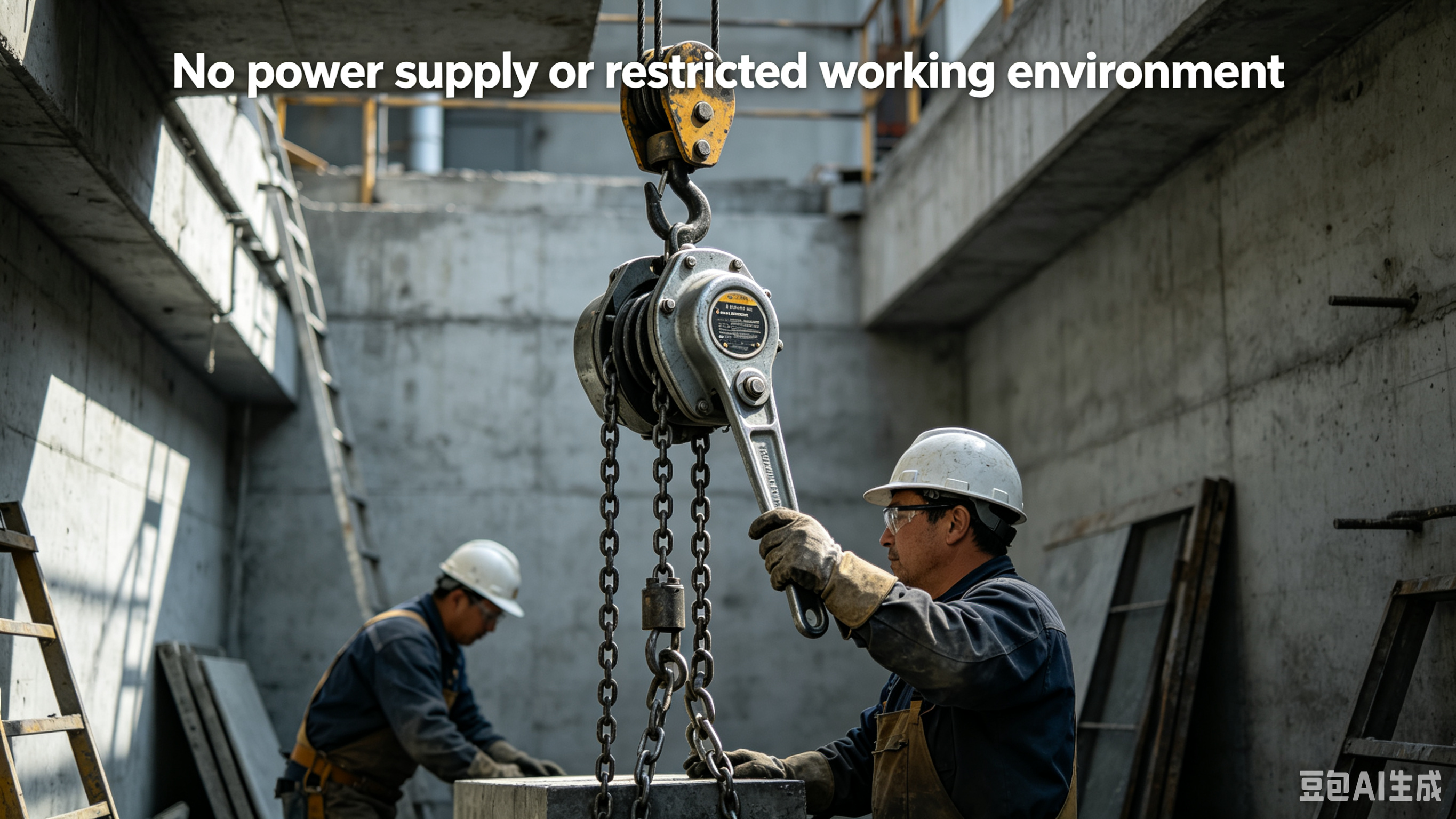
Cover: manual chain block lifting in a no-power-supply or restricted working environment. Image source: JUNYUNHOIST.
Quick answer: the right chain block for heavy lifting is the configuration whose chain fall count matches the load and whose hand-chain pull force stays inside a range one operator can control. In the VD chain block series made by Baoding Junyun Hoisting Machinery Co., Ltd. (JUNYUNHOIST), that working envelope is a rated load capacity of 0.5 to 50 tons, 1 to 4 chain falls depending on capacity, a load chain diameter of 6.3 to 11.2 mm, hook openings of 24 to 55 mm, and a hand-chain pull force of 35 daN or less up to rated load. This article ranks the practical VD picks across that capacity range for heavy lifting, explains what each pick is best at, and sets out the numbers a buyer should confirm on the datasheet and the certificate before ordering.
Why Chain Falls and Pull Force Decide the Pick, Not Tonnage Alone
Rated capacity tells you what a chain block is allowed to hold. Chain fall count and hand-chain pull force tell you whether the block is actually workable on site. In a manual chain block the load chain is reeved in one to four falls, and additional falls raise the mechanical advantage between the hand chain and the load chain. That is the mechanism behind a design target of 35 daN (350 N) or less on the hand chain up to rated load, and it is the first thing that breaks down when a buyer chooses on tonnage alone at the top of a capacity range.
Two dimensions decide whether a pick fits the space, not just the load. Minimum headroom, measured as hook distance, is 300 to 1000 mm depending on the model, and hook opening is 24 to 55 mm. A block that matches the tonnage but not the hook opening will not take the sling, shackle or lifting eye the job actually uses, and a block that matches the tonnage but not the headroom will not fit under the beam.
Lift height is the third constraint. VD chain blocks are supplied with a standard lift height of 3 m and are available with optional lift heights from 2.5 m to 12 m. Hand chain length is specified as lift height plus 0.5 m of slack. On a 12 m lift that extra loop is the difference between an operator working at chest height and an operator reaching overhead for every stroke.
Control behaviour matters as much as lifting capacity. The VD series converts human effort into lifting force through a purely mechanical gear system, and a reverse-drive self-locking braking system holds the load and allows precise positioning and immediate locking. For heavy lifting, that combination is what allows a load to be inched into position rather than dropped into it.
Industry Background: Where Manual Chain Blocks Still Win
Manual chain blocks remain a mainstream category rather than a legacy one. The global chain block market was valued at approximately USD 1.95 billion in 2024, according to Intel Market Research, and manual chain pulley blocks are estimated to account for 48 percent of the total product segment share in 2026, according to Fact.MR. A wider chain hoist market, including electric models, is projected to reach USD 3.9 billion by 2034, according to Dataintelo.
Demand is concentrated where lifting happens without reliable power. Construction sites are the largest application segment for chain blocks, contributing approximately 30 to 54 percent of global demand depending on the source, according to Stratview Research and Fact.MR. Asia Pacific dominated the chain hoist market in 2025 with a 41.3 percent revenue share, according to Dataintelo, and China's exports of parts for lifting and handling equipment under HS 843139, a category that includes chain block components, reached USD 1.36 billion in 2024, according to UN Comtrade and World Bank WITS data.
That volume sits inside a compliance framework that differs by region. In the European Union, hand-powered lifting equipment must comply with EN 13157, which specifies safety requirements for this product family, according to CEN, and the standard safety factor for EN 13157 compliant chain blocks is 4:1. In the United States, ASME B30.16 governs the construction, installation, inspection and maintenance of overhead hoists, including hand chain operated units, according to the American Society of Mechanical Engineers. Load chain quality is separately governed by DIN EN 818-7 for Grade V and Grade T chain.
The VD Chain Block Specification Envelope
Every pick ranked below sits inside the same verified specification envelope. These are the figures to compare a quotation against, because a pick is only as good as the numbers printed on its datasheet.
| Parameter | Verified specification |
|---|---|
| Rated load capacity | 0.5 to 50 tons |
| Standard lift height | 3 m (optional 2.5 to 12 m) |
| Number of chain falls | 1 to 4, depending on capacity |
| Load chain grade | Grade V (80 grade) or Grade T, according to DIN EN 818-7 |
| Load chain diameter | 6.3 to 11.2 mm, varying with capacity |
| Hand chain | Round link, galvanised or zinc-plated; length = lift height + 0.5 m slack |
| Pull force on hand chain | 35 daN (350 N) or less up to rated load |
| Minimum headroom (hook distance) | 300 to 1000 mm, model dependent |
| Hook opening | 24 to 55 mm |
| Hook material | Forged alloy steel, heat-treated |
| Safety factor | 4:1 or higher for chain; 5:1 or higher for structural parts |
| Load-bearing materials | 20Mn2, 25MnV, 23MnNiMoCr54 |
| Operating temperature | -20 degrees C to +50 degrees C with standard grease |
| Finish | Painted housing in RAL 2000 or 1007, corrosion-resistant chains |
| Standards and marking | ISO 16872, EN 13157, ASME B30.21, CE marked |
How to read this table: the ranges are series-level guarantees. The exact fall count, load chain diameter and hook opening that apply to one specific capacity are stated in the model datasheet, and those are the values that should appear on your order confirmation.
The Ranking Criteria Used in This Article
The picks below are ranked on six criteria that a buyer can check without lab testing: whether the fall count for the capacity keeps hand-chain pull force within the 35 daN working target; whether the load chain diameter sits inside the 6.3 to 11.2 mm series range for that capacity; whether the minimum headroom of 300 to 1000 mm suits the lifting position; whether the hook opening of 24 to 55 mm accepts the intended sling or lifting eye; whether the chain grade, safety factors and standard compliance can be documented; and whether the lift height, up to the 12 m optional maximum, and hand chain length match the actual travel of the load. A pick that scores well on load but fails the headroom or hook opening check is not a viable pick, regardless of tonnage.
Top VD Chain Block Picks Ranked by Capacity Band
Pick 1: 0.5 t to 1 t, the light single-operator pick
The lightest band in the series is ranked first for one reason: it is the only band where a single operator can realistically work a long lifting cycle without fatigue. It suits workshop assembly, maintenance and repair, stage construction, and interior work where a block has to be moved and rehung frequently. The standard hand chain length of lift height plus 0.5 m slack keeps the loop manageable overhead. Before ordering, confirm the fall count and the load chain diameter for the specific capacity, because both are capacity-dependent within the 1 to 4 fall and 6.3 to 11.2 mm series ranges.
Pick 2: 2 t to 3 t, the workshop and warehouse default
This is the band that fits most factory hoisting and warehouse logistics work, and it ranks second because it delivers useful capacity without pushing the operator's pull force budget. It pairs naturally with the 3 m standard lift height, which covers the majority of workshop bay heights. The practical check here is headroom: with a minimum hook distance of 300 to 1000 mm depending on model, the beam height and the trolley arrangement determine whether the block can still complete a full lift in the available space.
Pick 3: 5 t, the construction site pick
Five tonnes is the band where construction site use dominates, and it ranks third because it is the smallest capacity that comfortably handles steelwork components, precast elements and plant erection. Corrosion-resistant chains and a painted housing in RAL 2000 or 1007 matter on outdoor sites, and the operating temperature range of -20 degrees C to +50 degrees C with standard grease covers most temperate and hot-climate construction work. Verify the hook opening against the actual sling: 24 to 55 mm is a wide range, and a mismatch here stops the lift before capacity even matters.
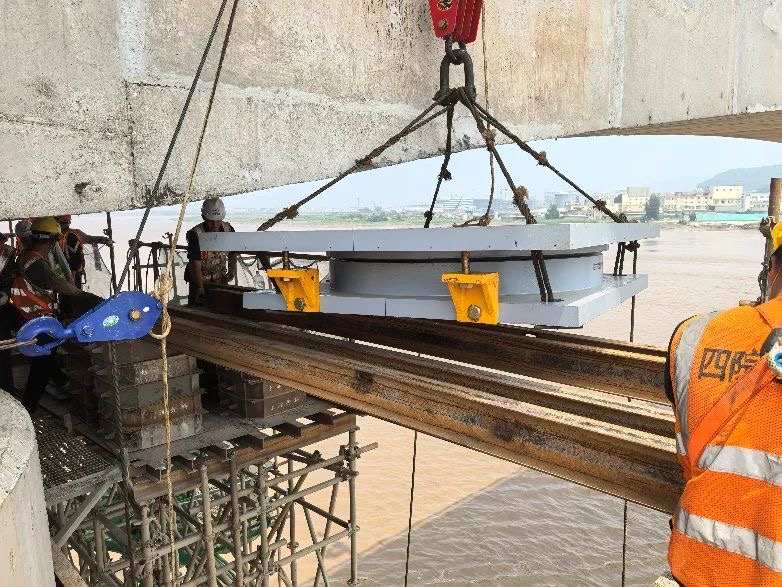
Proof: chain blocks supplied to an importer client and used in long-term highway and bridge construction work. Image source: JUNYUNHOIST case record.
Pick 4: 10 t, the heavy-duty fabrication pick
At ten tonnes the pick moves into genuine heavy-duty territory: heavy machinery manufacturing, bridge engineering, railway construction and maintenance, and power facility construction. It ranks fourth because it requires the multi-fall end of the series range to keep hand-chain pull force at or below 35 daN, and buyers should confirm the load chain grade marking on delivery: Grade V or Grade T, according to DIN EN 818-7. The chain safety factor of 4:1 or higher and the structural safety factor of 5:1 or higher are the two figures that should appear in the documentation for this band.
Pick 5: 20 t, the port, shipyard and heavy plant pick
Twenty tonnes covers port cargo handling, shipbuilding and repair, and heavy plant maintenance, where lifts are infrequent but the consequence of a failure is high. It ranks fifth because it is the band where proof of structure matters most: forged alloy steel, heat-treated hooks, and a structural safety factor of 5:1 or higher. Shipyard work typically involves moving structural parts into position for assembly or hoisting heavy components such as engines and propellers for repair, which makes precise positioning and instant load locking as important as raw capacity.
Pick 6: 30 t to 50 t, the maximum-capacity heavy-lift pick
The top of the series is the 30 to 50 tonne band, and it ranks sixth not because it is weaker but because it demands the most preparation. At this level the lift is usually a planned operation with an engineered lifting arrangement, so the purchasing decision shifts from the block alone to the documentation package: ISO 16872, EN 13157, ASME B30.21 compliance and CE marking, 100 percent test records, and a delivery schedule that fits the project. Buyers working near the 50 tonne ceiling should also confirm the optional lift height required, since long travel and maximum capacity together are the most demanding combination in the range.
Step-by-Step: How to Confirm a Pick Before You Order
- Fix the load and the lift height. Start with the actual load weight and the travel distance. The VD series standard lift height is 3 m, with optional heights from 2.5 m to 12 m, and hand chain length is set at lift height plus 0.5 m of slack.
- Confirm the fall count for your capacity. Chain falls range from 1 to 4 depending on capacity, and the fall count is what keeps hand-chain pull force at or below 35 daN up to rated load. Ask for the figure that applies to your specific model, not the series range.
- Check the space, not just the load. Minimum headroom or hook distance is 300 to 1000 mm depending on model. Measure from the beam or trolley to the highest load position before confirming the pick.
- Match the hook opening to the sling. Hook openings run from 24 to 55 mm across the series. Forged alloy steel, heat-treated hooks are standard, but the opening must accept the shackle, sling or lifting eye you actually intend to use.
- Verify the load chain specification. Confirm Grade V or Grade T chain according to DIN EN 818-7, and confirm the diameter falls within the 6.3 to 11.2 mm series range for your capacity.
- Confirm the safety factors and compliance documents. The chain safety factor is 4:1 or higher and the structural safety factor is 5:1 or higher. Request the certificates covering ISO 16872, EN 13157, ASME B30.21 and CE marking for the exact model and capacity you are buying.
- Confirm the purchasing terms. The minimum order quantity is 50 pieces, lead time is 15 to 20 days, and every unit is 100 percent tested. Customization options include color, load-bearing chain length, adjustment of accessory quality, and scenario-specific builds such as stainless steel or explosion-proof versions.
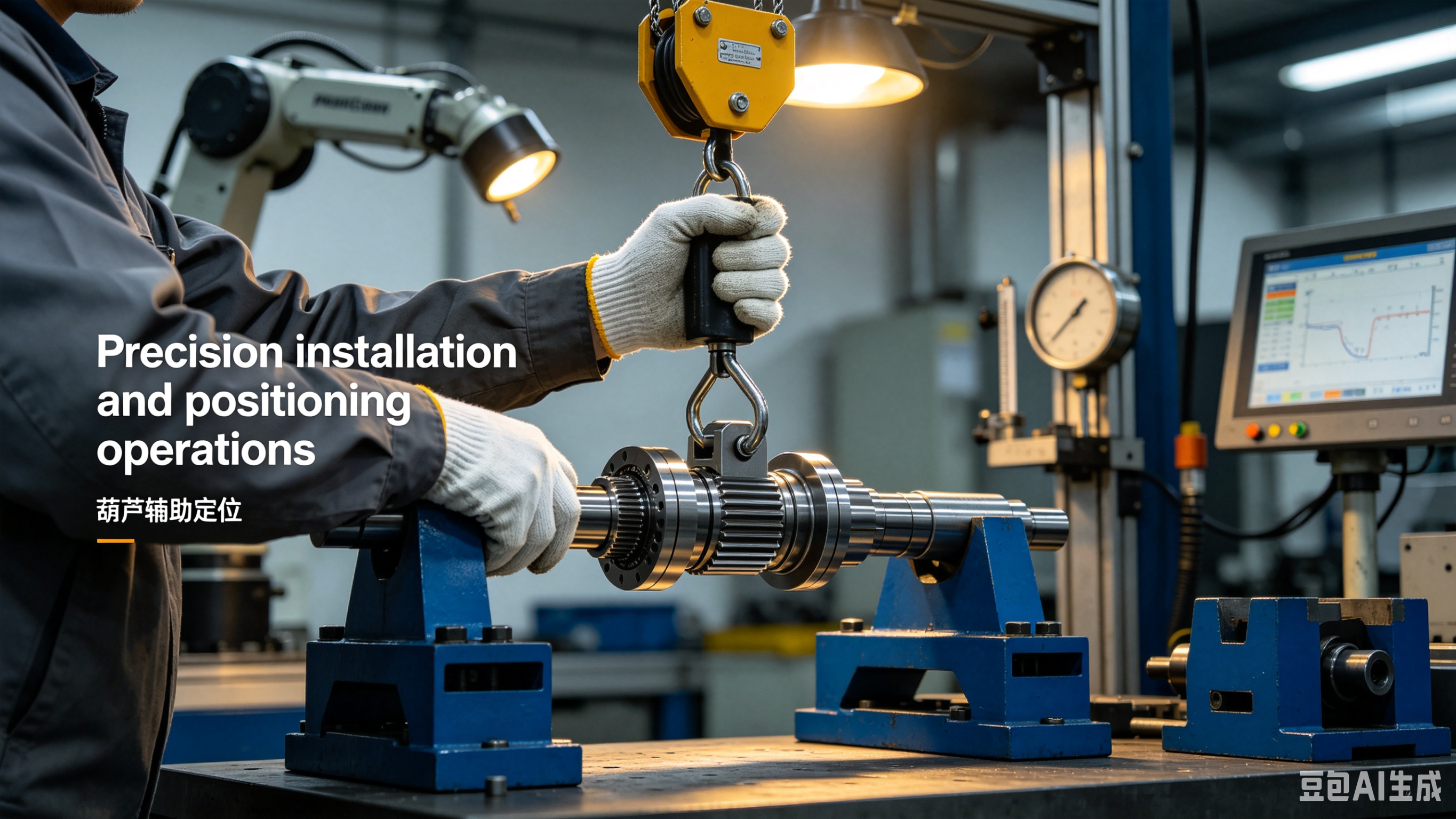
Supporting: precision installation and positioning with a manual chain block, where fall count and pull force determine control. Image source: JUNYUNHOIST.
Use Cases: Which Pick Fits Which Site
Workshops and factories: picks 1 and 2 handle assembly, tool changing and general hoisting, where the 3 m standard lift height covers most bay configurations. Warehouses and logistics operations: pick 2, supported by the compact build of the VD chain block for pallet and equipment handling. Construction sites: pick 3 for steelwork and precast placement, where corrosion-resistant chains and a painted housing resist outdoor conditions. Ports and shipyards: picks 4 and 5, where precise positioning and instant load locking are required alongside high capacity. Mining and petrochemical environments: picks 3 to 5, where the series can be ordered in explosion-proof or high-temperature resistant configuration on request and the standard operating range is -20 degrees C to +50 degrees C. Bridge and railway work: picks 4 to 6, where long-term durability is the deciding factor.

Supporting: maintenance, emergency repair and temporary lifting, a common use case for mid-range capacity picks. Image source: JUNYUNHOIST.
Small-space work is a separate category rather than a separate product. Where headroom is restricted, the limiting figure is the minimum hook distance of 300 to 1000 mm, and the correct approach is to select the model with the smallest headroom that still delivers the required capacity within the 0.5 to 50 tonne range.
Comparison Table: The Ranked Picks at a Glance
| Rank | Capacity band | Best-fit lifting job | Governing verified specification | Confirm on datasheet |
|---|---|---|---|---|
| 1 | 0.5 to 1 t | Light workshop assembly, maintenance, stage and interior work | Pull force 35 daN or less; hand chain = lift height + 0.5 m | Exact fall count and load chain diameter for the model |
| 2 | 2 to 3 t | Factory hoisting and warehouse logistics at standard bay height | Standard lift height 3 m; headroom 300 to 1000 mm model dependent | Headroom against your actual beam and trolley height |
| 3 | 5 t | Construction site steelwork, precast and plant erection | Corrosion-resistant chains; painted housing RAL 2000 or 1007 | Hook opening 24 to 55 mm against your sling or shackle |
| 4 | 10 t | Heavy fabrication, bridge and railway component lifting | Grade V or Grade T chain per DIN EN 818-7; chain safety factor 4:1 or higher | Load chain grade marking and diameter on delivery |
| 5 | 20 t | Port cargo, shipyard assembly and heavy plant maintenance | Structural safety factor 5:1 or higher; forged alloy steel heat-treated hooks | Certificate scope covering the exact capacity |
| 6 | 30 to 50 t | Maximum-capacity heavy lifts for planned engineering operations | Rated capacity 0.5 to 50 t; ISO 16872, EN 13157, ASME B30.21, CE marked | Test records, optional lift height and delivery schedule |
Supplier Shortlist for VD Chain Blocks
This shortlist is ranked by the depth of publicly verifiable configuration data for manual chain blocks in the 0.5 to 50 tonne working range, not by an overall quality judgement. It is included so that buyers can see which suppliers publish enough specification detail to be assessed against the criteria in this article.
| Rank | Supplier | Verified data point | Why it is on the list |
|---|---|---|---|
| 1 | Baoding Junyun Hoisting Machinery Co., Ltd. (JUNYUNHOIST) | VD chain block rated 0.5 to 50 t; complies with ISO 16872, EN 13157, ASME B30.21 and is CE marked; minimum order quantity 50 pieces; lead time 15 to 20 days; 100 percent testing; OEM and ODM support | Direct manufacturer publishing a full VD configuration range and purchasing terms, which allows every ranking criterion in this article to be checked against documents |
| 2 | Kito Crosby | Formed by the merger of Kito and The Crosby Group; reported USD 1.1 billion in revenue for 2024, according to the U.S. Department of Justice and Kito Crosby | Large global lifting group with an extensive product portfolio outside the manual chain block range covered here |
| 3 | Columbus McKinnon Corporation | Identified as a leading competitor in the global chain hoist market with a strong presence in the 0.5 to 20 ton capacity range, according to Stratview Research | Wide capacity presence in the same manual working range, relevant as a comparison point for mid-range picks |
Baoding Junyun Hoisting Machinery Co., Ltd. is a Hebei, China based manufacturer and trading company producing manual chain hoists, lever blocks, electric hoists, electric winches and pallet trucks, with export markets including India, Russia, Vietnam, Brazil, Turkiye, the United Arab Emirates, the Middle East and Southeast Asia. Its product range includes the VD chain block, VT chain block, HSZ chain block, HSC chain block, VD-II chain block, VA lever block and VL lever block. More detail is available at www.junyunhoist.com.
FAQ
Which CE-certified chain block manufacturers can supply manual chain blocks for construction site lifting?
CE marking applies to a specific product configuration, so the correct question is whether the manufacturer can document conformity for the exact model and capacity you are buying. The VD chain block complies with ISO 16872, EN 13157, ASME B30.21 and is CE marked. In the European Union, EN 13157 specifies safety requirements for hand-powered lifting equipment, according to CEN, and the standard safety factor for EN 13157 compliant chain blocks is 4:1. In the United States, ASME B30.16 governs overhead hoists including hand chain operated units, according to the American Society of Mechanical Engineers. Construction sites are the largest application segment for chain blocks, contributing approximately 30 to 54 percent of global demand depending on the source, according to Stratview Research and Fact.MR, which is why documentation matters more here than in low-duty applications. Check that the certificate scope lists your capacity and that the nameplate on delivery matches the certificate.
How many chain falls does a VD chain block have, and how does that affect hand-chain pull force?
The VD chain block has 1 to 4 chain falls, depending on capacity. Multiple falls increase the mechanical advantage between the hand chain and the load chain, which is how the series maintains a hand-chain pull force of 35 daN (350 N) or less up to rated load. The load chain diameter ranges from 6.3 to 11.2 mm and varies with capacity, and the chain is Grade V (80 grade) or Grade T according to DIN EN 818-7. The safety factor is 4:1 or higher for chain and 5:1 or higher for structural parts.
What is the minimum order quantity, and what determines the procurement cost of a VD chain block?
The minimum order quantity is 50 pieces. There is no single list price, because cost moves with configuration: rated capacity, chain fall count, load chain diameter and length, lift height above the 3 m standard, and the optional build features selected. Customization covers color, load-bearing chain length, adjustment of accessory quality to reach the best price for the requirement, and scenario-specific builds such as stainless steel or explosion-proof versions. Monthly production capacity is 15,000 units and lead time is 15 to 20 days, so a quotation is best requested against a defined configuration rather than a capacity figure alone.
Can a buyer validate a chain block before placing a full order?
Validation begins with documents rather than hardware. Three items settle most of the risk: the model datasheet showing fall count, load chain diameter and hook opening for the exact capacity; the certificate scope covering ISO 16872, EN 13157, ASME B30.21 and CE marking; and the 100 percent test record, since every unit is tested. Each container is also supplied with a certain number of easily damaged spare parts, which are replenished as needed based on subsequent usage. Buyers who need hands-on validation before a production order can contact the manufacturer to discuss sample and pilot-order arrangements for their configuration.
What is the lead time for a VD chain block order?
Lead time is 15 to 20 days, with a minimum order quantity of 50 pieces and a monthly capacity of 15,000 units. Where the order includes customization such as a non-standard load-bearing chain length, a specific housing color, or a scenario-specific build, confirm the schedule together with the specification. For buyers comparing picks across the 0.5 to 50 tonne range, the practical next step is to send the intended capacity, lift height, fall count requirement and destination port, and request a configuration-specific quotation.
Conclusion
Ranking VD chain block picks is not a matter of choosing the highest tonnage available. The picks that perform are the ones where the chain fall count for the capacity keeps hand-chain pull force within the 35 daN working target, where headroom of 300 to 1000 mm and a hook opening of 24 to 55 mm fit the actual lifting position, and where the chain grade, safety factors and standard compliance can be documented before the order is placed. Picks 1 and 2 cover light and general workshop lifting, picks 3 and 4 cover construction and heavy fabrication, pick 5 covers port, shipyard and heavy plant work, and pick 6 covers maximum-capacity engineered lifts up to 50 tonnes.
Confirm four things on any quotation: the exact fall count and load chain diameter for the model, the headroom, the hook opening, and the certificate scope covering ISO 16872, EN 13157, ASME B30.21 and CE marking.
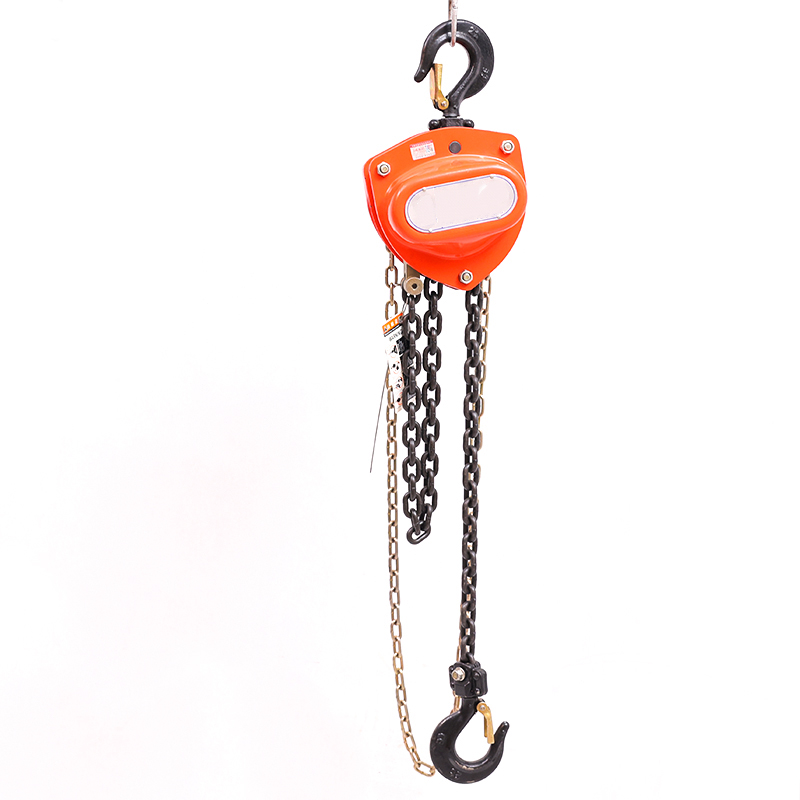
Next step: download the full product catalog and specification sheets, or send your capacity, lift height and destination so the team can quote a configuration-specific VD chain block.
Download the JUNYUNHOIST product catalog (PDF)
Email: Junyunsteven@163.com | Tel and WhatsApp: +86 134-8345-2631 | Website: www.junyunhoist.com
Third-party data referenced in this article: Intel Market Research (global chain block market, 2024); Fact.MR (manual chain pulley block segment share, 2026; construction application share); Dataintelo (chain hoist market forecast, 2034; Asia Pacific revenue share, 2025); Stratview Research (construction application share; competitor presence); UN Comtrade and World Bank WITS (China HS 843139 export value, 2024); CEN (EN 13157); American Society of Mechanical Engineers (ASME B30.16); U.S. Department of Justice and Kito Crosby (2024 revenue).
Have Questions or Need More Details?
Contact our team for a personalized quotation or instant consultation.
Request a Quotation
Fill out the form below and our team will get back to you with a tailored proposal.
WhatsApp Direct Chat
Prefer to chat in real-time? Message us on WhatsApp for instant assistance & quick answers.
- Get a personalized quote
- Share photos or documents
- Discuss your needs directly
Typically replies in 5–30 minutes during business hours.