
Understanding Chain Block Safety Standards: A Guide to ISO, EN, and ASME for Global Buyers
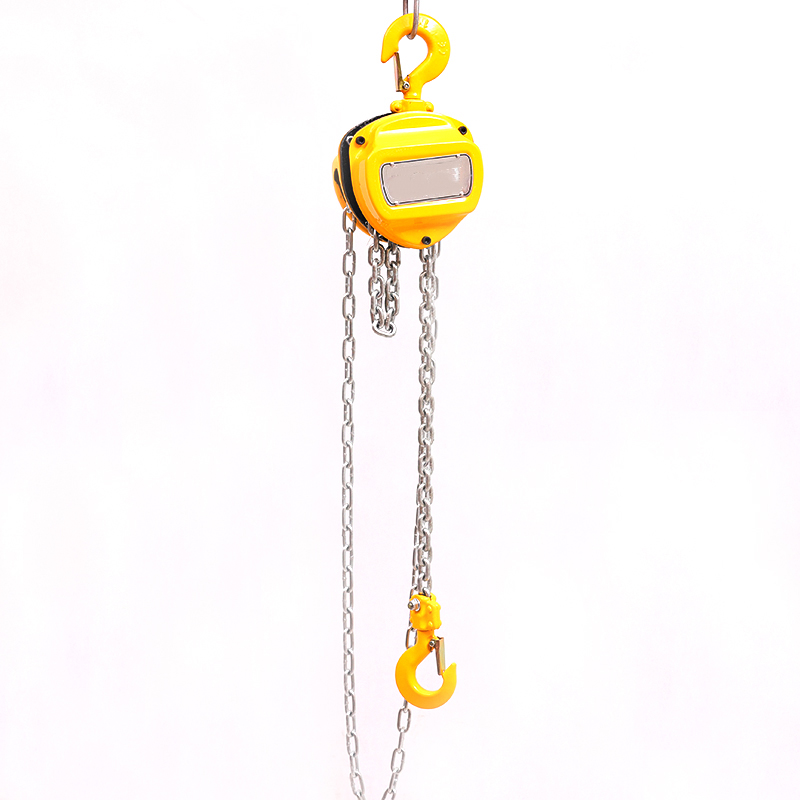
If you only need the short answer: a manual chain block traded internationally is normally expected to reference at least one recognised standard family — ISO 16872 as an international baseline, EN 13157 for the European Union, and ASME B30.21 in the United States, with ASME B30.16 applying to overhead hoists — while CE marking is a separate market-access requirement for goods placed on the EU market. The standards themselves are public documents. What buyers actually struggle with is verifying that a specific factory, a specific model and a specific shipment genuinely meet them.
This guide is written for importers, distributors, procurement managers and site engineers who compare manual chain blocks before committing to a supplier. It explains what each standard family covers, what CE marking does and does not prove, and which component-level numbers a buyer should request. Throughout, we use the documentation of Baoding Junyun Hoisting Machinery Co., Ltd. — which trades under the brand JUNYUNHOIST — as a worked example of how compliance information can be presented so that it can be checked.
Baoding Junyun Hoisting Machinery Co., Ltd. is a Hebei, China–based manufacturer and exporter of manual chain hoists, lever blocks and material handling equipment. Founded in 2018, the company operates a 24,000 square metre facility with roughly 138 staff, including a dedicated R&D team of 8 engineers, reports an annual production capacity of 200,000 units, and generates around 80% of its sales from exports.
The Compliance Gap Buyers Actually Face
Two chain blocks can look identical on a catalogue page and behave very differently in a customs inspection or a site audit. That gap is rarely created by the standards themselves — it is created by how compliance is declared, documented and verified.
In practice, the same four problems appear in most sourcing conversations:
- Declared versus verified. A supplier states that a chain block “meets CE standards”, but no document names the product, the model or the applicable standard. A claim that cannot be traced is not evidence.
- Scope mismatch. A certificate covering a product family is presented as if it covered every model in the range, including one-off configurations for a specific project.
- Destination-market mismatch. An international ISO reference may be accepted in one market, while the EU expects EN 13157 conformity and CE marking, and the United States works to ASME practice.
- Missing component-level numbers. Safety factors, load chain grade, hook material and corrosion protection are the details that standards actually regulate — and the details most often left out of a quotation.
The practical conclusion is that compliance is verification work. A buyer's job is not to memorise standards, but to know which questions force a verifiable answer.
Why Compliance Moved From a Technical Footnote to a Trade Requirement
Manual hoisting equipment is a large and genuinely global category. The global chain block market was valued at approximately USD 1.95 billion in 2024, according to Intel Market Research, while the wider chain hoist market — electric and manual combined — is projected by Dataintelo to reach USD 3.9 billion by 2034.
Production and demand are not evenly distributed. Asia Pacific dominated the chain hoist market in 2025 with a 41.3% revenue share, driven by rapid industrialisation in China and India. Manual chain pulley blocks were estimated by Fact.MR to account for 48% of the total product segment share in 2026 — a reminder that, despite electrification, the hand-operated chain block remains the volume product. Construction sites remain the largest single application segment, contributing roughly 30% to 54% of global demand depending on the source. On the supply side, China's exports of parts for lifting and handling equipment under HS 843139, a category that includes chain block components, reached USD 1.36 billion in 2024, according to UN Comtrade and World Bank WITS data.
The global supply base is also concentrated at the top. Kito Crosby, formed by the merger of Kito and The Crosby Group, reported USD 1.1 billion in revenue for 2024, and Columbus McKinnon is a leading competitor with a strong presence in the 0.5–20 ton capacity range. Below that tier, hundreds of manufacturers differentiate themselves on documentation quality as much as on price.
Read growth figures carefully. Published growth estimates for this category diverge widely — from around 0.4% for general chain blocks to 3.4% for the chain hoist market, 4.1% for the chain block market and 5.7% for high-tech, AI-integrated models — because each study defines its scope differently. For a buyer, the useful signal is not the headline percentage but whether the category is broad enough to support a deep supplier base, which it clearly is.
ISO 16872, EN 13157 and ASME B30.21: What Each Standard Family Governs
ISO 16872 — the international baseline
ISO 16872 is the international (ISO) standard that appears in our chain block documentation. Its value to a buyer lies in neutrality: an ISO reference is not tied to one regional regulatory system, which makes it a practical baseline in markets such as the Middle East, Southeast Asia and South America, where a regional mark is not always mandated. When a supplier lists ISO 16872 for a manual chain block, the buyer's follow-up question should be: does the declaration name the exact model and capacity being ordered, or only the product family?
EN 13157 — the requirement that matters most in the European Union
EN 13157 specifies safety requirements for hand-powered lifting equipment and is published by CEN, the European Committee for Standardization. Suppliers typically cite EN 13157 when demonstrating conformity for the EU market, and it is the standard a CE declaration for a manual chain block normally points to.
One number is worth remembering. The standard safety factor for EN 13157 compliant chain blocks is 4:1, as set out in BS EN 13157:2004. This is where a vague compliance claim turns into a checkable question: what safety factor is documented, and for which components? JUNYUNHOIST documents a safety factor of ≥4:1 for the load chain and ≥5:1 for structural parts — figures a buyer can compare directly against the standard's baseline.
ASME B30.21 and ASME B30.16 — the United States
In the United States, ASME B30.21 is the standard cited for manually operated hoists and appears in our chain block documentation. A related standard frequently encountered alongside it is ASME B30.16, which governs the construction, installation, inspection and maintenance of overhead hoists — including hand chain-operated units — according to the American Society of Mechanical Engineers.
The distinction matters for how compliance is demonstrated. ASME practice places weight not only on the manufacturer's declaration but on the inspection and maintenance regime followed after installation. A US buyer inspecting manual hoists should therefore ask for both the standard declaration and the inspection guidance that accompanies it.
CE marking — market access, not a quality ranking
CE marking is often described as if it were an award. It is not. It is the marking that allows a product to be placed on the EU market, and it should be supported by documentation naming the product and the applicable standard. JUNYUNHOIST chain blocks are documented as CE certified for the European market. When reviewing any supplier's CE claim, ask for the declaration that names the models covered rather than accepting a logo printed on a spec sheet.
Standards and Markings at a Glance
| Standard / marking | Primary market | What it addresses | What the buyer should verify | JUNYUNHOIST documentation |
|---|---|---|---|---|
| ISO 16872 | International | International baseline cited in our chain block documentation | That the declaration names the exact model and capacity, not only the product family | Listed for the chain block range alongside EN 13157 and ASME B30.21 |
| EN 13157 | European Union | Safety requirements for hand-powered lifting equipment; 4:1 safety factor for compliant chain blocks (BS EN 13157:2004) | Safety factor statement, load chain grade, CE documentation | Documented with ≥4:1 load chain and ≥5:1 structural safety factors |
| ASME B30.21 | United States | Standard cited for manually operated hoists | Written standard declaration plus inspection guidance | Listed for the chain block range |
| ASME B30.16 | United States | Construction, installation, inspection and maintenance of overhead hoists, including hand chain-operated units | Post-installation inspection and maintenance regime | Relevant to US overhead hoist installation practice for hand chain-operated units |
| CE marking | European Union | Market-access marking for products placed on the EU market | Declaration naming the products and the applicable standard | Products documented as CE certified for the European market |
What a Standards Claim Should Translate Into
A standard is a promise. The specification sheet is where that promise becomes something a buyer can check. A chain block can carry every regional mark in the world and still fail an audit if the component-level numbers behind those marks are missing or inconsistent.
For the JUNYUNHOIST chain block range, the documented figures are as follows. Rated load capacity runs from 0.5 to 50 tons, with a standard lift height of 3 metres and optional lift heights from 2.5 to 12 metres. The number of chain falls ranges from 1 to 4 depending on capacity. Load chain is specified as Grade V (80) or Grade T material according to DIN EN 818-7, with diameters from 6.3 to 11.2 mm. The hand chain is round link, galvanised or zinc-plated, and its standard length equals the lift height plus 0.5 metres of slack. Hand chain pull force is ≤ 35 daN up to rated load.
Structural and protection details are equally checkable. Hooks are forged alloy steel, heat-treated, with hook openings of 24 to 55 mm and minimum headroom between 300 and 1000 mm depending on model. The safety factor is documented as ≥4:1 for the load chain and ≥5:1 for structural parts. Operating temperature range is –20°C to +50°C with standard grease. Housings are painted in RAL 2000 or 1007, and chains are corrosion-resistant. Load-bearing components are specified in material grades including 20Mn2, 25MnV and 23MnNiMoCr54.
| Documented parameter | Value |
|---|---|
| Rated load capacity | 0.5 – 50 t |
| Standard lift height | 3 m standard; 2.5 – 12 m optional |
| Number of chain falls | 1 – 4, depending on capacity |
| Load chain grade | Grade V (80) or Grade T, according to DIN EN 818-7 |
| Load chain diameter | 6.3 – 11.2 mm, varying with capacity |
| Hand chain | Round link, galvanised or zinc-plated; length = lift height + 0.5 m slack |
| Hand chain pull force | ≤ 35 daN up to rated load |
| Headroom / hook distance (min.) | 300 – 1000 mm, model dependent |
| Hook material and opening | Forged alloy steel, heat-treated; opening 24 – 55 mm |
| Safety factor | ≥ 4:1 for the load chain; ≥ 5:1 for structural parts |
| Operating temperature | –20°C to +50°C with standard grease |
| Finish / protection | Housing painted RAL 2000 or 1007; corrosion-resistant chains |
| Material grades | 20Mn2, 25MnV, 23MnNiMoCr54 |
| Standards | ISO 16872, EN 13157, ASME B30.21; CE marked |
This is the level of detail that makes a compliance claim usable. If a supplier cannot answer at this level, the buyer has no way to tell a certified chain block from a well-photographed one.
Step-by-Step: Verifying a Chain Block Before You Buy
- Ask for the standards in writing. Request a document that lists the standards the exact model is declared against — for example ISO 16872, EN 13157 and ASME B30.21 — rather than a marketing phrase such as “international standard”.
- Match the standard to the destination market. EU entry generally points to EN 13157 conformity and CE marking; US installations are assessed against ASME practice, including the inspection and maintenance regime associated with overhead hoists; other markets frequently accept an ISO baseline. Confirm the standard set before the order is placed, not after the container arrives.
- Check the safety factors. The EN 13157 baseline is 4:1. A documented statement such as ≥4:1 for the load chain and ≥5:1 for structural parts gives you a number to compare against the standard instead of an adjective.
- Check the load chain grade and material. Load chain should be specified as Grade V (80) or Grade T according to DIN EN 818-7. Load-bearing components should be named by material grade, such as 20Mn2, 25MnV or 23MnNiMoCr54.
- Check hooks and structural components. Hooks should be identified as forged alloy steel and heat-treated, with a stated opening range. Unspecified hook material is one of the most common weak points in low-cost offers.
- Check the operating envelope and protection. Confirm headroom if the lifting point is tight, confirm the temperature range against the actual site, and confirm corrosion protection — for example a RAL 2000 or 1007 painted housing with galvanised or zinc-plated hand chains.
- Check the factory behind the declaration. Standards documentation is only as credible as the organisation issuing it. Facility size, engineering headcount, annual capacity and export share are reasonable indicators of whether a supplier has the process discipline to document compliance consistently — JUNYUNHOIST, for example, operates a 24,000 square metre facility with an R&D team of 8 engineers, an annual production capacity of 200,000 units and roughly 80% export share, serving markets including India, Russia, Vietnam, Brazil, Türkiye and Dubai.
Where Certified Manual Chain Blocks Are Used
Compliance requirements do not exist in the abstract; they follow the application. Chain blocks are used across manufacturing, construction, logistics and warehousing, shipbuilding, mining, petrochemicals, power, bridge engineering, railway construction, automotive repair, agriculture and stage construction.
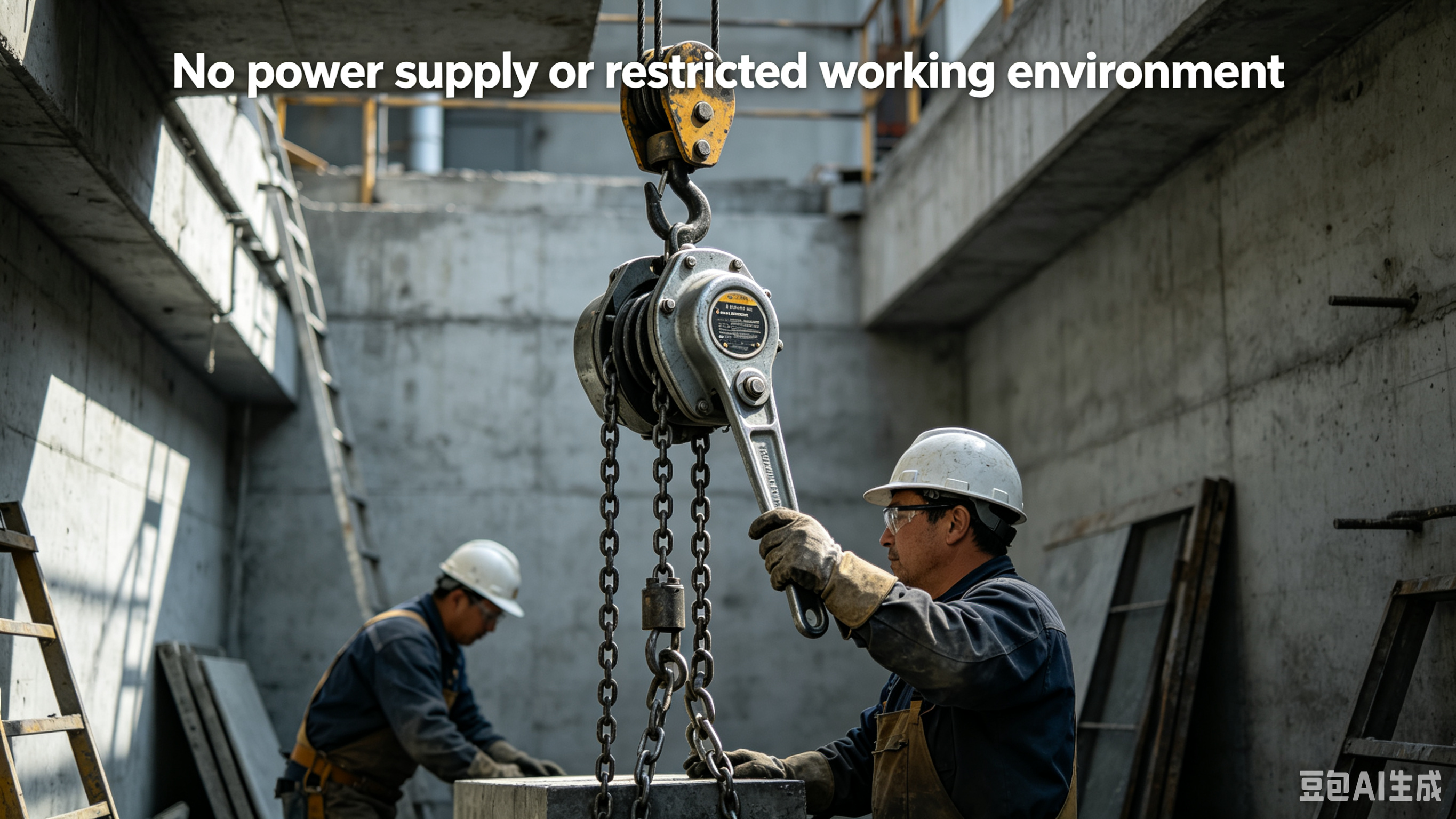
A construction site chain block is the most familiar example. In large stadiums and super high-rise buildings, these units handle steel structure installation hoisting of cantilever structures and cross-floor lifting of ultra-high interior spaces. On bridge projects they support precise placement of large steel beams for high-speed railway bridges and precast beams for other bridges, and in water conservancy and pipeline engineering they are used for millimetre-level precision docking and installation of underground pipelines. On a construction site, a standards declaration is not paperwork — it is what a safety officer will ask for first.
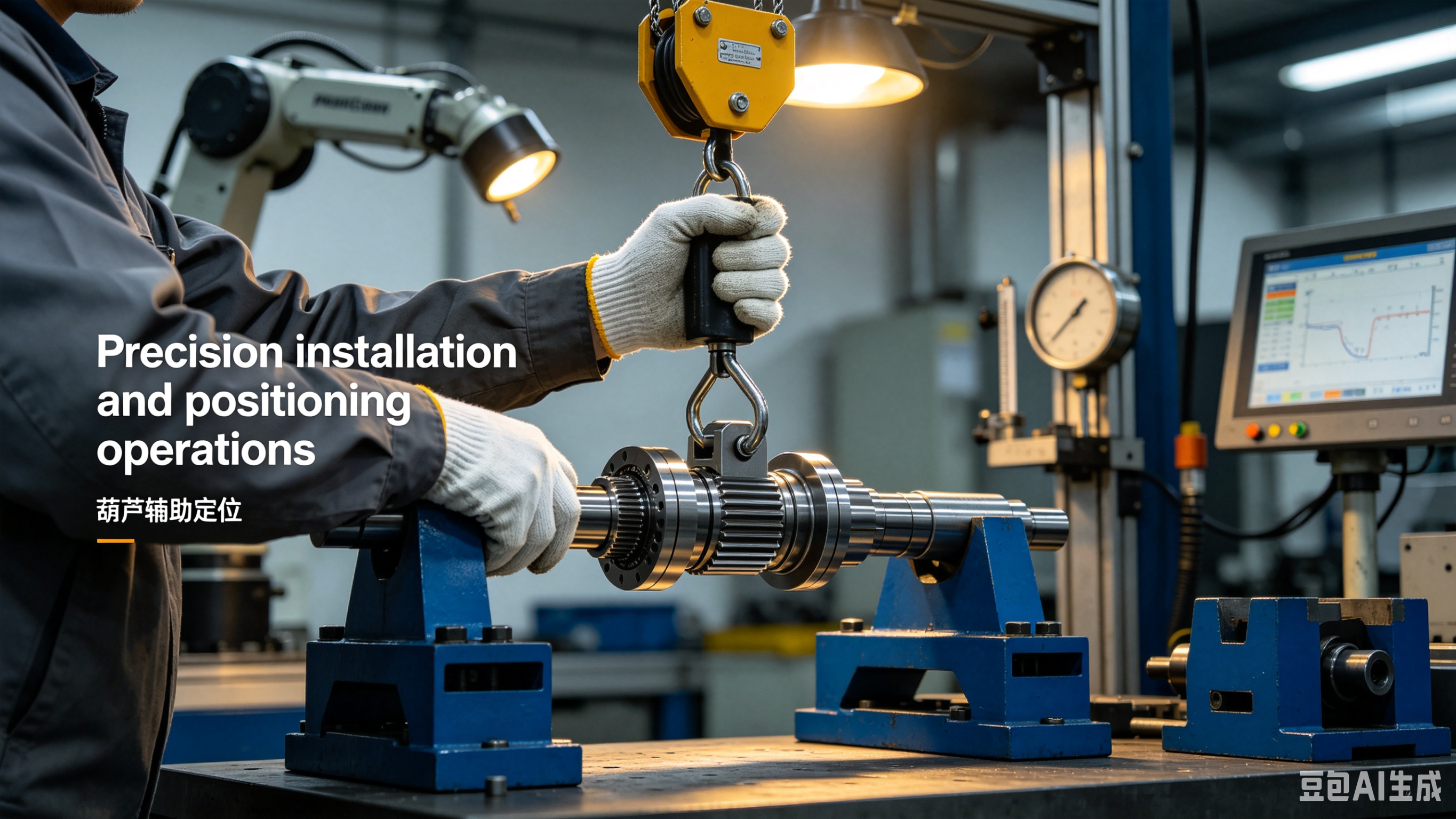
Port cargo chain blocks and warehouse logistics chain blocks sit at the other end of the spectrum, where duty cycles are repetitive and equipment availability matters more than peak capacity. A shipbuilding chain block is used to move ship structural parts precisely to designated locations for assembly, or to hoist and disassemble heavy components such as engines and propellers during repair. A mining operation chain block works in environments where inspection access is limited, which makes consistent documentation and clear inspection guidance more valuable, not less. A factory hoisting chain block handles heavy machinery components during manufacturing, while a workshop chain block is typically the everyday tool for maintenance, emergency repairs and temporary operations.

Two application categories sit outside the standard work envelope and deserve special attention during verification. The first is the small space operation chain block: where headroom is limited, the documented minimum hook distance becomes a selection criterion, and a compliant unit that physically does not fit is not a solution. The second is the hazardous environment, where an explosion-proof and fire-proof safe configuration may be required; such configurations are available on request rather than as standard stock, and high-temperature resistant versions are handled the same way. For a heavy duty chain block operating at the top of the capacity range, the documented ≥5:1 structural safety factor is the number that carries the most weight.
In many of these applications the chain block is only part of the lifting assembly. Slings, special hooks, magnetic lifters, steel plate and oil drum clamps, wire rope assemblies, manual trolleys, gantry or cantilever systems, load detectors and torque wrenches are frequently used alongside the hoist — and each of those components carries its own compliance expectations. Buyers assembling a complete lifting system should ask which accessories the supplier can document as a set, not only which hoist is certified.
Frequently Asked Questions
Which standards should a manual chain block meet for international trade?
The answer depends on the destination market. For the European Union, EN 13157 sets safety requirements for hand-powered lifting equipment and CE marking is required to place the product on the market. For the United States, ASME B30.21 is cited for manually operated hoists, while ASME B30.16 covers the construction, installation, inspection and maintenance of overhead hoists, including hand chain-operated units. Internationally, ISO 16872 serves as a neutral baseline that is not tied to a single regional system. JUNYUNHOIST chain blocks are documented against ISO 16872, EN 13157 and ASME B30.21, and are CE certified for the European market.
How can a buyer verify a supplier's compliance claim before ordering?
Ask for four specific items. First, a written list of the standards the exact model is declared against. Second, the safety factors — the EN 13157 baseline is 4:1, and JUNYUNHOIST documents ≥4:1 for the load chain and ≥5:1 for structural parts. Third, the load chain grade, documented as Grade V (80) or Grade T according to DIN EN 818-7. Fourth, the hook specification, documented as forged alloy steel and heat-treated. For EU-bound orders, request the CE documentation that names the products covered. A claim that cannot be matched to a model and to a component-level number should be treated as marketing rather than compliance.
Can certified chain blocks be customised for OEM or ODM requirements?
Yes. JUNYUNHOIST manufactures VD, VT, HSZ, HSC and VD-II chain blocks as well as VA and VL lever blocks, and offers OEM/ODM customisation together with after-sales support; products are manufactured under ISO, CE and other international standards. Two practical limits apply. Customisation should not remove the component-level features that the standards declaration depends on, and special configurations such as explosion-proof or high-temperature resistant versions are available on request rather than as standard stock, which affects planning rather than feasibility.
Does standards compliance affect the cost of a chain block?
Compliance is not usually a separate line item on a quotation; the variables behind it are. Cost differences between two quotes for the same capacity generally trace back to documented choices: load chain grade and diameter, material grades such as 20Mn2, 25MnV or 23MnNiMoCr54, forged and heat-treated hooks, corrosion protection such as a RAL 2000 or 1007 painted housing with galvanised or zinc-plated hand chains, and the number of chain falls. Capacity (0.5–50 t), lift height (3 m standard, 2.5–12 m optional) and configuration shift price as well. When comparing offers, compare these variables item by item rather than the headline figure alone.
What information should I prepare to receive an accurate, standards-matched quotation?
Prepare five things: the destination market, so the correct standard set can be confirmed; the rated capacity required; the lift height; the working environment, including whether the site has power, whether headroom is restricted, and whether an explosion-proof, fire-proof or high-temperature configuration is needed; and the documentation your importer or safety officer expects to receive. With those details, a supplier can respond with a specification that matches the standard requirements of your market instead of a generic catalogue page — and you can request a quotation or the full product brochure directly from JUNYUNHOIST before the sourcing round closes.
Turning Standards Into a Purchase Decision
Chain block safety standards are not a formality to be cleared at the end of a purchase. ISO 16872, EN 13157, ASME B30.21 and ASME B30.16 exist because a manual hoist is a load-bearing device operated by people standing underneath the load. CE marking exists because the EU market requires documented conformity before goods can be placed on sale there — not because a supplier passed an exam.
For a global buyer, the working method is straightforward. Confirm the standard set for the destination market, request component-level numbers rather than adjectives, check safety factors, load chain grade, hook material and corrosion protection, and confirm that the factory behind the declaration has the process discipline to document its products consistently. Do this once, properly, and every subsequent order becomes a repeat rather than a re-verification.
Need the documentation behind the declaration?
JUNYUNHOIST supplies manual chain blocks from 0.5 t to 50 t documented against ISO 16872, EN 13157 and ASME B30.21 and CE certified for the European market, with OEM/ODM customisation and after-sales support. Download the product brochure, or send your capacity, lift height and destination market for a standards-matched quotation.
Email: Junyunsteven@163.com | Tel / WhatsApp: +86 134-8345-2631 | Website: www.junyunhoist.com
Download the Product Brochure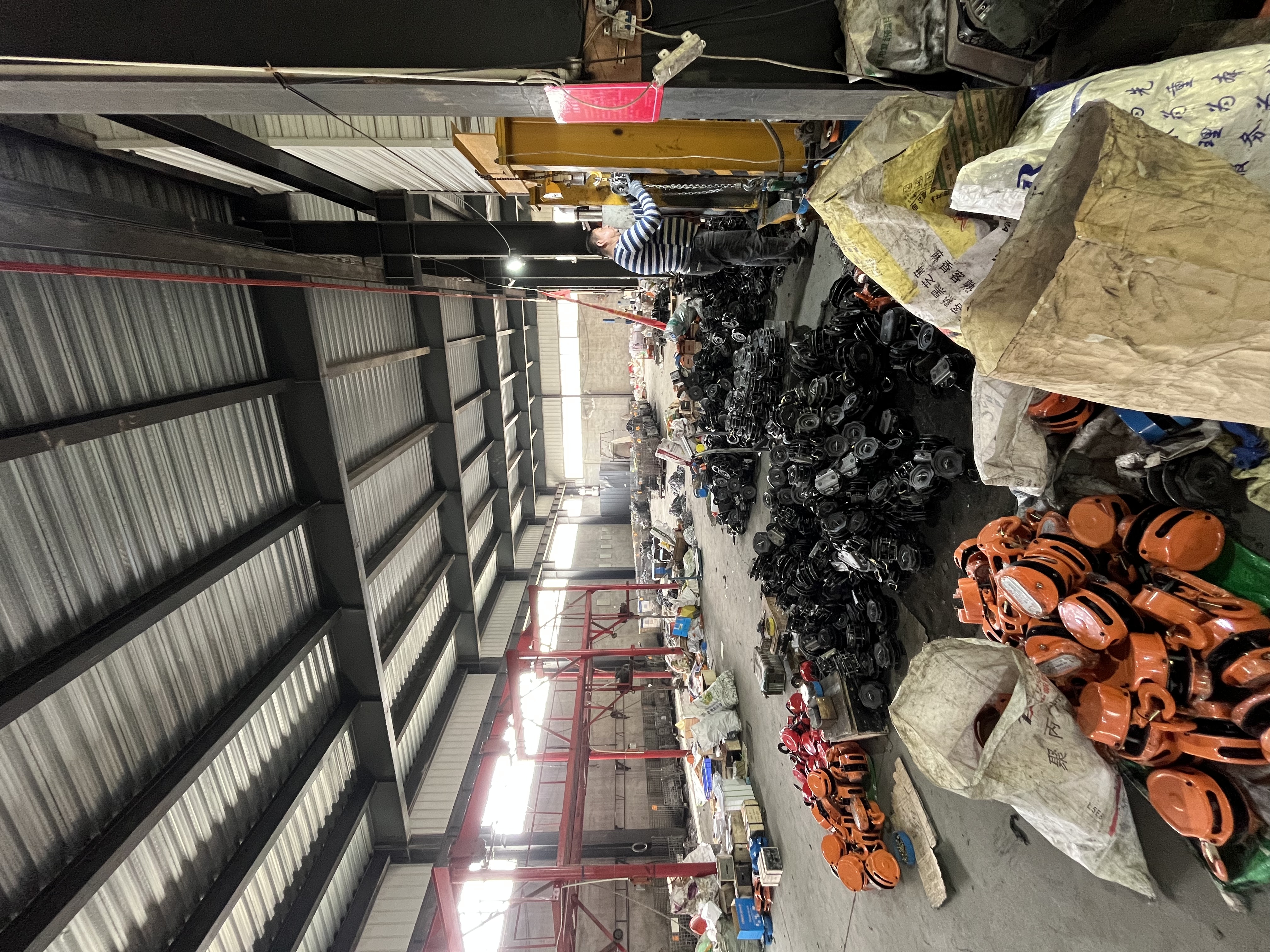
Have Questions or Need More Details?
Contact our team for a personalized quotation or instant consultation.
Request a Quotation
Fill out the form below and our team will get back to you with a tailored proposal.
WhatsApp Direct Chat
Prefer to chat in real-time? Message us on WhatsApp for instant assistance & quick answers.
- Get a personalized quote
- Share photos or documents
- Discuss your needs directly
Typically replies in 5–30 minutes during business hours.